
Common roofing scams to avoid Anaheim and check roof costs

An unsolicited roof inspection does not prove your roof needs work. Common roofing scams to avoid in Anaheim include exaggerated damage claims, pressure to sign immediately, and low bids that grow with unexpected charges. Get at least three quotes before choosing a roofing contractor.
It’s reasonable to want a quick answer when someone points out possible roof damage, especially after severe weather. But a confident pitch or a photo alone should not determine what happens to your home. Ask for clear photos or video of the damage, and get a second opinion before acting on an unsolicited claim.
This guide explains how to assess a roof-damage claim, compare bids, research a contractor, and respond to door-to-door offers without being rushed. You’ll also learn what to look for in a written agreement and how taking time to review your options can help protect your home and budget.
Key Takeaways
- Get at least three written quotes and compare the proposed work, not just the bottom-line figure.
- Ask for clear photos or video of claimed roof damage, and seek an independent second opinion before acting on an unsolicited assessment.
- Review a contractor’s license, insurance, local references, and customer reviews before signing an agreement.
- Treat unusually low bids, surprise charges, and pressure to sign immediately as reasons to pause and review the terms carefully.
- Decline unsolicited offers that make you uncomfortable, and take time to consider your options before committing to roof work.
1. Comparing quotes and verifying roof damage independently
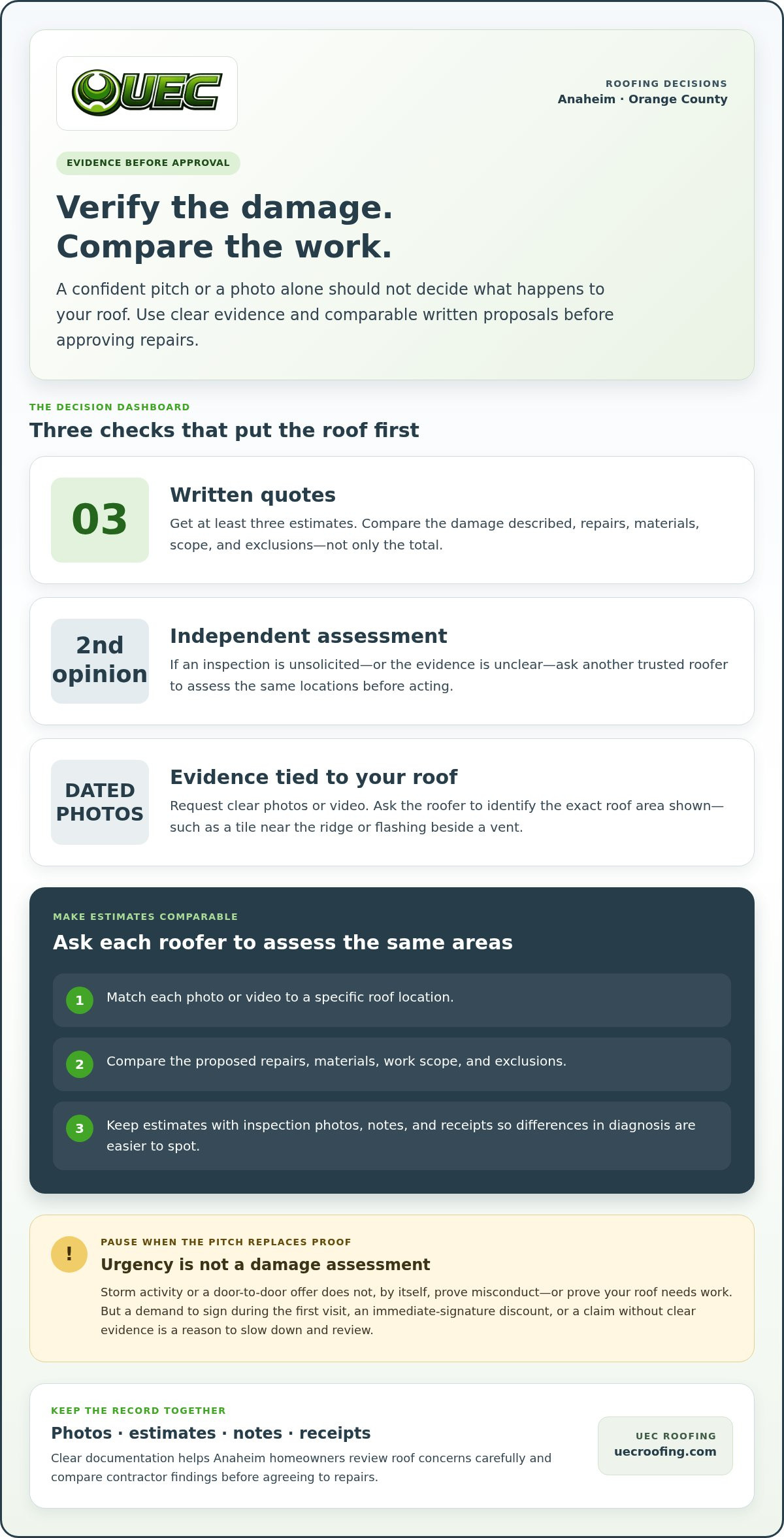
Start with evidence, not a sales pitch. If a roofer says your Anaheim home needs urgent repair, ask for dated photos or video showing the specific damage. Match each image to a roof area, such as a tile near the ridge or flashing beside a vent. Anaheim is in Orange County, and local homeowners may compare estimates across Southern California communities, including Lake Elsinore and the Inland Empire, as well as Riverside, Orange, San Diego, Los Angeles, and San Bernardino Counties.
Get three written quotes from roofing companies serving your area before approving a project. Compare the stated damage, proposed repairs, materials, scope of work, and exclusions, not just the total. Ask each roofer to identify the same roof areas so you can see where assessments differ. Keep estimates with inspection photos, notes, and receipts related to the work. Consistent documentation makes differences in diagnosis easier to spot.
Storm chasers travel to areas after severe weather, seeking homes that may have hail, wind, or storm damage. Some may arrive the day after a storm. That timing does not prove misconduct, but urgency should never replace careful review. Research the roofer’s background and claims, and don’t sign paperwork during the first visit simply because the salesperson says the damage needs immediate attention.
Door-to-door roofers may claim they spotted “mystery” damage from the street. Dishonest salespeople may fabricate an inspection report, create damage, or show a photo of another roof as if it were yours. Ask the inspector to identify the exact location and explain how the image documents that area. If someone spends an hour on the roof but provides no clear evidence, request an independent second opinion.
Before considering an insurance claim, document the roof’s condition from the ground and request photos or video of any reported damage. Don’t rely on a contractor’s unsupported description to decide whether a claim is appropriate. If the evidence appears credible, have another trusted roofer assess the same locations. Compare both findings before contacting your insurer or agreeing to repairs.
Keep pressure sales separate from the damage assessment. A roofer who ties an immediate signature to a discount, deductible offer, or claim promise gives you another reason to pause. Save the proposal and record what was said. These steps help homeowners in Anaheim and nearby Southern California communities distinguish a documented roof concern from an unsolicited sales claim.
2. Researching contractors, references, licenses, insurance, and reviews
For Anaheim homeowners, research the business named in the estimate, not just the salesperson at the door. Use the exact business name and license number on the paperwork when checking California contractor license records. Compare those details with the proposed agreement and insurance documents. A mismatch between company names deserves an explanation before you move forward.
Request proof of insurance and compare its business name with the contractor’s written estimate. Review customer feedback and complaints for specific patterns, such as reports of unfinished work, unexpected charges, or communication problems. One vague comment offers little context, while repeated accounts describing similar issues give you more to evaluate. Keep notes so you can compare contractors consistently.
Local references can help you understand how a roofer handles work in Southern California. Ask for references from homeowners with comparable roofs or similar repair needs. A homeowner in Lake Elsinore, for example, may be able to describe how the contractor communicated about roof conditions and documented completed work. References from communities across the Inland Empire and nearby counties can also provide useful context.
When speaking with a reference, ask for concrete details: whether the written scope matched the completed work, how changes were explained, and whether cleanup was addressed. A useful reference can describe the project rather than offering only a general endorsement. Record the responses alongside your estimates as you compare contractors in Riverside, Orange, San Diego, Los Angeles, or San Bernardino County.
Treat an offer to waive or pay your insurance deductible as a serious warning. Contractors waiving or paying a homeowner’s insurance deductible is illegal, and both the homeowner and contractor could face legal consequences. A discount tied to an insurance claim can also make the proposed payment harder to understand. Keep the insurer’s estimate and the contractor’s proposal separate, and compare the described work and amounts.
Before paying or signing, read the entire agreement. Check that the work, materials, payment stages, and process for approving changes are clearly written. California cancellation rights can depend on the circumstances of an agreement, so review the cancellation notice included with the paperwork instead of relying on a verbal summary. If key terms are unclear or you feel rushed, take time to review them.
For a practical comparison, consider how the written scope relates to roofing contractor services. Keep license details, insurance documents, references, reviews, and contract records together. That organized file can help Anaheim homeowners assess proposals from across Southern California with care.
3. Unusually low bids and unexpected price increases
A bid far below two or three other reputable estimates deserves a closer look. In Anaheim and across Orange County, compare the work and materials behind each total, not just the figure at the bottom. Use the same approach when reviewing proposals from Lake Elsinore, the Inland Empire, Riverside, San Diego, Los Angeles, or San Bernardino Counties. A lower bid may cover less work, omit materials, or leave key tasks undefined.
For example, one estimate might include replacing several damaged roof tiles, while another proposes work across a larger roof area. Those totals are not directly comparable until you understand the different scopes. Check which roof sections each bid covers, which materials it names, and what cleanup or other work is included. Ask for unclear items to be described in writing before choosing a proposal.
Some scammers use a low opening bid to secure a job, then charge more after work starts. A genuine unforeseen condition should come with a specific explanation, not just a vague warning that “extra work is needed.” Ask the contractor to identify the location, describe the issue, and explain how it changes the work. Request a written change order stating the added task and revised total before approving it.
Material costs rarely fluctuate in the middle of a project. If a roofer says a material increase requires a new charge, ask which material changed and how it affects the agreed scope. Keep the original bid beside any revised estimate. This makes it easier to identify whether the new amount reflects a clearly described change or an increase without a documented reason.
An insurance claim does not automatically justify replacing more roofing than the documented damage supports. Compare the contractor’s proposed work with the insurer’s paperwork, and ask for an explanation when the scopes differ. For instance, a recommendation to replace a broad roof section should identify the condition that makes the work necessary. Don’t approve a change based only on a promise that insurance will cover it.
Before authorizing an added charge, check that the paperwork states:
- The roof area and condition prompting the additional work.
- The specific task and materials being added or changed.
- The revised total and your approval before work proceeds.
If a contractor won’t explain a price increase or changes the scope without written approval, pause before proceeding. Comparing bids across Anaheim and nearby Southern California communities is most useful when each proposal describes the same work. A low starting figure should not stop you from understanding what the project will actually involve.
4. Verifying licenses, insurance, and local business presence
Anaheim homeowners can compare the contractor’s name and license number with California’s official contractor license records. Ask for proof of insurance, then verify that the policy information corresponds to the business named on the estimate. Match the business name, license details, and insurance documents before signing. A mismatch needs a clear explanation.
Check the license details against the written estimate, contract, and payment instructions. A salesperson may use a different company name from the one on the paperwork or provide documents with inconsistent details. Write down the license number and business name, then search those exact details in California’s records. Don’t rely only on a logo, business card, or verbal assurance.
For insurance, request current documentation and contact the insurer using independently obtained contact information. Ask whether the policy information matches the contractor named in your agreement. A document alone may not resolve a name mismatch or establish that coverage applies to the proposed work. Keep the insurance details with your contract and estimates so you can refer to the same records later.
Check whether the business has a verifiable local presence. Compare its stated address and phone number across paperwork, business records, and customer references. A consistent address is one useful detail, not proof of quality. Ask for references from Anaheim or nearby homeowners, then ask what work was completed and whether the final paperwork matched the agreed scope.
Handle insurance payments carefully. Some roofing scammers ask homeowners to sign over or cash an insurance check, claiming they need the funds for materials or upfront labor, then disappear. Others may forge an endorsement and cash the check. Don’t sign over an insurance check until required materials and supplies have been delivered. Keep your insurance company’s communications and payment documents for comparison.
- Match the contractor’s license number and business name with California’s official records.
- Compare the insurance documents with the company named in the written agreement.
- Keep control of insurance checks and document when required materials arrive.
Allow at least 48-72 hours to review estimates and verify the contractor’s license before signing. Use that time to compare the submitted records, check local references, and resolve inconsistencies. If someone insists that you endorse an insurance check or sign immediately, pause the transaction. A careful review helps Anaheim homeowners reduce the risk of payment disputes and insurance fraud.
5. Avoiding unsolicited roofing offers
A knock at the door does not establish that an Anaheim roof needs work. After severe weather, an unfamiliar salesperson may claim visible damage requires immediate repair or replacement. Treat an unsolicited inspection as an offer to assess, not as a diagnosis. You decide who inspects your home and when.
The Better Business Bureau recommends caution with unsolicited free roof inspections and advises homeowners to monitor contractors and inspectors on the roof. If you allow an inspection, stay present and ask the inspector to identify each area they examine. Keep track of where they walk and what they photograph. Don’t let an inspection become an unobserved assessment of your property.
Pay attention to the specific claim. A salesperson might point to a roof slope, describe supposed storm damage, then urge you to sign before leaving. Ask for evidence and a written explanation of the proposed work. If the roofer claims an insurance claim is necessary, separate that suggestion from the roof assessment. Review the damage evidence independently before deciding how to proceed.
High-pressure sales tactics are a red flag, even when they come with a discount. Some roofing contractors offer a low rate only if you sign on the spot or promise no-cost incentives tied to insurance work. Don’t sign a contract because a salesperson says the offer expires that day. A sound decision requires time to review the proposed scope, payment terms, and contractor details.
Use a simple response when an unexpected visitor arrives: “Please leave your written information. I’ll review it and decide whether to follow up.” You don’t need to open the door, provide insurance details, or allow a roof inspection. If a salesperson refuses to leave after you ask, call the police. Note the company name and time of the visit.
Before moving forward with any unsolicited offer, take these steps:
- Write down the visitor’s name, company, and stated reason for inspecting the roof.
- Ask for photographs tied to specific roof areas and a written description of the damage.
- Decline immediate signing, deductible offers, and pressure to file an insurance claim.
- Choose whether to seek an independent assessment on your own timeline.
An unsolicited pitch shouldn’t control whether you repair or replace a roof. If you have a concern after an unexpected inspection, request a roof repair assessment at a time you choose. You remain in control of who enters your home, what evidence you accept, and when you make a decision.
UEC Roofing: leak repair
UEC Roofing provides leak repair and roof repair for homeowners addressing a documented roofing concern. If an inspection identifies a leak, damaged area, or maintenance issue, a roof tune-up can help assess the roof’s condition and the work it needs. Clear findings and a defined scope help you make an informed decision without relying on an unsolicited sales pitch.
For Anaheim homeowners, the next step is to discuss your concern and the relevant roofing services. Whether you’re responding to a leak or considering a roof repair, understand the proposed work before authorizing it. Contact UEC Roofing to discuss your roofing concern.
Make your next roofing decision with confidence
Protecting your home starts with choosing a deliberate next step, not reacting to an unexpected pitch. Keep your roof’s condition and long-term performance in view, and let documented needs guide the work you authorize. This steady approach helps Anaheim homeowners avoid common roofing scams and make decisions that support their property.
When you need a professional assessment, UEC Roofing offers leak repair, roofing services, and roof tune-ups. These services can help address an active leak or evaluate maintenance needs with the roof’s condition in mind. Choose work that fits the issue, and take the time to understand its scope before proceeding.
Contact UEC Roofing today to discuss your roofing concern. A clear next step can help you move forward with confidence.
Frequently Asked Questions
What are the most common roofing scams homeowners should avoid in Anaheim?
Common tactics include a false damage diagnosis, a misleading low bid, and pressure to authorize work before reviewing the terms. In Anaheim, a salesperson might claim a roof needs replacement after a brief look, even though the homeowner has no inspection record. Treat each claim as something to evaluate, not an instruction to sign. Keep dated notes and compare the contractor’s claims with written evidence.
What are the warning signs of roofing storm-chaser scams and high-pressure sales tactics?
Storm chasers may approach homes after severe weather and frame a quick inspection as an urgent opportunity. Watch for a stranger who pushes an immediate signature, offers a discount that expires on the spot, or discourages you from reviewing paperwork. A legitimate discussion should give you time to consider the scope. If a salesperson refuses to leave after you ask, contact local police.
How do roofing scams involving fake inspections, unnecessary repairs, or inflated damage claims work?
A dishonest roofer may present another property’s damage photo as evidence from your Anaheim home or describe damage without identifying its location. Some may exaggerate an issue to justify unnecessary work. Ask the inspector to connect each image to a specific roof area and explain the recommended repair. If the evidence doesn’t match your property or the explanation remains unclear, don’t authorize work based only on that inspection.
What should a legitimate roofing estimate and contract include in California?
Use a written estimate that identifies the roof areas, proposed work, materials, exclusions, and payment schedule. The contract should match the accepted estimate and explain how you approve changes if concealed conditions arise. For example, a proposal should distinguish replacing a few damaged tiles from broader roof work. Read any cancellation instructions included with the paperwork, and don’t rely on verbal assurances to fill gaps.
How can homeowners avoid insurance deductible waiver scams and roofing insurance fraud?
Don’t accept an offer from a roofer to pay or waive your insurance deductible. Keep the insurer’s documents and contractor invoices consistent, and don’t agree to separate invoices that show different charges for the same work. Before endorsing or transferring an insurance check, confirm what it covers and whether promised materials have arrived. Contact your insurance company directly if a contractor’s payment instructions conflict with its claim paperwork.
What steps should Anaheim homeowners take before hiring a roofer or signing a contract?
Before signing, compare written scopes, verify the contractor’s California license, review proof of insurance, and contact references about similar work. Check that the company named on the estimate matches the contract and payment instructions. Keep inspection photos and communications together. Take time to read the complete agreement, including cancellation terms and procedures for approving added work. Don’t sign under pressure or leave blanks to be filled later.
Where can Anaheim residents report roofing fraud or check complaints against a contractor?
For suspected fraud, contact local law enforcement and your insurance company, especially if funds or a claim may be involved. To check a contractor’s license information or ask about a complaint, contact California’s contractor licensing agency. Keep the estimate, contract, payment records, photographs, messages, and salesperson’s business details together. These records help explain what happened when you make a report or request a license review.
What California rules govern roofing deposits, cancellation rights, and home improvement contracts?
The agreement should clearly state the work, materials, payment stages, and process for approving changes. California cancellation rights depend on the circumstances, so review the cancellation notice included with the paperwork. The article gives no specific deposit rule.