
How to Choose a Reliable Roofer in Murrieta for Your Roof
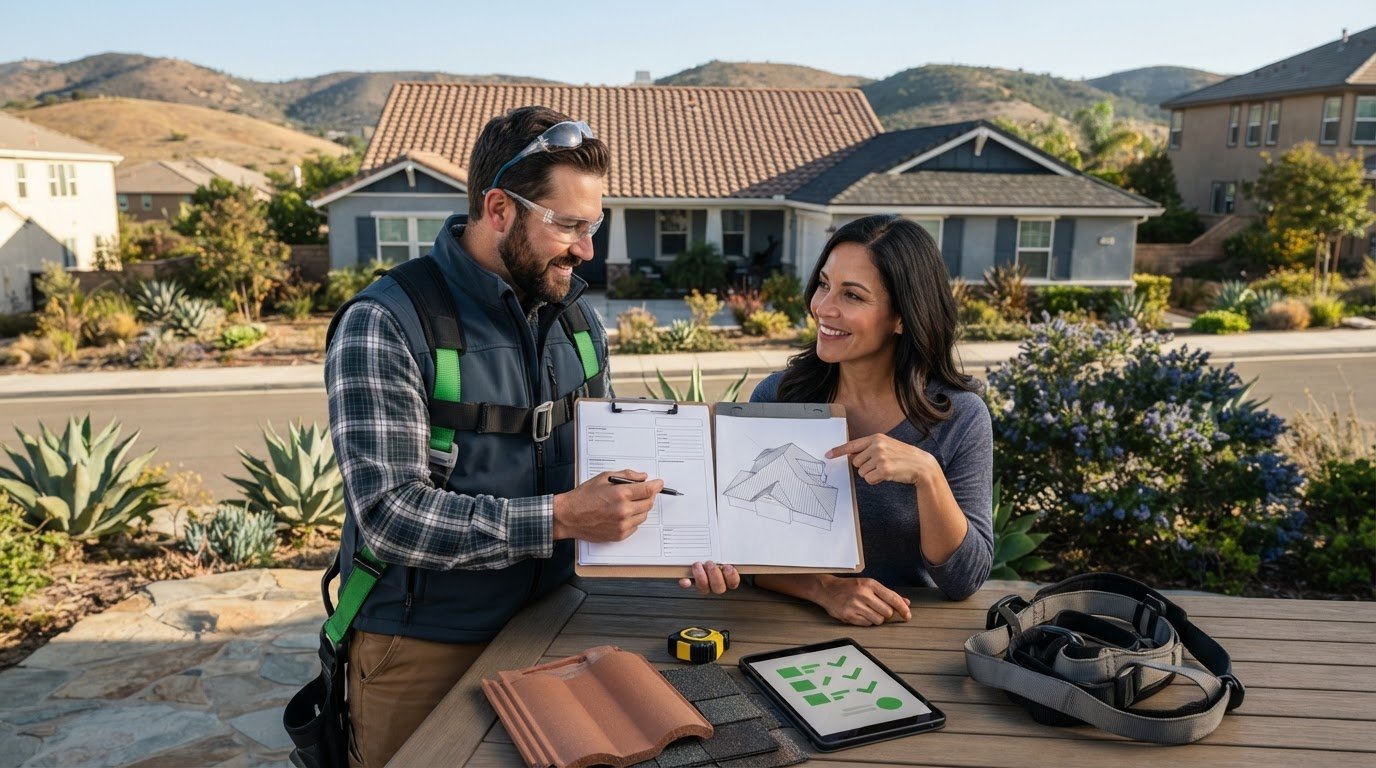
The lowest bid isn’t always the safest choice. Knowing how to choose a reliable roofer in Murrieta starts with comparing written estimates, verifying licensing and insurance, and reviewing the proposed work. A clear estimate should explain the materials, labor, timeline, and payment schedule.
It’s reasonable to want a roofer who explains what your roof needs and how the work will be handled. That matters whether you’re arranging a repair or considering a full replacement, because the right solution depends on the roof’s condition, not just the price on a quote.
This guide explains how to compare local roofers, review estimates, and assess proposed work. You’ll also learn what to look for in repair and replacement plans so you can make an informed decision for your Murrieta home.
Key Takeaways
- Look beyond star ratings by reading detailed reviews for patterns in communication, estimate clarity, and completed work.
- Compare written estimates side by side, paying attention to the scope, materials, labor, timeline, and payment schedule.
- Verify a roofer’s required licenses and ask about liability insurance and workers’ compensation coverage.
- Assess whether the proposed repair or replacement addresses your roof’s actual condition, not just its visible symptoms.
- Use clear workmanship details and knowledge of local conditions to distinguish a thorough plan from a vague promise.
How do I choose the best roofing contractor?
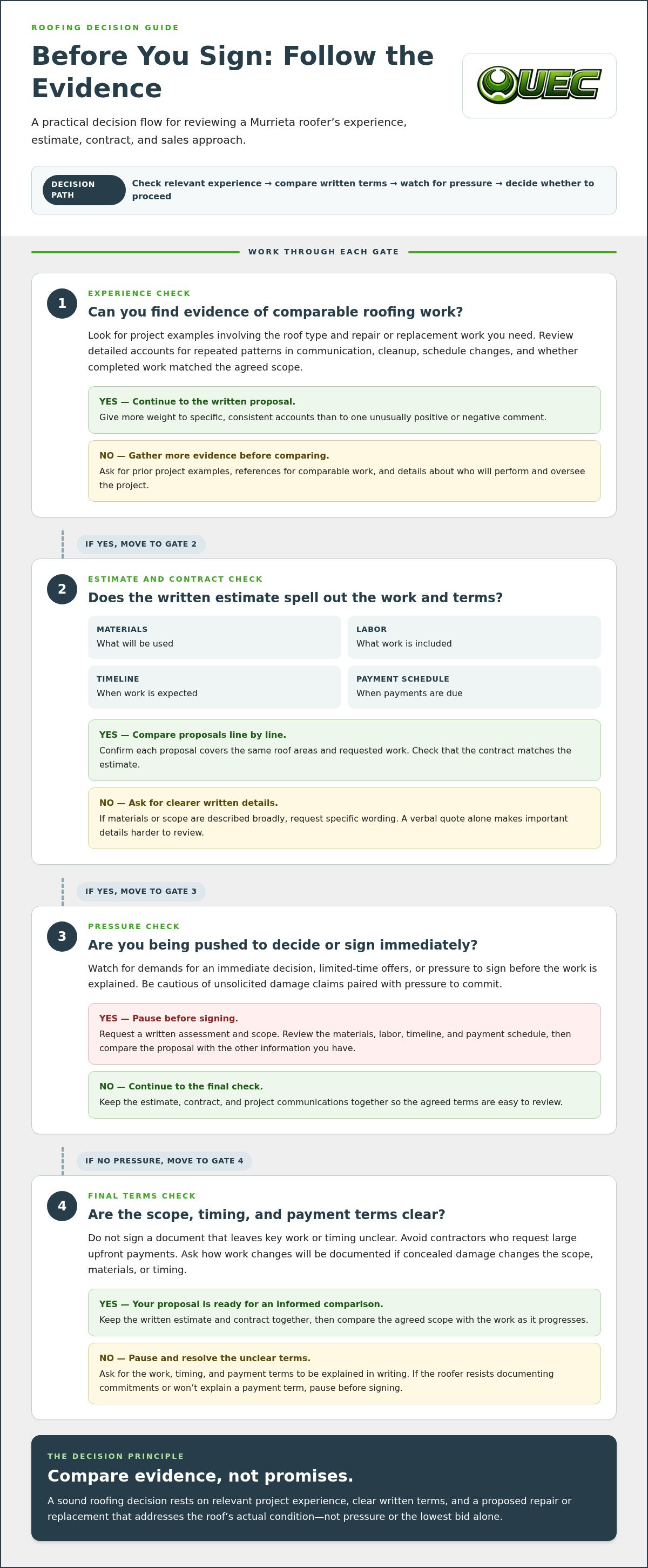
Compare evidence, not promises: review project experience, examine written terms, and watch for pressure tactics before choosing.
-
Review Ratings and Hiring History
Start by comparing contractor ratings, detailed reviews, and prior project examples. Look for repeated comments about communication, cleanup, schedule changes, and whether completed work matched the agreed scope. A single glowing review tells you less than several specific accounts describing similar results. For Murrieta homes, prioritize examples involving the roof type and repair or replacement work you need.
For tile work, check the Tile Roofing Industry Alliance contractor directory. According to the Tile Roofing Industry Alliance, certified contractors have training and follow standards for tile installation and maintenance. Certification can help distinguish relevant tile experience from general roofing experience. Review the contractor’s hiring history, too: ask who will perform the work and whether the people overseeing the project have handled comparable roofs.
Compare evidence consistently. Note whether reviews identify a project, explain the customer’s concern, and describe how the roofer responded. A complaint about a delayed start may matter less than repeated reports of unresolved workmanship problems. Treat ratings as one factor alongside relevant project experience and clear written terms.
-
Request Written Estimates and Contracts
Ask each roofer for a written estimate and contract before work begins. The estimate should identify materials, labor, timeline, and payment schedule. Compare the scope line by line, not just the total. Confirm that each proposal covers the same roof areas and requested work.
Check that the contract matches the estimate and clearly explains what the roofer will do and when. If one proposal names materials while another uses broad descriptions, ask for clearer wording before comparing them. A verbal quote alone makes important details harder to review later.
Pay attention to payment terms. Avoid contractors who request large upfront payments, and don’t sign a document that leaves key work or timing unclear. Keep the written estimate and contract together so you can compare the agreed scope with the work as it progresses. For a Murrieta roof, precise descriptions help prevent misunderstandings about repairs or replacement work.
-
Spot Scams and High-Pressure Sales
Slow down if a salesperson demands an immediate decision, uses a limited-time offer, or pushes you to sign before explaining the work. These tactics make it harder to compare estimates and understand contract terms. Ask for the proposal in writing, then review its materials, labor, timeline, and payment schedule before agreeing.
Be cautious of unsolicited claims about roof damage paired with pressure to commit immediately. Don’t rely on a verbal promise or vague description of urgent work. Request a clear written assessment and scope, then compare them with the other information you have. A sound decision rests on specific work details, not fear or an expiring offer.
Choosing a reliable roofer in Murrieta means taking time to review the evidence. Keep estimates, contracts, and project communications together. If a roofer resists putting commitments in writing or won’t explain a payment term, pause before signing. Clear records make it easier to understand what was agreed and assess whether the completed work follows that agreement.
Customer experiences with estimates and workmanship
Use customer accounts to understand what happens after an estimate is accepted. Look for specific examples of communication, workmanship, and follow-through.
-
Check Customer References and Online Reviews
Read detailed reviews and ask for references for comparable roofing work. Look for accounts describing the estimate, project updates, cleanup, and how concerns were handled. A review that says “good service” gives little detail. One describing a changed scope or unresolved repair offers more useful evidence.
Ask a reference about the finished roof, not only the scheduling process. Find out whether the work matched the written scope and whether the roofer addressed questions after installation. Compare those answers with reviews. Consistent, specific experiences matter more than a single unusually positive or negative comment.
-
Assess Estimates and Workmanship
Compare customer accounts with the written project scope. Reviews may show whether homeowners received clear explanations when concealed damage changed the work. Look for examples of how the roofer documented changes and explained their effect on materials or timing. A vague review can’t establish workmanship quality, so give detailed accounts more weight.
Use visible details to assess finished work when references share project photos. For a tile roof, check whether images show consistent tile placement and clean transitions around roof features. Ask references whether the crew protected the property and removed debris. These observations can help distinguish careful work from a polished sales presentation.
- Ask how the roofer documents work and handles concerns after completion. Request examples of project records, such as photos of completed areas or a written description of the finished scope. If a customer reports a problem, note whether the roofer responded clearly and explained the next step. That history can show how the roofer approaches accountability.
Clarify warranty terms before signing. Ask for any workmanship warranty in writing, including covered work, exclusions, and how to raise a concern. Manufacturer warranties cover products under their terms. Installation that doesn’t meet approved standards may void manufacturer warranties, so ask how the proposed work follows the manufacturer’s installation guidelines.
Keep the estimate, contract, and warranty documents together. If a reference describes a repair after installation, compare that experience with the written coverage. Clear terms help you understand which issues relate to workmanship and which involve product coverage. This makes customer experience more useful than relying on a star rating alone.
Compare local roofing professionals
Compare local project experience, material knowledge, and the reasoning behind each proposed roof system. Ask for examples of work in Murrieta and how the roofer accounts for local conditions and roofing materials.
- Ask each roofer for examples of completed projects in Murrieta or nearby communities. Local references can help you assess whether the roofer has worked on homes with similar designs and materials. Tile and shingle roofs, for example, have different installation requirements. Match the examples to your home, not simply to a general claim of local experience.
Ask what each project involved and what the crew encountered. A clear answer should explain the roof type, the work performed, and how the approach suited that home. If the roofer describes work in Lake Elsinore or elsewhere nearby, ask how those examples relate to your Murrieta property.
- Ask how the roofer accounts for Murrieta’s local conditions. Find out how sun exposure, heat, and seasonal rain factor into the proposed materials and installation approach. A useful answer connects conditions to specific choices, such as material selection, roof details, or maintenance. Broad claims about being “local” don’t explain how the plan suits your home.
Ask how the roofer follows manufacturer installation guidelines and considers local building codes. Installation that doesn’t meet approved standards may void manufacturer warranties. A useful explanation connects the chosen roofing system to its installation requirements, rather than relying on vague claims about durability.
- Compare recommendations for the same roof and project scope. One roofer may suggest a repair while another proposes replacement. Ask each to explain the roof condition behind that recommendation, which areas need attention, and how the work addresses the issue. For example, ask what supports replacing a roof section rather than repairing it.
Review whether the proposed material suits your roof structure and home design. Tile and shingle systems have different installation requirements, so compare like with like where possible. If proposals recommend different materials, ask each roofer to explain the practical trade-offs for your property.
- Keep a simple comparison record before deciding. Note each roofer’s local project examples, material experience, proposed scope, and explanation of installation requirements. Record unanswered questions, too. This keeps your decision tied to evidence, not a confident presentation or broad promise.
Ask each roofer who will oversee the work and how progress will be communicated. Clear answers help you understand how the project will be managed. Choose a roofer who connects relevant local experience to a specific, understandable plan for your Murrieta home.
License verification
For a Murrieta roof replacement, permit requirements depend on project scope and applicable local rules. Before work begins, establish who determines whether a permit applies and who handles the process.
- Request the roofer’s license details before signing. Verify the name and number against the business identity, then confirm the license is current and appropriate for the work. Any mismatch between the contract name and license details needs an explanation before you proceed.
Check license status directly with the issuing authority. Review any listed restrictions or status information, and confirm the person arranging your project is connected to the licensed business. Keep a record of what you checked with your estimate and contract.
- Confirm insurance coverage for the people and property involved. Verify that the roofer carries liability insurance and workers’ compensation coverage. Ask for current documentation, then compare the insured business name with the name on your proposal.
These documents address different risks. Liability coverage relates to damage claims, while workers’ compensation relates to work-related injuries. Don’t rely on a verbal assurance or an old certificate. Store copies with your project paperwork, especially if a separate crew will do the work.
- Clarify the permit decision for your specific roof project. Ask the roofer to state in writing whether the planned scope requires a permit under applicable Murrieta rules. If a permit is needed, identify who will obtain it and how its status will be documented before construction starts.
A roof replacement and a limited repair may involve different scopes, so don’t assume their permit processes are identical. Replacing roofing materials, for example, may differ from changing structural components. The written scope should describe the actual work so the permit determination reflects the proposed project.
- Match verified credentials to the work described in the contract. If the proposal includes tile or felt replacement, make sure the license details correspond to the business taking responsibility for that work. This helps prevent confusion when a sales representative, contracting business, and onsite crew have different names.
Before approving the agreement, review the license details, insurance documents, permit responsibility, and written scope together. Resolve inconsistencies first. Keep copies of approved documents and any permit records with your project file. Clear paperwork shows who is responsible for the roof work.
Whether a permit is required depends on the work’s scope and applicable Murrieta rules. Replacing materials may be treated differently from changing structural components. Ask for a written permit determination and clarify who will obtain any required permit and document its status before construction.
Roof replacement and repair services
Choose a roof plan that addresses the roof’s current condition and your home’s longer-term needs. Compare repair, replacement, and rejuvenation against the materials and scope of work.
- Determine whether the concern is localized or affects broader roof areas. A small leak may call for targeted repair, while widespread deterioration can prompt a replacement assessment. Ask what the inspection found and how the proposed work addresses it. Damaged tiles may need replacement, while affected underlying felt requires separate attention.
Match the recommendation to the evidence. A proposal should explain why it targets a particular section rather than an unrelated area. This helps you understand what the work is intended to solve and whether its scope fits the observed condition.
- Compare possible roofing materials in relation to your home and priorities. Tile, composite shingle, metal, foam, and flat roofing systems have different applications and installation requirements. Ask how the proposed system suits the roof’s design and how its installation will follow the manufacturer’s guidelines.
Include energy efficiency and fire resistance in the material discussion. Ask the roofer to explain how the specified assembly addresses those priorities, rather than relying on a broad claim about a material. Attic ventilation also belongs in the conversation, since the roof plan should consider the home as a complete system.
- Ask whether roof rejuvenation is suitable for your roof’s condition. The comparison depends on the existing material, its wear, and whether underlying components also need attention. Request a clear explanation of what rejuvenation includes and what concerns it is intended to address.
Compare rejuvenation with repair or replacement by reviewing the proposed scope and maintenance needs. If a proposal includes rejuvenation but visible damage remains, ask how the damaged areas will be addressed. A sound plan should account for the treatment and any separate repairs.
- Review the full work sequence before approving a project. Ask how the roofer will document concealed conditions, protect the property, and explain changes to the agreed scope. If removal reveals damaged felt, clarify how that affects the proposed work before additional work proceeds.
For an active leak or roof concern, discuss roof repair support as a practical next step. Choose a plan that connects the roof’s observed condition with appropriate materials, installation details, and long-term care for your home.
UEC Roofing: leak repair
UEC Roofing provides leak repair for Murrieta homeowners facing roof leaks or signs of water intrusion. Based in Lake Elsinore, with a brick-and-mortar location and over 2,000 successful projects across the region, UEC Roofing serves homeowners in Riverside, Orange, San Diego, Los Angeles, and San Bernardino Counties.
A ceiling stain may point to a leak, though water can enter elsewhere on the roof. UEC Roofing handles leak repairs, roof repairs, and roof tune-ups. Contact UEC Roofing to discuss your concern and the next step for your home.
Protect Your Roof With a Deliberate Next Step
A roofing decision is also a decision about protecting your home over time. Knowing how to choose a reliable roofer in Murrieta means looking beyond an immediate repair and considering how the work supports your roof’s condition and long-term care.
Once you’ve noticed a concern, keep a simple record of where it appears and when it began. This gives the roofing professional useful context and helps you discuss the next step clearly. You don’t need to diagnose the cause yourself. Start with the visible issue and a conversation about your roof’s needs.
For help assessing a roof concern or planning appropriate work, contact UEC Roofing to discuss your roof. A clear conversation can help you move forward with greater confidence and care for your home.
Frequently Asked Questions
How do I verify a roofer’s California contractor license and insurance?
Match the license details to the business name on your proposal, then review license status with the issuing authority. Request current liability insurance and workers’ compensation documents. Check that the insured business name matches the contract, and keep copies with your project records. This creates a clear paper trail if the contracting business or project arrangements change.
What certifications and credentials should a reliable roofer have in Murrieta?
Credentials should fit the roof system. For tile roofing, the Tile Roofing Industry Alliance offers a contractor directory. TRIA-certified contractors have training and follow tile installation and maintenance standards. Ask how that experience applies to your roof, such as tile placement or work beneath the tiles. Certification complements, but doesn’t replace, reviewing license and insurance information.
How do I check reviews, references, and complaint history for Murrieta roofers?
Read detailed reviews and ask for references about similar projects. Look for specific accounts of communication, completed work, and how concerns were handled. You can also review complaint records available through the relevant licensing authority. Compare patterns, not just ratings: repeated reports about the same issue deserve closer consideration than an isolated comment.
What should a roofing estimate and contract include in California?
A useful estimate describes materials, labor, timeline, and payment schedule. The contract should define work areas, included tasks, and exclusions. Ask how changes will be recorded if concealed damage appears. If the proposal excludes repairs to underlying materials, for example, that should be clear before signing. Keep the final documents together.
How do roofing quotes compare for materials, labor, warranties, and cleanup?
Compare quotes only after matching project scopes. Check material descriptions, labor, timing, warranty terms, and cleanup responsibilities. Ask how installation will follow the manufacturer’s guidelines, since work that fails approved standards may void manufacturer warranties. Clarify who handles debris and property protection; don’t assume those tasks are included unless the proposal says so.
What questions should homeowners ask before hiring a roofer?
Ask which roof areas the proposal covers, who will oversee the work, and how changes will be documented. Clarify the planned materials, relevant installation guidelines, and warranty terms. For a Murrieta home, ask how the recommendation fits the roof’s condition and local climate. Also establish who will determine whether a permit applies and how project updates will be shared.