
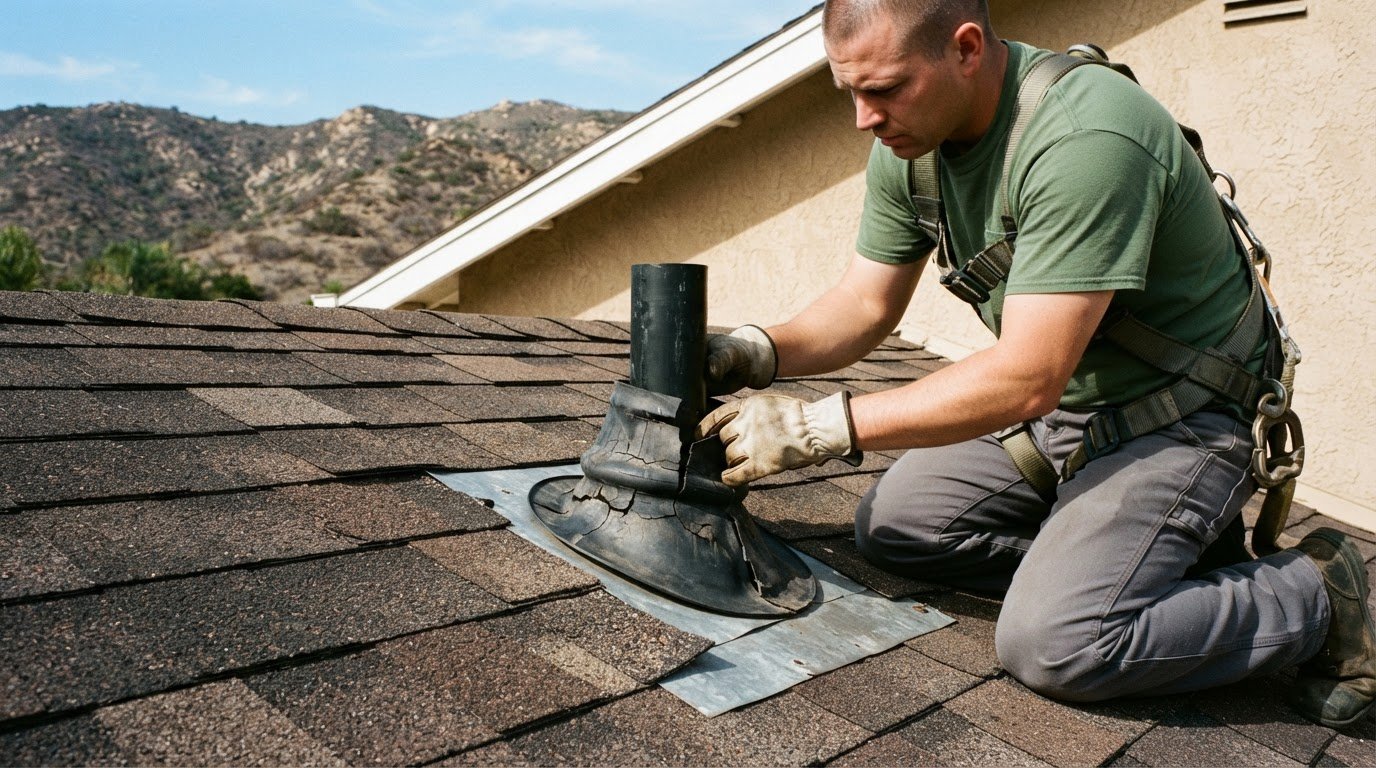
A ceiling stain may appear far from the roof vent where rain entered. For troubleshooting roof leaks around vents in El Cajon, start with the flashing, sealant, vent boot, and nearby roofing. The visible damage does not always reveal the entry point.
Water appearing during or after rain can indicate a leak, but attic condensation can also cause moisture and staining. Timing and patterns help distinguish the two. This guide covers common causes, clues to look for, and how to tell whether a localized repair may be enough or broader roof work may be needed.
Small openings around roof penetrations can let water beneath the roofing and allow damage to spread through the attic. Learn when it is safer to have the roof assessed rather than inspect it yourself. These considerations apply in El Cajon and nearby communities, including the Inland Empire, Los Angeles County, San Bernardino County, San Diego, Menifee, Temecula, Lake Elsinore, Canyon Lake, Corona, Anaheim, Moreno Valley, Winchester, Wildomar, Murrieta, Riverside, Orange, Huntington Beach, Fallbrook, Vista, Escondido, Carlsbad, and Poway. The goal is to understand what may be happening and which solution fits your roof.
Key Takeaways
- Look beyond the ceiling stain: water can travel through the attic before it becomes visible indoors.
- Rain-linked drips often point to a vulnerable vent boot, flashing, cap, or sealant, while moisture patterns can help distinguish a leak from condensation.
- Small gaps around roof penetrations can let water reach underlying materials, so the entry point matters even when the opening looks minor.
- A localized repair may address isolated flashing or boot damage; widespread wear or persistent moisture can call for broader roof work.
- Avoid climbing onto a hazardous roof, and have persistent leaks, extensive interior damage, or an unclear cause assessed professionally.
What Causes Roof Leaks Around Chimneys & Vents?
In El Cajon, a roof vent leak can begin where flashing, sealant, shingles, or a rubber boot no longer protect an opening. Include vent caps, flashing, and sealant in a regular roof inspection, and look for changes after a major storm.
Common Sources of Vent Leaks
A roof penetration is an opening where a vent pipe or other fixture passes through the roofing. Plumbing vent pipes release sewer gases outdoors and help maintain air pressure in the drainage system, so the roof junction needs a watertight seal. Cracked sealant, loose or poorly installed flashing, and missing or damaged vent caps can let rain reach the opening. Missing, cracked, or curled shingles nearby can also expose the underlayment and decking to moisture. A small defect around one pipe can cause damage beyond the visible opening.
Deteriorating Rubber Vent Boots
A rubber vent boot fits around a plumbing vent pipe and seals the space where it passes through the roof. Sunlight and temperature changes can crack or deteriorate the rubber. If the boot splits, water may run down the outside of the pipe and enter the attic, even when the pipe looks intact. From a safe vantage point, look for visible gaps or damaged roofing. Do not climb onto a wet, steep, or otherwise hazardous roof. A roofer can assess whether the boot or adjacent flashing needs replacement.
Resealing or Replacing a Leaking Vent
Resealing may address sound materials with a small sealant failure. Replace a boot, cap, or flashing assembly when it is cracked, deteriorated, or damaged. First identify the entry point, then examine the boot, flashing, nearby shingles, and roof decking for damage. Flashing should direct water over the shingles, with its upper portion beneath them. Applying caulk or roofing cement over a damaged boot may not provide a dependable long-term repair. A controlled hose test after resealing can help reveal whether water still enters, but it does not replace correcting damaged materials.
Roof Vent Inspections and Safety
During an inspection, the roofer checks vent caps, pipe boots, flashing edges, sealant, and surrounding shingles for cracks, looseness, or gaps. The attic can also reveal damp insulation or stained decking that points toward water intrusion. Homeowners should avoid climbing onto steep, wet, or otherwise unsafe roofs. If a temporary tarp is needed until permanent work can happen within a few days to a week, it should extend several inches beyond the affected area. Safe access matters: an inspection should never create another hazard.
Preventing Repeat Leaks
Regular inspections can catch deteriorating materials before rain reaches the roof opening. Include plumbing vent penetrations in your roof review, and inspect them again after a major storm. Check that caps remain in place and that flashing and sealant show no visible separation. In El Cajon, a clear view of the attic may reveal damp insulation or dark decking after rain. If water returns after a repair or the entry point remains unclear, arrange a professional assessment rather than repeatedly covering the same spot.
Why is my roof vent leaking when it rains?
Rain can enter through a gap in flashing, a damaged vent cap, or failed sealant around a roof penetration. In El Cajon, sun exposure and temperature changes can deteriorate sealant and vent materials, while wind-driven rain can push water through small openings.
Damaged Flashing, Caps, and Sealant
Flashing is the metal or protective material that directs water away from a roof vent opening. If it is cracked, loose, rusted, pulled away, or improperly installed, rain can pass beneath the roofing instead of draining over it. A missing or damaged cap may expose the vent opening, while cracked sealant can leave a gap around the flashing. During heavy rain, wind can force water through a defect that goes unnoticed in lighter weather.
Vent Boot and Flashing Repairs
A plumbing vent boot seals the roof around the pipe, while flashing guides water across the surrounding roofing. If the boot is split or the flashing has separated, replacing only the surface sealant may leave the entry point open. A proper repair addresses the damaged part and checks nearby materials for signs of water intrusion. The upper flashing should sit beneath surrounding shingles so water flows over, not under, the roof covering.
Watertight Flashing
Watertight flashing creates a protective junction between a vent pipe and the roof. It needs to fit closely and direct water away from the opening. Poor installation can reverse the water path, allowing rain beneath shingles or along the pipe into the attic. A roofer examines the boot, flashing overlap, adjacent shingles, and visible sealant together, because sealing one exposed edge may not correct a hidden gap.
Repairing or Replacing a Leaking Vent
A localized repair may be suitable when the vent remains sound and the leak comes from a flashing or sealant defect. Replace the boot, cap, or flashing assembly if it is cracked, deteriorated, or no longer fits securely. After addressing damaged materials, a controlled hose test can help identify continued water entry. Repeated leaks or damp decking call for a broader inspection, because water may have reached roofing materials beyond the vent.
For future prevention, include vent caps, flashing, boots, and sealant in an annual roof inspection, then review them again after a major storm. Avoid climbing onto wet or difficult-to-access roofing. If a leak persists or its source remains unclear, professional roof leak repair can help identify the failed connection and address the affected materials.
Distinguishing roof leaks from attic condensation
A roof leak brings water through a failure in the roofing system; attic condensation forms when moisture-laden indoor air meets cooler attic surfaces. In El Cajon, the timing, location, and pattern of moisture can help narrow the cause, but a ceiling stain alone won’t identify where water entered.
Start by noting when moisture appears. Dripping during or after rain points toward water intrusion, especially if it recurs near a roof vent. Condensation can develop without rainfall, often when indoor moisture reaches roof decking or other cool attic surfaces. One observation is not conclusive, so compare the timing with rain, household moisture, and visible attic conditions.
Look for patterns rather than relying on one stain. A roof leak may leave damp insulation or dark staining on the decking, with water tracking along rafters before reaching the ceiling. Peeling paint, bubbling drywall, or a musty odor can signal ongoing moisture, but these signs do not prove that a vent is the entry point. The visible interior mark may be some distance from the roof opening.
Condensation is more likely when moisture appears across several attic surfaces rather than beneath one isolated roof penetration. Bathroom and kitchen activities can add moisture to indoor air. The U.S. Environmental Protection Agency recommends exhausting bathroom and kitchen moisture outdoors, not into the attic. A bathroom fan that releases air into the attic can contribute to damp surfaces even when the roofing has no visible damage.
Use a careful sequence to assess the clues from a safe location:
- Record whether dripping or new staining appears during rain or afterward.
- Notice whether dampness clusters near one vent or appears across attic surfaces.
- Look for damp insulation and dark decking, without disturbing wet materials.
- Consider whether bathroom or kitchen moisture is being exhausted into the attic.
These observations can guide an inspection, but they do not replace one if water keeps returning. Rain-related moisture near a vent warrants attention to the roof opening and surrounding materials. Widespread dampness without a clear connection to rain calls for examining attic moisture sources and ventilation. Avoid climbing onto a hazardous roof. A roofer can trace the moisture path from interior signs to the affected roofing or attic conditions.
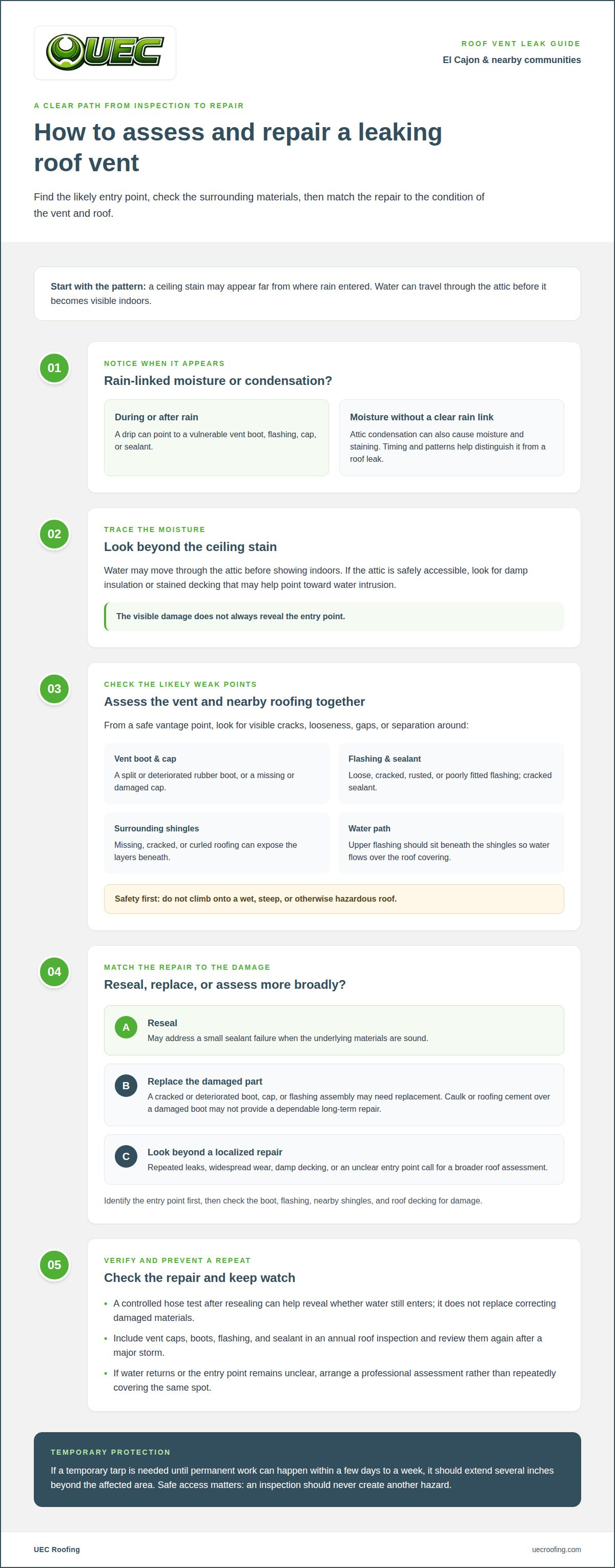
Why roof openings around vents can leak
A roof vent interrupts the roof’s otherwise continuous surface. The opening must let air or plumbing gases pass while keeping rain outside. Roofing materials, flashing, and the vent assembly work together to protect this boundary. If one layer separates, cracks, or shifts, moisture can enter beneath the visible surface. In El Cajon, a small defect may remain hidden until rain reaches the opening and follows the roof structure inward.
The key issue is the path water takes, not simply the size of the gap. Rain may pass beneath a lifted edge, move along a pipe, or travel over roof decking before appearing indoors. For example, a stain beside a ceiling light may trace back to a vent opening farther upslope. That distance makes the ceiling mark an unreliable guide to the entry point. Troubleshooting roof leaks around vents in El Cajon means considering the path between the opening and the interior stain.
Once moisture gets below the roofing, it can affect materials that look undamaged from outside. Damp insulation may lose some effectiveness, while persistent moisture can weaken roof decking and contribute to wood decay. Damp building materials can also create conditions that support mold growth when moisture remains unresolved. The longer water continues entering, the greater the chance that a localized opening will affect surrounding roof components.
Vent openings meet materials that move and weather differently. The pipe, boot, flashing, sealant, shingles, and underlayment all form part of the protective assembly. A split boot may let water run down the pipe, while a separated shingle edge may direct it beneath nearby roofing. Covering only the visible crack can leave another part of the water path untouched. When troubleshooting roof leaks around vents in El Cajon homes, the whole connection matters.
During an assessment, focus on the route moisture could follow rather than assuming the nearest roof opening is responsible. Useful clues include:
- Whether moisture appears during rain or continues in dry weather.
- Where damp insulation or dark decking appears in relation to vents.
- Whether water marks follow a rafter or framing member indoors.
- Whether the vent, surrounding roofing, and attic show related signs.
These clues can help distinguish a roof leak from another attic moisture source, but they do not prove the entry point by themselves. A roof professional traces the suspected route from interior evidence back through the attic and roof assembly. This matters when a stain appears away from the opening or a previous patch has not stopped the moisture.
When should a leaking roof vent be repaired versus replaced?
A vent leak may call for a localized repair when damage centers on a failed boot or flashing assembly and the surrounding roofing remains serviceable. Replace a vent component when it is cracked, deteriorated, or no longer protects the roof opening. Neither condition automatically requires replacing the entire roof. The decision depends on how far moisture has spread and whether nearby roofing materials remain sound.
For example, a split boot with intact surrounding shingles points toward replacing the boot and restoring the flashing connection. If the flashing has loosened but the vent and nearby roofing remain in good condition, correcting the flashing addresses the failed water path. A layer of roofing cement over damaged material is not a lasting substitute for replacing the failed component. The repair must close the entry point and preserve the roof’s drainage path.
Broader roof work becomes relevant when an inspection finds damage beyond the vent. Persistent moisture can weaken roof decking and contribute to wood decay. Damp insulation, dark decking, or water marks extending away from the penetration indicate that the issue needs assessment beyond the visible boot. If deterioration affects multiple roof areas, a professional evaluates whether repairs can restore protection or roof replacement is more appropriate.
Use these conditions to understand the likely scale of work:
- Localized repair: One vent boot or flashing assembly is damaged, with surrounding roofing intact.
- Component replacement: A cracked boot, damaged cap, or deteriorated flashing cannot protect the opening.
- Broader assessment: Moisture persists after repairs, the cause remains unclear, or interior water damage is extensive.
- Roof replacement discussion: Deterioration extends beyond the vent and affects the roof system more widely.
Interior signs help establish urgency, but a ceiling stain does not show the full extent of roof damage. Water can travel along decking or framing before appearing indoors. Persistent leaks, extensive water damage, or mold call for professional assessment. In El Cajon, have the roof evaluated before repeated patching allows moisture to keep affecting the decking or insulation. Avoid climbing onto a steep or wet roof to inspect the damage yourself.
For a leak that keeps returning, request a roof leak repair assessment to identify the damaged area and determine whether localized repair or broader work fits the roof’s condition.
UEC Roofing: leak repair
UEC Roofing provides leak repair when a roof vent leak persists, the source is unclear, or a previous patch has not resolved the problem. An assessment can help identify the affected area and determine whether the repair should address the vent or surrounding roofing.
With a brick-and-mortar location in Lake Elsinore and over 2,000 successful projects in the region, UEC Roofing serves homeowners across Southern California. Its Roofing Services include leak repair, roof repair, and roof tune ups to address immediate concerns and ongoing maintenance.
If a vent leak keeps returning or is difficult to locate, contact UEC Roofing to discuss leak repair. A clear assessment can help you choose a practical next step to protect your roof.
Protect Your Roof with a Clear Next Step
Troubleshooting roof leaks around vents in El Cajon starts with understanding what the roof needs now and what can help protect it over time. If moisture has returned or the source remains unclear, move from observation to a professional assessment before the damage spreads. A careful evaluation can help determine whether a targeted repair is suitable or broader work should be considered.
UEC Roofing offers leak repair, roofing services, and roof tune-ups to address roof concerns and ongoing maintenance. The right next step depends on the condition of the affected area and surrounding roofing, not just the visible stain. Addressing the issue early can help you make a more informed decision about protecting your home.
Contact UEC Roofing for help with a roof leak concern. A sound plan starts with a clear assessment, and taking that step can help you move forward with confidence.
Frequently Asked Questions
Roof Leak or Attic Condensation?
A roof leak brings rainwater through the roof assembly, while condensation forms when indoor moisture collects on cooler attic surfaces. The distinction matters: sealing a roof opening will not address excess indoor moisture, and changing ventilation will not repair a failed roof connection. Persistent moisture can have more than one source, so the remedy should match the conditions found in the attic and roofing.
What are common causes of roof leaks around plumbing vents and roof vents?
Along with vent boots and flashing, nearby chimney masonry can contribute to roof leaks. Cracked bricks, deteriorated mortar joints, or a damaged chimney crown may allow moisture into the structure. Older masonry can also become porous and absorb water. If a stain appears near both a chimney and a vent, note their positions separately. The visible ceiling mark alone may not identify which roof feature is involved.
How can I safely inspect and troubleshoot a roof leak around a vent?
Gather observations from indoors without accessing the roof. Note the room, the stain’s shape, when it changes, and whether the ceiling or wall feels damp. A dated photo can show whether the mark is growing. If you can safely view the attic from its access point, note visible wet materials without moving insulation or stepping onto ceiling surfaces. These records clarify the suspected location and timing.
How do you repair a leaking roof vent boot or flashing?
The repair should address the failed connection and any moisture damage around it. A roofing professional assesses whether the boot fits securely around the pipe, whether flashing directs water across the roof covering, and whether nearby decking remains sound. The surrounding materials help determine whether the repair can remain localized. Repeatedly adding surface sealant without correcting the underlying failure can leave the leak unresolved.
What California building code requirements apply to roof vent flashing and repairs?
California requirements depend on the project’s location and scope, so a general repair description should not be treated as code approval. For a vent repair in El Cajon, applicable provisions should be considered for the specific roof assembly and work involved. This is particularly relevant when work changes a roof penetration or its flashing. A project-specific review helps distinguish a sound repair method from compliance with applicable requirements.
What are the risks of DIY roof leak repairs and climbing onto a roof?
A fall is an immediate risk on steep, wet, or difficult-to-access roofing, and tools or foot traffic can damage roof materials. A repair made without locating the water path may conceal a problem while moisture continues to affect hidden materials. Do not climb up to place a patch or tarp. Record what you can safely observe indoors, and leave roof access and repair work to a qualified roofing professional.