
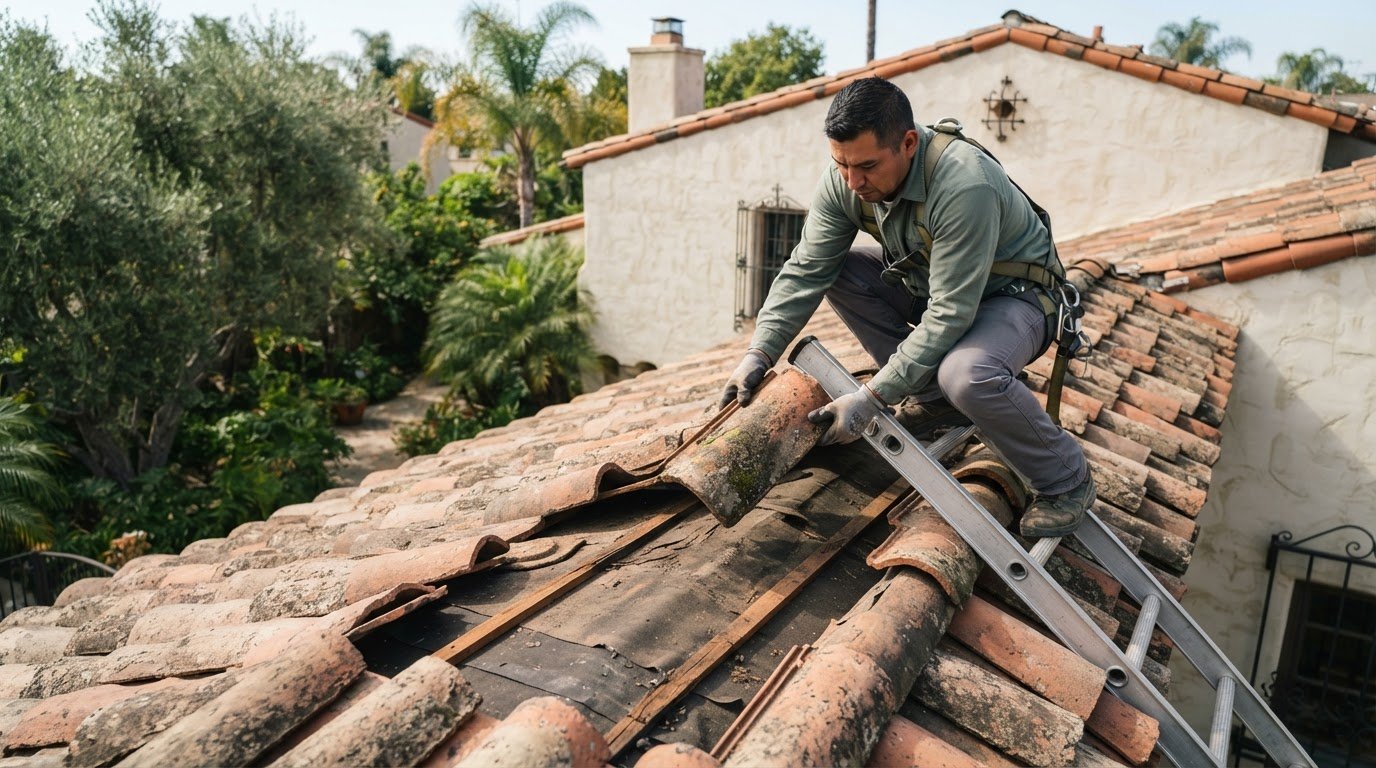
A historic roof needs more than a roofer who knows standard replacements. Choosing a roofer for a historic home in Corona means finding someone who understands period materials, can assess the roof’s condition, and can account for applicable local guidelines. These considerations matter for historic homes across Southern California, including the Inland Empire and communities in Riverside, Orange, San Diego, Los Angeles, and San Bernardino Counties.
It’s reasonable to want repairs that respect an older home’s character while addressing damage beneath the visible roofing. Tile, slate, wood, and metal each require careful assessment and work suited to the existing roof.
This guide explains how to assess a roofer’s experience with older homes, what to look for during a roof inspection, and how to identify local guidelines that may affect material choices. It focuses on practical considerations for homeowners in Corona, Lake Elsinore, and nearby communities.
Key Takeaways
- Look for roofing experience with the materials and methods that suit your home’s original roof, not just general replacement work.
- Use old plans, photographs, and other historical records to help identify the roof’s original materials and changes over time.
- Review a roofer’s examples and references from comparable historic-home projects to assess relevant experience.
- Check whether local preservation guidelines apply before deciding on roof materials or exterior changes.
- Arrange a professional assessment for signs of wear, leaks, or structural concerns; according to the U.S. Environmental Protection Agency, contractors working on pre-1978 homes must be EPA-certified when their work disturbs painted surfaces.
1. Finding a roofer experienced with historic roofs and specific materials
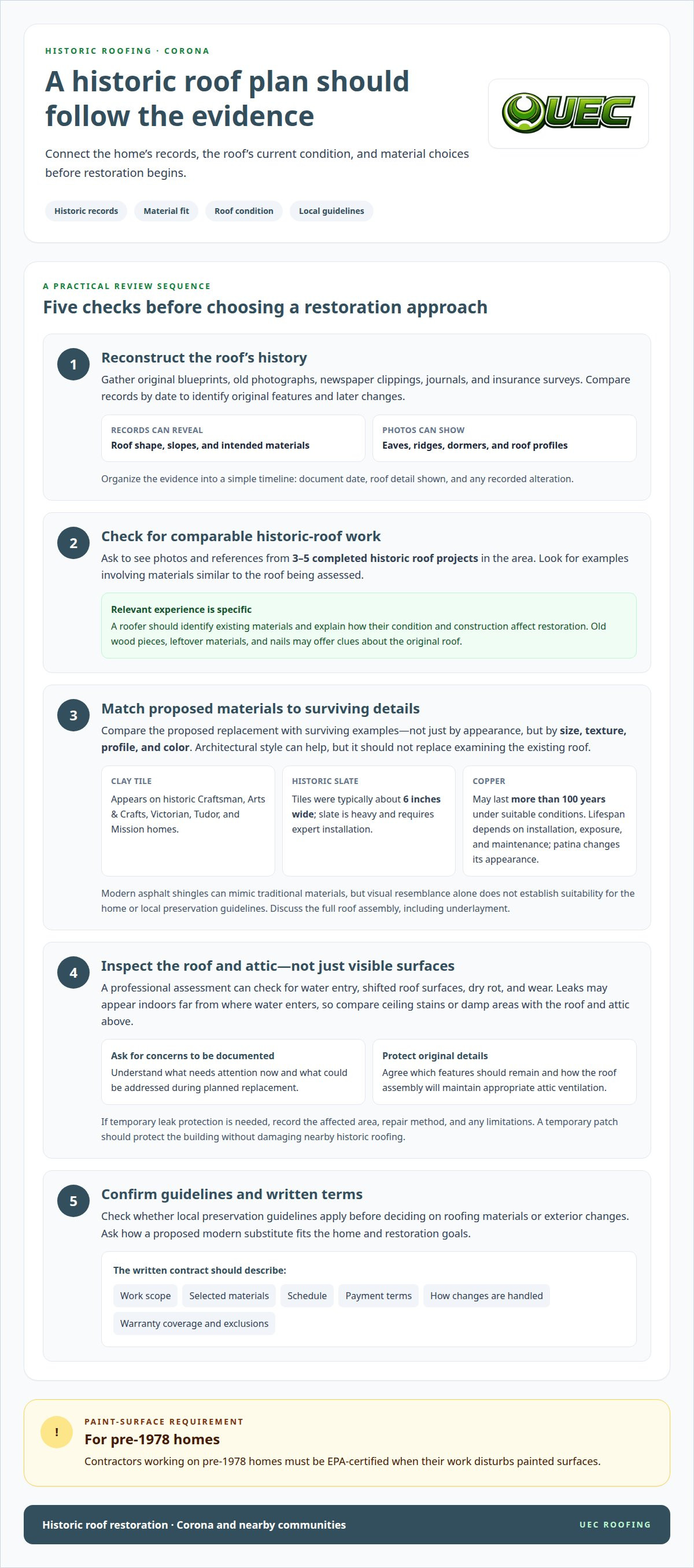
For homeowners choosing a roofer for a historic home in Corona, relevant experience means more than installing standard shingles. A roofer should be able to identify existing roofing materials and explain how their condition and construction affect restoration. Old wood pieces, leftover materials, and nails can offer clues about the original roof. Ask for photos and references from 3-5 completed historic roof projects in the area, then look for examples involving materials similar to yours.
Architectural style can help narrow down appropriate roofing materials, but it shouldn’t replace an examination of the existing roof. Clay tiles, for example, appear on historic Craftsman, Arts & Crafts, Victorian, Tudor, and Mission homes. Wood shingles were common from early colonial days into the 19th century. A roofer familiar with these materials can explain how the roof’s visible details, such as tile shape or shingle profile, relate to the home’s character.
Matching replacement materials to the original roof is a practical starting point for preserving a historic home’s appearance. Ask how the roofer will compare the proposed material with surviving examples, including its size, texture, profile, and color. Modern asphalt shingles can mimic traditional clay tile, slate, wood shingles, and historic shingle styles, but a visual resemblance alone doesn’t establish that a material suits your home or local preservation guidelines. Some historical organizations allow modern underlayment beneath traditional roofing materials, so discuss the full roof assembly, not just its visible surface.
Material knowledge matters because historic roofing has distinct properties. Historic slate tiles were typically about 6 inches wide, and slate requires expert installation because it is heavy. Copper roofing may last more than 100 years under suitable conditions, though its actual lifespan depends on factors such as installation, exposure, and maintenance. Its patina also changes the roof’s appearance over time. Ask a roofer to explain how the original material’s dimensions, installation details, and existing condition inform any proposed replacement. A thoughtful answer should distinguish preservation from simply choosing a product that resembles the old roof.
Expect the written contract to describe the work, selected roofing materials, schedule, payment terms, and how changes will be handled. It should also explain any workmanship or material warranties, including their coverage and exclusions. Review the actual terms before signing.
In Corona, compare the proposed approach with the specific details of your home’s roof, rather than relying on a general claim of historic-home experience. A useful discussion should connect evidence from your roof to the recommended materials and explain how the work will preserve its character. If the roofer proposes a modern substitute, ask what it changes visually and how it fits your restoration goals.
2. Who Can Restore My Historic Roof?
Start with records that can show how a Corona home looked before later repairs. Original blueprints may show the roof shape, slopes, and intended materials. Old photographs can reveal details such as eaves, ridges, dormers, and the profile of a metal roof. Newspaper clippings, journals, and insurance surveys may also document renovations or storm damage. Compare records by date to distinguish original features from later changes.
Next, organize the evidence into a simple timeline. Note each document’s date, the roof detail it shows, and any recorded alteration. A photograph from before a replacement, for example, may show a chimney or decorative edge that’s absent today. Share the timeline during a professional inspection so the roofer can consider historical evidence alongside the roof’s current condition.
Documents don’t tell the whole story. A close inspection can identify where water enters, whether roof surfaces have shifted, and whether underlying wood shows dry rot or wear. Leaks may appear indoors far from their entry point, so compare ceiling stains or damp areas with the roof and attic above them. Ask the roofer to document each concern and explain whether it needs attention now or can be addressed during planned replacement.
Historic restoration also requires care around original features. Removing sound materials unnecessarily can erase evidence of earlier construction, while a new roof assembly that blocks existing ventilation paths can contribute to trapped heat or moisture. Before work begins, agree on which features should remain, how vulnerable details will be protected, and how the proposed assembly will maintain appropriate attic ventilation. In Corona, the roofer’s inspection should address the home’s actual roof and attic, not assume every older house has the same construction.
Temporary repairs can protect the building while replacement plans take shape. A patch should control water entry without damaging nearby historic roofing or removing material that may be needed later. Ask for the affected area and repair method to be recorded, along with any limitations. This record helps distinguish temporary protection from the permanent restoration plan.
A historic roof can be harmed by rushed removal, careless handling, or replacement details that conceal original features. Poorly planned ventilation can also leave heat or moisture with fewer paths to escape. Clear documentation and an inspection based on the roof’s condition help identify these risks before replacement starts.
When an active leak needs attention during planning, roof repair can help limit water intrusion while preserving surrounding materials. The repair approach should account for the roof’s condition and the historic details documented during inspection.
Assess the available evidence. Restoration may need to follow local historic guidelines for exterior repairs and replacements. An inspection should identify dry rot and worn structures, so needed repairs can be included in the project.
3. Choosing a contractor experienced with historic homes
Experience with new construction doesn’t automatically prepare a roofer for historic homes. Look for projects involving materials and details comparable to yours, such as copper roofing, clay tiles, or a Mission-style roof. Ask how the roofer handles fragile materials, documents existing conditions, and adjusts the work if concealed damage appears. Specific answers matter more than a general claim of historic-home expertise.
Review a portfolio of completed projects and request references for 3-5 historic roof replacements in the area. Compare roof profiles, materials, and architectural details with your home. Ask references whether the contractor protected original features, explained changes to the work, and completed the agreed scope. Reviews from owners of historic properties can add useful context, especially when they describe restoration work rather than routine roofing.
According to the U.S. Environmental Protection Agency, Federal EPA RRP rules require contractors working on pre-1978 homes to be EPA-certified when their work disturbs painted surfaces. Discuss whether the planned work could disturb painted surfaces and how the contractor will address that requirement. This consideration is especially relevant when roof work includes painted trim or other exterior components.
Compare bids by matching their scope line by line. Ask what materials and installation methods each proposal includes, how the roofer will handle damaged sheathing or unexpected repairs, and what the schedule and payment terms cover. For example, a proposal that names clay tiles but doesn’t describe removal, underlayment, or protection of nearby details leaves important decisions unclear. Request written explanations for differences between proposals.
To verify a California contractor’s license, review the license details and status through the state’s official contractor licensing records. Request current insurance and bonding documentation, then verify the documents with the named insurer or bond provider. Check that the names and business details match the contractor presenting the bid. Keep copies with the contract and project records.
Before hiring, ask for references and photos of historic-home projects, then review customer feedback for details about the work. A completed copper roof or clay-tile restoration on a home of a comparable age or architectural style can show relevant experience. Ask references whether the contractor communicated clearly when the existing roof differed from expectations and how those findings affected the work.
Use the same questions for each candidate: Which historic roofs have you worked on? How will you protect original features? What findings could change the scope? The answers help distinguish a contractor prepared for historic restoration from one whose experience is limited to standard replacements.
4. Historic guidelines and local regulations
Before planning a roof project in Corona, find out whether the home has a historic designation or sits within a historic district. Properties in historic districts may face remodeling and building-code restrictions. That doesn’t mean every older Corona home has the same review requirements. Check the property’s designation and ask the relevant municipal authority whether roof work needs review or approval.
Ask which parts of the project are subject to review. A change from clay tile to another roofing material, for example, may alter the roof’s profile, texture, and color. A durable modern material can still look different from the roof that contributes to a home’s historic character. Preservation requirements may address visible roofing materials, finishes, or architectural details. Get the applicable criteria in writing before choosing materials or approving a proposal.
Local preservation groups and neighborhood associations can help identify guidance that applies to a property. Municipal authorities can explain the formal process and any required submissions. Provide the property address and a clear description of the proposed work, including whether it involves repair, replacement, or a visible material change. Ask whether photographs, material samples, drawings, or a description of the existing roof are needed. Requirements depend on the property and scope.
If a Certificate of Appropriateness is required, ask the reviewing authority how long the process typically takes and what materials must be submitted. Where the authority’s guidance or project timeline indicates that review may take several weeks, consider starting 8-12 weeks before the target roof installation date. This provides time to prepare materials and respond to review comments before work is scheduled. Build the review into the project timeline, rather than treating approval as a last-minute step. Keep copies of correspondence, submitted documents, and decisions with the roofing proposal.
Compare the proposed roof with both the home’s documented appearance and the authority’s criteria. For a Colonial-style house, the question may be whether the replacement preserves the roof’s established shape and visual character. For a home with clay tile, ask whether the proposed tile profile and finish align with applicable guidance. Don’t assume a material is acceptable simply because it resembles a historic product.
Keep the contractor’s scope aligned with any review conditions. If approval limits the material, finish, or visible details, the written proposal should reflect those requirements. A later substitution could change the project and require further discussion with the reviewing authority. Before signing, confirm that the proposed work, material descriptions, and project drawings match the reviewed plan.
Corona homeowners should treat preservation review and building-code requirements as related but distinct checks. Ask the municipal authority which approvals apply and what documentation it expects. Share those requirements with the roofer so the project plan accounts for local guidelines before materials are ordered or installation begins.
5. Inspecting older roofs before repairs
A professional inspection should establish the roof’s condition before repair work begins. The roofer should examine roof surfaces, flashings, edges, penetrations, and accessible attic areas. Ask for photographs and notes tied to specific locations. This record helps distinguish a local defect from broader wear and gives the repair plan a clear starting point. In Corona, sun exposure and attic conditions can also shape what the inspection needs to address.
Check for conditions that affect energy efficiency as well as water protection. In the attic, the roofer can look for blocked ventilation paths, damp insulation, or gaps around roof penetrations. These details can affect heat movement and moisture management. Ask how identified issues relate to the roof assembly and which repairs address the underlying cause, rather than only the visible symptom. The inspection should document observed conditions before recommending work.
Fire resistance deserves attention when the roof includes wood shingles or shakes. Depending on the product and local requirements, wood roofing may need periodic treatment to help reduce risks from fire, rot, or pests. Ask the roofer to record the material’s condition and any evidence of deterioration, then explain whether treatment or repair suits the existing roof. Don’t assume a roof’s age alone shows its current condition. Recommendations should connect to visible evidence.
Clay tiles can be vulnerable to the elements, so note cracked, displaced, or deteriorated pieces and check nearby areas for water entry. Metal roofing needs a different review. Assess seams, fasteners, penetrations, and areas where water may collect. On historic metal roofs, document features such as seam patterns and edge details before repairs alter them. These observations help preserve the roof’s character while identifying practical maintenance needs.
Ask the inspector to trace signs of moisture beyond the visible stain. Water can travel from its entry point before reaching ceilings or walls, so consider attic conditions alongside the roof surface. The roofer should also look for worn structures and dry rot, then explain how each concern relates to the proposed repair. A clear report separates observed damage from recommended work and identifies issues that may affect insulation or ventilation.
Weight matters if a repair plan proposes heavier materials. Before installing natural slate or tile on an older home, ask a roofer or structural engineer whether the structure can support the load. The assessment should consider the existing roof structure, not rely only on architectural style or similar nearby homes. Record the recommendation with the inspection findings, especially if the proposal changes the existing roofing system.
Use inspection findings to define the repair scope before work begins. If a leak or damaged area needs attention, discuss roof repair with a contractor who can relate the proposed work to documented conditions, energy concerns, and the roof’s fire-resistance needs.
UEC Roofing
UEC Roofing is a brick-and-mortar roofing company in Lake Elsinore, with over 2,000 successful projects across the region. For historic homes in Corona, its roofing work includes repairs, new roofs, rejuvenation, tile and shingle roofing. The right next step depends on the roof’s condition and your project needs, whether addressing a current issue or planning longer-term work.
Share your inspection findings, photographs, and any preservation requirements when discussing the project. UEC Roofing also provides leak repair and roof tune ups. Contact UEC Roofing to discuss your historic home’s roofing needs.
Plan the Next Step for Your Historic Roof
Turn the inspection findings into a clear project brief. Gather photographs, notes on observed damage, the home’s roof history, and any written direction from local preservation authorities. This gives the discussion concrete context and keeps decisions tied to the property’s condition and character. Choosing a roofer for a historic home in Corona means considering communication throughout the project, not just the initial recommendation. Make sure you understand the proposed scope and how changes will be explained before work proceeds.
UEC Roofing provides roofing services, including leak repair and roof tune ups, for homeowners addressing roof concerns. If you’re ready to discuss your inspection findings and the home’s next roofing needs, contact UEC Roofing. A thoughtful plan can help protect your home while respecting the features that make it distinctive. Take the next step with a clear sense of your priorities.
Frequently Asked Questions
Who Can Restore My Historic Roof?
A roofer with hands-on experience restoring older properties can assess the roof and plan appropriate work. In Corona, look for experience with the roof’s construction type, not just its visible surface. A restoration plan can separate urgent protection from longer-term preservation decisions. Ask how the roofer will record existing conditions and explain any proposed changes before work begins.
What roofing materials are appropriate for historic homes in Corona, California?
The home’s original roofing material and architectural character are useful starting points, but the roof structure and applicable local guidelines also matter. Historic roofs may feature tile, slate, wood, metal, or asphalt, depending on the home’s age and style. A material that looks similar may still differ in weight, profile, or installation needs. Base the choice on the existing roof evidence and the property’s requirements.
Does Corona have historic preservation rules or design review requirements for roof replacement?
Historic review in Corona depends on the property’s designation or district status and the proposed work. An older home isn’t automatically subject to the same review as a designated historic property. Ask the City of Corona which approvals, design reviews, or permits apply to the specific address and scope. Get the applicable requirements before selecting materials or setting the project plan.
What experience should a roofer have with historic homes and traditional roofing materials?
Choose a roofer who can show relevant work on historic properties and explain how their methods suit traditional roofing materials. A useful portfolio includes projects with comparable roof features, not only homes of a similar age. Ask how the contractor documents existing conditions, handles concealed issues, and explains changes to the agreed scope. Clear answers help you judge whether their experience fits your home.