
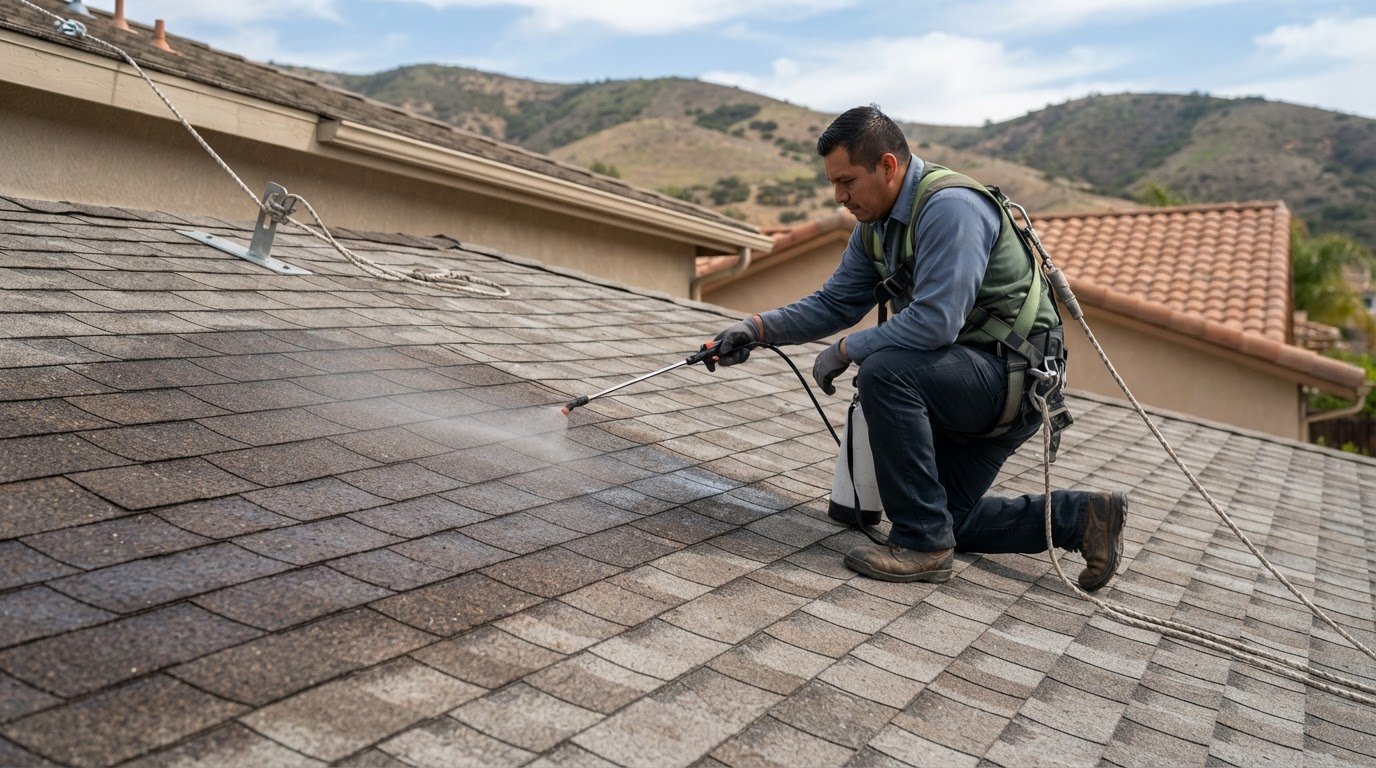
A cleaner-looking roof isn’t necessarily a healthier shingle roof. Cleaning removes surface dirt and growth; roof rejuvenation for asphalt shingles in Murrieta is a treatment intended to address aging shingles. They solve different problems, so the right option depends on the roof’s condition.
That distinction matters in Murrieta, where inland heat and repeated temperature changes can contribute to shingle wear. This guide explains how heat affects asphalt shingles and what a professional assessment considers before recommending cleaning, repairs, or rejuvenation.
You’ll also learn what shapes an estimate, how repairs fit into treatment planning, and what to expect during application and recovery. The price depends on the roof and project scope, and is provided after a quote request; roof size, shingle condition, necessary repairs, and treatment needs all affect the estimate.
Key Takeaways
- Distinguish surface cleaning from rejuvenation by the roof problem each approach addresses.
- Learn how Murrieta’s inland heat and temperature swings can contribute to shingle aging.
- Recognize why granule loss and reduced flexibility matter when assessing asphalt shingles.
- Understand how roof condition, repairs, and project scope shape an estimate.
- Know what to expect during treatment and the recovery period that follows.
What's the difference between roof cleaning and rejuvenation?
Roof cleaning removes dirt, debris, and surface growth; rejuvenation applies a treatment intended to address aging asphalt shingles. Cleaning changes the roof’s surface condition, while treatment is aimed at the shingles themselves. Neither step replaces an inspection. In Murrieta, California, which had 110,949 residents in the 2020 census according to the U.S. Census Bureau, roof condition and project scope matter more than appearance alone.
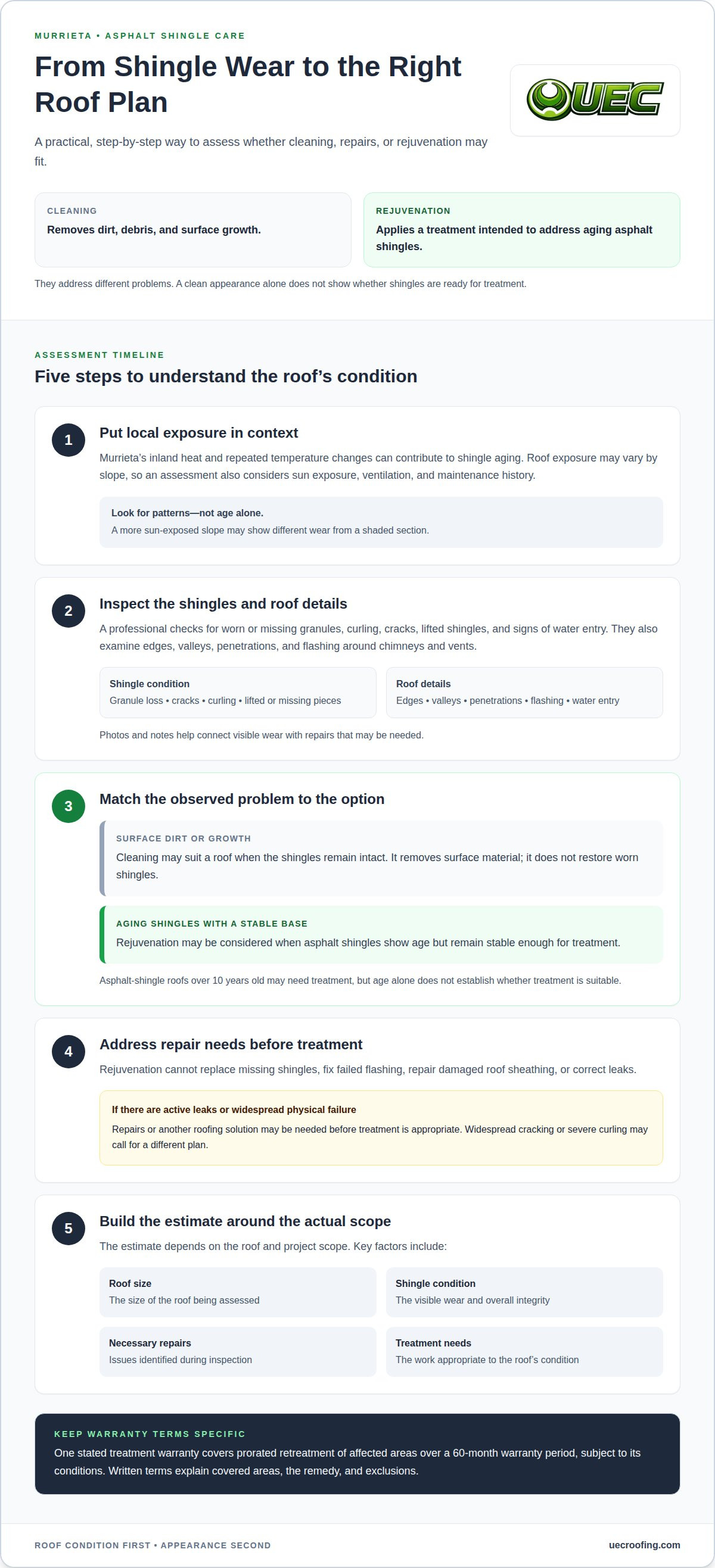
A sound assessment starts with the roof’s overall condition. A roofing professional examines the surface for worn or missing granules, curling, cracks, lifted shingles, and signs of water entry. They also inspect edges, valleys, penetrations, and flashing, where small defects can lead to larger problems. Photos and notes help connect visible wear with necessary repairs.
Cleaning may suit a roof with surface dirt or biological growth if its shingles remain intact. Rejuvenation may be considered when asphalt shingles show age but still provide a stable base for treatment. It cannot replace missing shingles, repair failed flashing, or correct damaged roof sheathing. If an inspection finds active leaks or widespread physical failure, repairs or another roofing solution may be needed before treatment is appropriate.
A roof tune-up assessment also considers flashing around chimneys, vents, and other penetrations. The professional checks whether flashing is loose, damaged, or allowing water past the roof surface. Addressing these details helps distinguish a maintenance issue from shingle aging. A clean appearance alone doesn’t show that a roof is ready for treatment.
There is no single treatment lifespan or warranty that applies to every provider. One stated treatment warranty covers prorated retreatment of affected areas over a 60-month warranty period, subject to its conditions. The written terms matter: they describe covered areas, remedy, and exclusions.
Rejuvenation cannot correct leaks, replace missing shingles, or repair damaged decking. Cleaning has limits too: it removes surface material but does not restore worn shingles. A careful inspection identifies the issue before work begins.
Whether a specific license applies to roof rejuvenation work in California depends on the work being performed. The term “roof rejuvenation” alone doesn’t establish a contractor’s qualifications, so consider the actual scope of work when assessing a provider.
Murrieta re-roof permits concern roof replacement rather than simply cleaning or treating an existing surface. The City of Murrieta’s residential re-roof process uses the DS-147 application for online applications and requires two inspections: roof sheathing and final. That distinction helps homeowners understand why an inspection and surface assessment should come before deciding whether rejuvenation fits.
Roof aging from inland heat and thermal cycling
Murrieta’s inland climate exposes asphalt shingles to heat and repeated temperature changes. These conditions can contribute to aging, so assess visible wear along with the roof’s overall integrity.
Cracking, Curling, and Oxidation
Cracks, curled edges, and changes in the shingle surface can signal aging. During an inspection, a roofing professional looks across roof slopes and checks whether damage is isolated or widespread. For example, curling near a roof edge differs from cracking across several areas. The pattern helps determine whether repair, treatment, or roof replacement merits consideration.
Thermal cycling means roofing materials warm and cool as conditions change. Repeated expansion and contraction can place stress on aging shingles and their surrounding components. Murrieta’s California Climate Zone 10 setting gives local inspections useful context, but the roof’s actual exposure, ventilation, and maintenance history also matter.
Visible Shingle Aging
Look for uneven surfaces, missing granules, brittle-looking edges, and shingles that no longer lie flat. A professional also checks for loose or missing pieces around ridges, valleys, and roof penetrations. These details help distinguish ordinary surface wear from damage that may affect the roof’s ability to shed water.
Age alone does not establish whether treatment is suitable. Asphalt-shingle roofs over 10 years old may need treatment, but the inspection must also assess the shingles’ condition. Treatment is not a substitute for replacing failed materials or addressing leaks. A roof with widespread cracking or severe curling may need a different plan to protect the underlying structure.
Oxidation can accompany aging and may show up as changes in the shingle surface. Granule loss is another sign to assess, especially when exposed areas differ across a slope. A roofing professional records where these signs occur and whether the wear is localized or consistent across the roof. This gives a clearer picture than judging from the ground.
Murrieta’s heat can make roof exposure uneven. A slope with greater sun exposure may show a different wear pattern from a shaded section. An inspection compares these areas and considers nearby trees, roof orientation, and attic ventilation. These observations help explain why two slopes on one home may not show the same degree of aging.
When shingles retain their integrity, targeted maintenance may address limited concerns. When deterioration affects broad areas or leaves the roof unable to protect the home, replacement may be the more appropriate long-term solution. A reliable assessment connects observed wear to the roof’s condition instead of relying on appearance alone.
Granule retention and shingle flexibility
Granule coverage and flexibility offer practical clues about asphalt-shingle condition. For roof rejuvenation for asphalt shingles in Murrieta, a professional considers these signs alongside the roof’s overall condition.
Granule Retention and Loss
Granules create the textured surface of asphalt shingles. During an inspection, the roofing professional looks for bald spots, uneven coverage, and granules gathered near downspouts or in gutters. A small amount in one location may mean something different from widespread loss across a slope. The pattern and location help show whether wear is concentrated or more extensive.
Homeowners may notice granules collecting after weather or roof work, but that alone doesn’t explain the cause. The professional compares affected areas with nearby shingles and considers roof edges, valleys, and other transitions. This helps distinguish localized wear from a broader change in the roofing surface.
Shingle Flexibility
Flexibility describes whether shingles retain their ability to move without cracking. A professional looks for brittle-looking edges, fractured corners, and shingles that have lost their shape. Homeowners shouldn’t bend or handle shingles to test them, since direct handling can cause damage. A visual assessment helps show whether the material remains suitable for treatment or needs another kind of attention.
Granule coverage and flexibility inform different parts of the assessment. A roof may have some granule loss while its shingles remain intact, or brittleness alongside surface wear. For example, a few worn shingles differ from deterioration across several roof areas. A professional records both observations before recommending a treatment plan.
Granule Adhesion
Granule adhesion refers to how firmly granules remain attached to the shingle surface. An inspector compares areas where granules appear to be shedding with adjacent shingles. Concentrated loss near an edge may call for a different assessment than similar wear across multiple slopes. This comparison provides useful context about the roof’s current condition.
A rejuvenation treatment for aging shingles uses millions of micro-beads of natural oil to penetrate old, brittle roofing. That does not mean every roof with granule loss is suitable for treatment. The shingle condition and pattern of wear still matter. An inspection establishes whether the material is appropriate for treatment or whether repairs should come first.
Murrieta homeowners considering roof rejuvenation for asphalt shingles can use granule retention and flexibility as assessment factors, not as a diagnosis on their own. A professional evaluates how those signs appear across the roof and whether they coincide with other visible wear. This broader view connects the roof’s condition with a practical next step.
Repair planning, estimates, and project timelines
Repair planning starts by identifying the source and extent of roof damage. A clear scope separates necessary repairs from treatment preparation.
Repair Planning and Estimates
A roofing contractor assesses the affected shingles, roof penetrations, flashing, and signs of water intrusion. For a leak near a vent, the visible stain may not reveal exactly where water enters. The inspection traces the issue across nearby materials before planning repairs. This defines the work instead of treating only the symptom.
Before rejuvenation treatment, damaged shingles and active leaks need attention. Preparation may include correcting loose or failed flashing and replacing shingles that cannot provide a sound surface. A professional records recommended repairs separately from treatment, so homeowners can see what each part of the project addresses.
Fascia and soffit condition also matters when planning roof work. These components meet the roof edge and can show water damage or deterioration affecting nearby materials. The assessment should document visible damage, its location, and whether it connects to a roof leak. That scope clarifies whether edge repairs belong in the same project.
To detect a leak, the contractor examines the roof above and around interior water marks. Water can travel along roof components before appearing indoors, so the stain alone does not identify the entry point. A documented inspection connects visible evidence with the repair location and helps avoid a patch that leaves the source unresolved.
Project Timelines and Repair Costs
Project timing depends on the repair scope, roof access, material needs, and whether treatment follows the repairs. A focused repair and a project involving multiple damaged areas require different planning. The estimate should identify the work sequence, including which repairs must be completed before treatment.
Roof repair costs in Murrieta depend on the damage, materials, roof layout, access, and extent of work. The estimate depends on the project and is provided after a quote request. A leak affecting one roof penetration differs from widespread shingle damage or repairs involving underlying materials.
Estimates are most useful when they describe the exact work, affected areas, and preparation required. Homeowners can use those details to understand what the project addresses and what falls outside its scope. Treatment may help extend the service life of suitable shingles, but it does not replace repairs needed to restore roof integrity.
Before work begins, the professional can explain the repair sequence and how each step affects the planned treatment. This keeps leak repair, surface preparation, and application aligned with the roof’s condition. Clear planning helps homeowners understand the project and distinguish a treatment estimate from the cost of correcting roof damage.
Treatment application and recovery time
Professional application follows roof preparation and focuses on suitable asphalt shingles. In Murrieta, the stated application time is typically less than two hours, while recovery takes longer.
Treatment Application
Before applying treatment, the roofing professional confirms that planned repairs are complete and the shingle surface is ready. This sequence matters: applying treatment over unresolved damage won’t repair a leak or replace a failed shingle. The assessment also identifies the roof areas included, so the work follows the agreed scope.
The treatment is applied to aging asphalt shingles, not used as a substitute for cleaning or repair. The professional works across the selected surface and considers how the roof’s layout affects coverage. Steep sections, roof penetrations, and areas with different exposure each require attention during application.
Before work begins, homeowners should understand what the project includes. The treatment plan should identify the roof areas being treated and any repairs that must come first. It should also explain what recovery means for the roofing system, rather than suggesting that application alone immediately restores every part of the roof.
Application Time and Recovery
The stated application time for Roof Rejuvenate is typically less than two hours. This refers to application, not a promise that every roof project takes the same amount of time from inspection through completion. Roof size, access, and preparation affect the overall schedule.
The stated recovery timeframe is that a treated roof’s flexibility and waterproofing protection return within 72 hours. This is distinct from the time spent applying the treatment. Homeowners should confirm the expected recovery period with their roofing professional and follow instructions for the treated roof during that time.
Timing also depends on the work that comes before treatment. If a roof needs leak repair or other preparation, those steps belong in the project schedule first. For example, a roof with a damaged area needs repair planning before treatment is applied to the remaining suitable shingles.
A careful schedule separates inspection, repairs, application, and recovery. That makes it easier to understand when treatment occurs and when the stated 72-hour recovery period ends. It also prevents a quick application from being mistaken for a complete project timeline.
For a clear plan around preparation and application, discuss roof treatment planning for your Murrieta home.
UEC Roofing
UEC Roofing helps homeowners assess roof wear and plan a practical next step, whether that means a roof tune-up, roof repair, or leak repair. With a brick-and-mortar location in Lake Elsinore and more than 2,000 successful projects in the region, the company serves homeowners across the Inland Empire and Riverside, Orange, San Diego, Los Angeles, and San Bernardino Counties.
For Murrieta homeowners, a roof assessment can clarify which work best fits the roof’s condition and priorities. Contact UEC Roofing to discuss your roof and its next steps.
Make a Clear Plan for Your Roof
Your roof helps protect your home and contributes to its long-term value. A sound decision matches the next step to the roof’s actual condition, rather than choosing treatment simply because the surface looks worn. For roof rejuvenation for asphalt shingles in Murrieta, a professional assessment can clarify what belongs in the plan and what should happen first.
Bring your observations into the conversation: where you’ve noticed wear, whether water has appeared indoors, and what roof work has already been completed. Those details help focus the discussion on your home and priorities. UEC Roofing can help you consider the next step with care and straightforward guidance.
Contact UEC Roofing to discuss your roof and take a considered step toward protecting your home.
Frequently Asked Questions
How Does It Work?
A professional first determines whether the existing asphalt shingles are suitable for treatment. The roof is assessed for damage, and necessary repairs are completed before application. Treatment is then applied to the selected shingle areas. This process works with the existing roofing rather than replacing it. Homeowners should understand which roof sections are included and what conditions the treatment is intended to address.
What is asphalt shingle roof rejuvenation and how does it work?
Asphalt shingle roof rejuvenation is a treatment applied to existing shingles, not a cleaning method or a replacement roof. It is intended for aging shingles that remain suitable for treatment. The professional assesses the roof and applies the product across the agreed areas. For example, a roof with aging shingles and separate flashing issues needs those issues identified as distinct parts of the work plan.
How much does asphalt shingle roof rejuvenation cost in Murrieta, California?
The estimate depends on the specific roof and project scope, including roof size and layout, shingle condition, access, and any repairs or preparation needed before treatment. A roof with several areas requiring repair involves different work from one needing treatment alone. A useful estimate explains which areas are covered and separates repair work from treatment.
Does roof rejuvenation restore shingles or extend roof life compared with replacement?
Rejuvenation treats existing shingles, but it doesn’t replace missing or physically damaged materials. It may help extend the service life of suitable shingles, while replacement installs a new roofing system. The appropriate choice depends on the roof’s condition and extent of deterioration. For example, isolated damaged sections may call for repairs, while widespread failure can make replacement a more appropriate long-term option.
What types and ages of asphalt shingles are suitable for rejuvenation?
Suitability depends more on the shingle’s current condition than on age alone. Treatment may be considered for aging asphalt shingles that remain intact, while severe cracking, missing sections, or failed underlying materials require a different plan. A professional evaluates the shingle type, visible wear, and roof condition before recommending treatment. The assessment also identifies repairs to complete first.
How can homeowners tell whether a roof needs rejuvenation, repairs, or replacement?
The pattern and severity of damage help distinguish the options. Localized damage, such as a small area of missing shingles, may call for repair; aging shingles that remain intact may be treatment candidates. Widespread deterioration can indicate that replacement merits consideration. Interior water stains are useful clues, but they don’t establish the roof’s full condition or identify every needed repair.
What steps are involved in a roof rejuvenation inspection and treatment?
The process generally moves from assessment to scope, preparation, application, and care instructions. Before the inspection, homeowners can share past repair records and point out where they have noticed leaks or surface changes. The professional evaluates the roof, identifies required repairs, and explains which areas are included. After the work, homeowners receive guidance on the treatment’s recovery period and any applicable written terms.
Do Murrieta’s climate and local conditions affect asphalt shingle rejuvenation?
Yes. Murrieta’s inland heat and sun exposure can contribute to uneven wear across roof slopes, so an assessment should consider roof orientation and shading. Nearby trees, roof design, and attic ventilation can also affect different sections. These local factors help a professional evaluate shingles across the whole roof instead of assuming every slope has aged in the same way.