
Do you have to cut open a wall to find a roof leak? Usually, no. A roof leak detection service in El Cajon can often narrow down the source through non-invasive inspection before any wall opening is considered, though the visible water stain may not be directly below the roof entry point.
It’s reasonable to want a clear diagnosis without unnecessary damage to your home. This guide explains how acoustic testing and moisture meters can help trace moisture, what inspection can reveal before repairs begin, and when opening part of a wall may still be needed to reach concealed damage.
You’ll also learn which El Cajon and East County areas are covered and what information helps a roofing professional assess the problem. The goal is a careful path from signs of a leak to a practical repair decision, with your home’s protection in view.
Key Takeaways
- A roof leak often can be traced without cutting into a wall; inspection findings help determine whether opening an area is needed to reach concealed damage.
- Moisture readings can help locate damp areas, while acoustic testing is suited to detecting pressurized water escaping through concrete, not tracing a roof leak by itself.
- The listed service area includes El Cajon ZIP codes 92019, 92020, and 92021, as well as Santee and La Mesa.
- Water stains may appear away from the roof entry point, so a careful assessment considers the roof and the path moisture may have taken.
- Inspection costs depend on the type and scope of assessment; learn which factors affect the work before deciding on the next step.
Acoustic leak detection and moisture meters
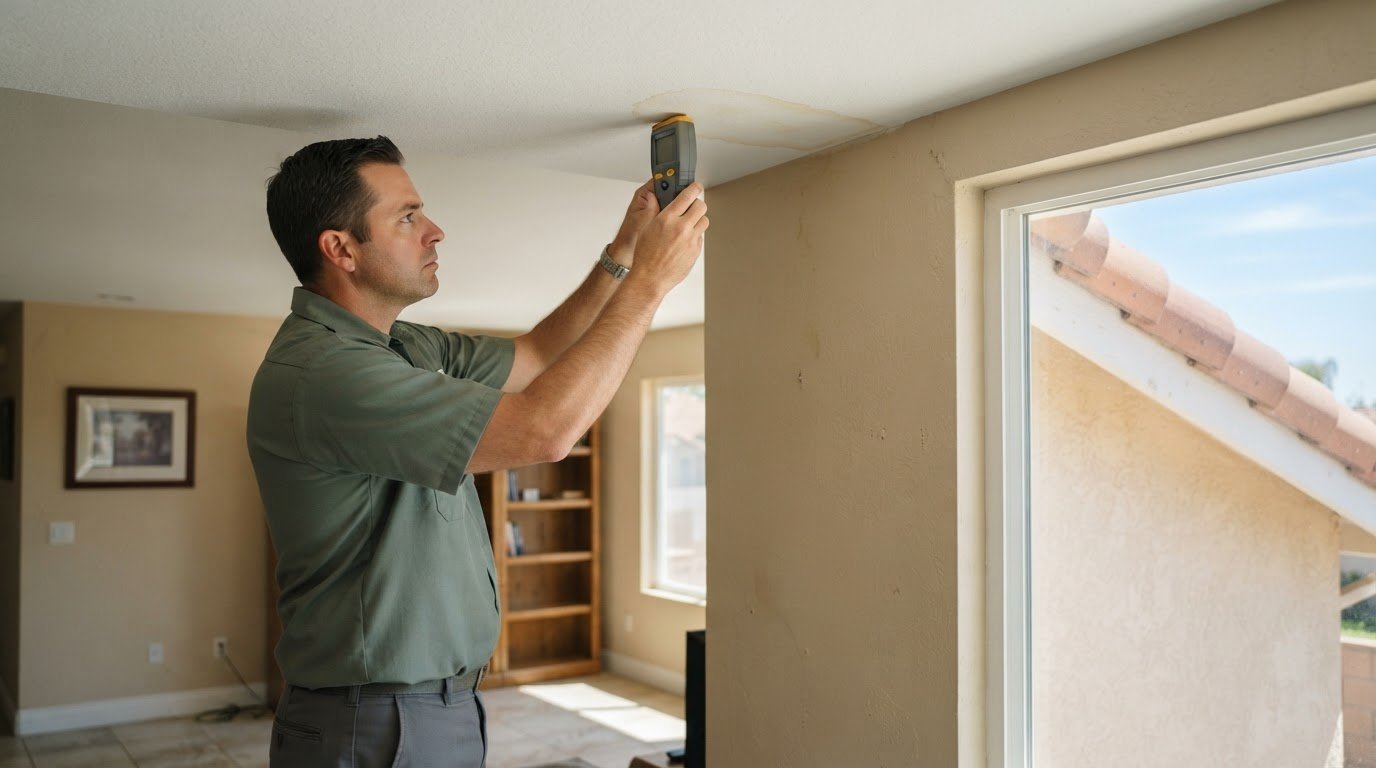
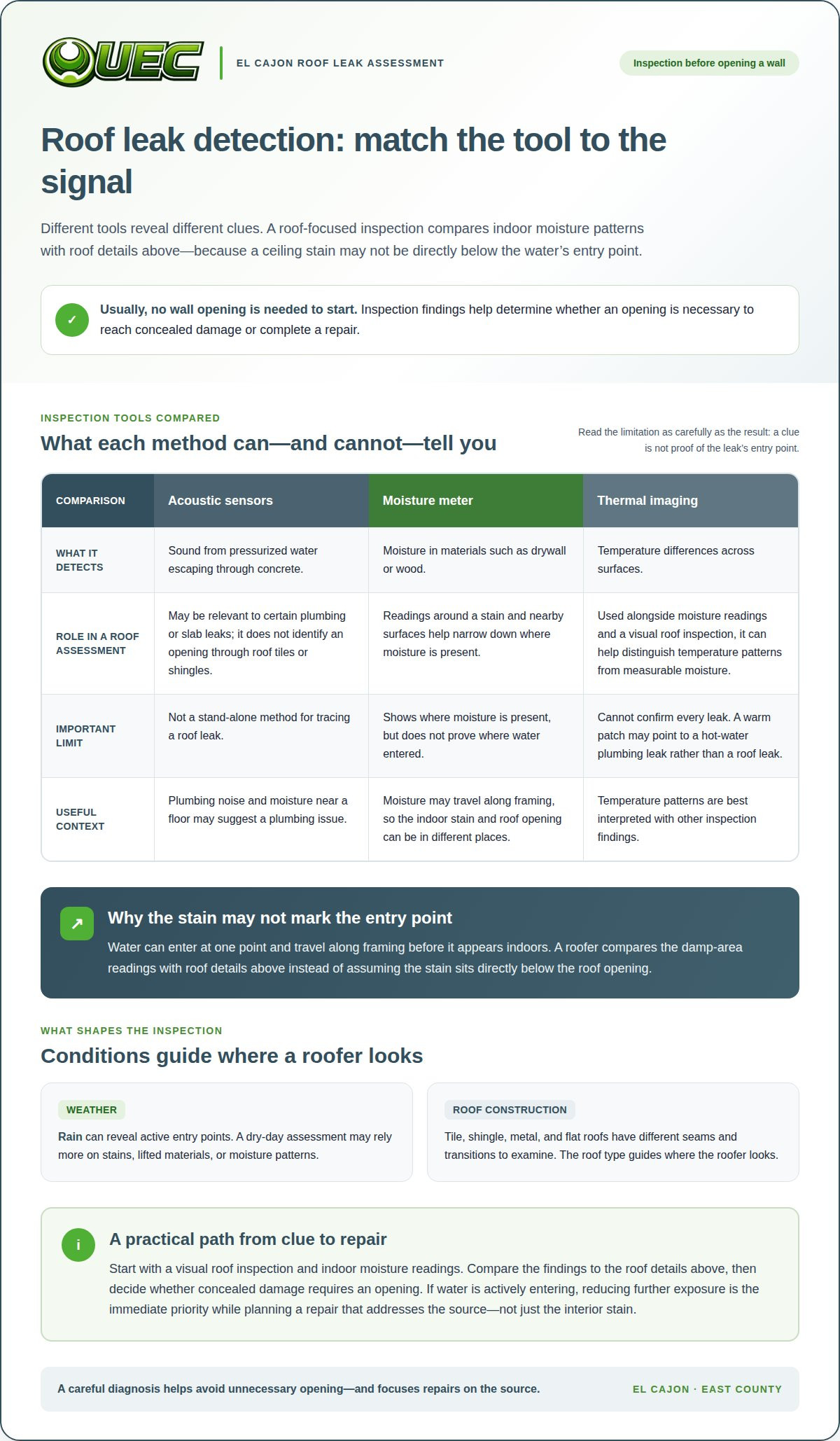
A roof leak usually doesn’t require cutting open a wall to locate its likely entry point. In El Cajon, a roofer can inspect the roof and use a moisture meter to map damp areas indoors, then compare those readings with roof details above. An opening may still be needed to reach concealed damage or complete a repair, but it isn’t automatically the first step.
Acoustic sensors have a specific role. Ground microphones can help locate pressurized water escaping through concrete, making them relevant to certain plumbing or slab leaks. They don’t identify an opening through roof tiles or shingles. For example, plumbing noise and moisture near a floor may suggest a plumbing issue, while a ceiling stain beneath a roof calls for a roof-focused inspection.
A moisture meter measures moisture in materials such as drywall or wood. A roofer can take readings around a ceiling stain and nearby surfaces to narrow down the damp area. The readings help show where moisture is present, but they don’t prove where water entered. A roof leak can travel along framing before appearing indoors, so the stain and the roof opening may be in different places.
Thermal imaging shows temperature differences, but it cannot confirm every leak. A warm patch on flooring may point to a hot-water plumbing leak, not a roof leak. Used alongside moisture readings and a visual roof inspection, an infrared image can help distinguish temperature patterns from areas with measurable moisture.
Does homeowners insurance cover roof leak detection and repairs in California? Coverage depends on the policy and the cause of the damage. A policy may treat resulting water damage differently from the repair itself, so homeowners should review the relevant coverage terms for their claim.
Do roof leak detection companies in El Cajon offer emergency service? Emergency response depends on a company’s scheduling arrangements, not on the detection tools used. When arranging service, describe whether water is actively entering and which areas are affected.
El Cajon’s local weather and roof construction affect how an inspection proceeds. Rain can reveal active entry points, while a dry-day assessment may rely more on stains, lifted materials, or moisture patterns. Tile, shingle, metal, and flat roofs also have different seams and transitions to examine; the roof type helps guide where a roofer looks.
How can a roofer limit water damage before repairs begin? The roofer can document wet areas, trace the likely path from the roof, and identify exposed materials that need attention. If water is actively entering, the immediate priority is to reduce further exposure while planning a repair that addresses the source, not just the interior stain.
El Cajon and East County service areas
Location details help establish whether a property falls within an inspection area. In El Cajon, the listed ZIP codes are 92019, 92020, and 92021. Those codes cover distinct parts of the city, so include the full street address when describing a leak. A ZIP code is a useful starting point, but the property location gives the clearest context for planning an assessment.
East County communities named in the service area focus primarily on El Cajon neighborhoods and immediate surroundings. These locations are within the wider San Diego area, but nearby addresses can still fall under different municipal boundaries. Giving the city and ZIP code together helps confirm which community the property belongs to for your roof leak detection service El Cajon.
- El Cajon: 92019, 92020, and 92021
- Fletcher Hills: 92020
- Bostonia: 92021
- Rancho San Diego: 92019
Neighborhood names add useful detail within El Cajon. Fletcher Hills is listed with ZIP code 92020, Bostonia with 92021, and Rancho San Diego with 92019. For example, a homeowner in Bostonia can provide both “Bostonia” and “92021,” rather than relying on the broader label “El Cajon.” That extra location detail reduces ambiguity when discussing the property and its roof.
El Cajon is part of a wider Southern California setting that includes the Inland Empire and communities in Riverside, Orange, San Diego, Los Angeles, and San Bernardino Counties. Lake Elsinore is another recognizable local reference in this regional context. These names can help describe where a property sits in relation to the wider area, but the property’s own city and ZIP code remain the most precise details for an inspection request.
For homes near a city boundary, use the mailing city and ZIP code shown for the property. A nearby landmark or neighborhood name can help clarify the location, but it shouldn’t replace the street address. This is especially useful around El Cajon communities sharing ZIP codes, such as Fletcher Hills and the wider 92020 area. Clear details also help keep notes about water damage tied to the correct property.
Before arranging an assessment, gather the property’s city, ZIP code, and a brief description of the affected rooms. Note whether the issue appears after rain or near plumbing fixtures, such as a toilet. These details help frame the concern without assuming its cause. To review local roofing information from UEC Roofing, use the location details that best identify your property.
Common leak sources
A ceiling stain in an El Cajon home can point to several roof details, not just damaged roofing material. Common sources include cracked or displaced tiles, damaged shingles, worn flashing, and roof penetrations. Water may enter at one point, then travel along framing before appearing indoors. That path can make the stain’s location misleading.
Roof covering damage is one place an inspection examines. A cracked tile or lifted shingle can expose the layers beneath it to rain. On a tile roof, the visible tile may be intact while the underlayment below has deteriorated. On a shingle roof, a damaged area near a roof edge can let water reach the deck.
Flashing protects transitions where roofing meets a wall, chimney, vent, or other raised feature. Loose or worn flashing can create a narrow entry point that is difficult to see from the ground. For example, a ceiling stain near a chimney may lead the inspection toward the chimney flashing rather than the roof surface directly above the stain.
Roof valleys and drainage details deserve attention after rain. Valleys channel water down adjoining roof sections, so damaged material or debris can interrupt drainage. Gutters and downspouts also affect how water flows around the roof edge. A leaking gutter alone doesn’t prove a roof leak, but overflow near a fascia or soffit can leave water damage worth examining.
Some indoor signs point toward plumbing rather than roofing. A leak near a bathroom, for example, may relate to a supply line or drain instead of roof materials. A slab leak can affect flooring or create moisture away from the plumbing break. A roofer can compare the affected room, visible roof details, and moisture patterns to help distinguish these possibilities.
For a San Diego County home, an inspection should connect each symptom to a plausible entry route. The roofer can document stained ceilings, check roof penetrations and transitions, and examine damaged materials. A mark that appears after rain near an exterior wall suggests a different area to inspect than persistent moisture below a bathroom fixture.
- Roof covering: Look for displaced tiles, damaged shingles, or exposed underlayment.
- Transitions: Examine flashing at chimneys, walls, vents, and roof valleys.
- Drainage: Note overflow or water damage near gutters, fascia, and soffits.
- Plumbing: Compare moisture near fixtures with roof-related signs before identifying the source.
A careful assessment narrows likely sources before repair planning begins. Recording when a leak appears, such as during rain or near plumbing use, gives the roofer a useful diagnostic clue. The aim is to identify the entry point and related damage, not simply cover the visible stain.
Company experience and credentials
For an El Cajon roof assessment, look for a clear diagnostic process. A professional should connect visible symptoms with roof details, explain which inspection methods fit the property, and distinguish roof moisture from plumbing concerns. If a ceiling stain appears beneath a valley, for example, the roofer should assess that transition instead of assuming the stain marks the entry point.
What questions should I ask before hiring a roof leak detection service in El Cajon? Ask how the inspection will distinguish a roof leak from plumbing moisture, what evidence supports the suspected source, and what the written findings will include. Also ask whether the proposed work addresses the entry point or only the visible interior damage.
Credentials and experience are useful context, but neither replaces a property-specific explanation. Ask who will inspect the roof, what relevant training or credentials that person holds, and whether the assessment covers the roof type installed at your home. A tile roof in El Cajon has different visible components from a flat roof, so the inspection should account for its materials and transitions.
Clear findings should connect observations to a practical next step. For example, a report might identify displaced roofing near a vent, moisture beneath the affected area, and the repair needed to address the suspected entry. If the evidence instead points toward a plumbing line, the assessment should explain that distinction rather than label every wet surface a roof problem.
Ask how the professional assesses hidden moisture and uncertain source locations. Moisture beneath roofing or ceiling materials can extend beyond the visible mark. A careful assessment separates observed conditions from conclusions, then explains what further access would establish. That detail helps you understand whether opening an area is necessary for repair, rather than assuming wall cuts are part of every inspection.
Acoustic testing also needs the right context. Ground microphones can help locate pressurized water escaping through concrete, but that method concerns plumbing leaks, not roof openings. For suspected slab leaks, ask how the findings distinguish a water line beneath the flooring from water entering through the roof. The explanation should make the method’s purpose clear.
Before approving work, look for a defined scope that separates detection from repair. It should state the suspected location, evidence gathered, areas needing access, and proposed next action. In a home with a ceiling stain near a bathroom, for example, that distinction helps clarify whether the concern involves roof materials, plumbing fixtures, or both.
- Process: Which inspection methods fit the roof and reported symptoms?
- Evidence: What observations support the suspected source?
- Scope: What work is detection, and what work is repair?
- Access: What would opening a wall or ceiling reveal?
These questions make experience measurable through the quality of the explanation. A sound assessment links El Cajon roof conditions, inspection evidence, and the proposed next step without confusing slab leaks with roofing concerns.
Do El Cajon roofers charge for roof inspections or leak assessments?
Some El Cajon roof inspections and leak assessments carry a charge, especially when locating the source requires more than a visual review. A basic inspection and electronic detection involve different scopes. For roofing work, the price depends on the case and is given after a quote request; factors include roof type, access, suspected leak location, and the assessment required.
The scope matters. A visual inspection may focus on roof coverings, flashing, valleys, and visible interior signs. A more involved assessment may compare moisture readings across affected areas or examine hard-to-reach roof details. A tile roof with a ceiling stain near a wall, for example, calls for different inspection points than a flat roof with water near a drain.
Acoustic testing for plumbing is not the same as a roof assessment. Ground microphones help locate pressurized water escaping through concrete, while a roof assessment examines roofing materials and transitions. If moisture appears beneath flooring, the suspected source may differ from a ceiling stain after rain. The method selected should match the evidence and the building area involved.
Before work begins, ask what the assessment includes and what findings you’ll receive. A clear scope should distinguish inspection from repair, identify accessible areas, and explain whether further access is needed. For example, a roofer may locate a likely entry point at flashing but still need to open a ceiling section to inspect concealed damage. Detection and repair are separate decisions.
- Inspection scope: Which roof areas and indoor signs will be examined?
- Detection method: What method fits the suspected source and roof type?
- Written findings: Will the assessment describe observations and recommended next steps?
- Access: Could inspection or repair require opening a ceiling or wall?
El Cajon homeowners can help make an assessment more focused by sharing the property location, roof type if known, and where water appears. Include whether the stain follows rainfall or continues during dry weather. A ceiling mark after rain near a vent gives a different diagnostic clue than persistent moisture beside a bathroom fixture.
Ask whether the proposed work is limited to locating the source or includes a repair. A separate repair scope should describe the affected roof area and the work intended to address the entry point. This distinction helps prevent confusion between stopping water at the roof and treating interior staining.
If a roof leak is affecting your home, request an assessment and discuss repair options. A defined scope, relevant inspection method, and clear findings help you make an informed decision about protecting the roof and interior.
UEC Roofing: leak repair
UEC Roofing provides leak repair and roof repair when an assessment points to a roofing source. As a brick-and-mortar business based in Lake Elsinore, the company has completed over 2,000 projects in the region. That local experience supports practical recommendations for protecting Southern California homes.
Depending on the roof’s condition, next steps may include a focused repair, a roof tune-up, rejuvenation, or a full roof replacement. UEC Roofing works with tile and shingle roofing, including Eagle Roofing product for tile and Owen’s Corning product for shingle. Its roofing services also include metal, foam, and flat roofing systems, as well as commercial TPO systems using Johns Manville product.
Contact UEC Roofing about leak detection to discuss your roof and possible next steps.
Protect your roof with a clear next step
A recurring stain or fresh sign of moisture is a reason to move from observation to a professional assessment. For homeowners seeking a roof leak detection service in El Cajon, the next step is to connect the suspected source with work that addresses the roof itself. Clear findings can help distinguish a targeted repair from broader maintenance needs.
UEC Roofing provides leak repair, roofing services, and roof tune-ups to address roofing concerns and ongoing maintenance. The right option depends on what the roof assessment identifies. Addressing the source, rather than only the interior mark, keeps attention on protecting your home and the roof’s long-term condition.
Contact UEC Roofing about leak detection to discuss the concern and next steps. A careful start can put your El Cajon home on a more confident path toward a sound roof.
Frequently Asked Questions
Do you have to cut open walls to find a leak in El Cajon?
No, opening a wall isn’t usually the starting point for locating a roof leak. The key distinction is between tracing the likely entry point and gaining access to concealed damage. For example, a roofer may identify a roof detail associated with a ceiling stain, then determine whether a small interior opening would help assess the repair area. The need for access depends on what must be reached.
How do I know if I have a hidden water leak in El Cajon?
Look at the pattern: symptoms that follow rainfall suggest a different cause from moisture that appears regardless of weather. A continuously running water heater, warm flooring, or a rising water bill can point toward a hot-water plumbing leak. These clues don’t establish a roof problem. A professional assessment can compare the timing and location of symptoms to determine which system needs attention.
Can a small water leak really cause major damage?
Yes. Even a slow leak can repeatedly wet the same building materials, increasing the affected area over time. A small mark near a ceiling corner, for example, may conceal moisture beyond the visible stain. The concern is not just the amount of water at one moment, but how often materials become wet and whether they can dry between incidents. Persistent moisture merits prompt assessment, and water damage specialists like DK Production Restoration often emphasize that rapid mitigation and structural drying are critical to prevent deep-seated rot.
What is the fastest way for a roofer to confirm a water leak?
A focused assessment starts with the symptom pattern and the roof area most relevant to it. The roofer can compare reported conditions, such as water appearing during rain, with accessible roof details and interior evidence. Sharing when the issue occurs and which rooms are affected helps narrow the inspection. Clear findings should identify the suspected source and explain the supporting evidence.
Which roof leak detection services operate in El Cajon, CA?
UEC Roofing provides roofing services in El Cajon, including leak repair and roof repair. Homeowners can describe the property location, roof type, and reported problem to frame the work. For instance, a recurring ceiling stain calls for a different repair discussion than damage visible on roof materials. The service area is local, and the recommended roofing work depends on the condition identified.
What roof leak detection methods do El Cajon contractors use?
Methods depend on whether the suspected source is the roof or plumbing. Roof assessments may involve visual examination and moisture readings, while acoustic detection can help locate pressurized water escaping through concrete. Thermal imaging can show a warm pattern associated with a hot-water leak beneath flooring. These tools answer different questions, so the suspected system guides which method is relevant.
How quickly can a roofer inspect an active leak in El Cajon?
Inspection timing depends on scheduling, roof access, and conditions at the property. For an active leak, describe whether water is entering now, which rooms are affected, and whether rain is occurring. Those details help establish the urgency and scope of the visit. A wet or difficult-to-access roof can also affect inspection planning, so discuss the conditions when arranging service.
How can I compare roof leak detection contractors in California?
Review licensing and insurance separately, then check whether the written scope clearly distinguishes detection from repair. A useful scope explains the work proposed, the areas involved, and the basis for the recommendation. Consider whether the explanation distinguishes roofing concerns from plumbing issues instead of treating every sign of moisture as a roof leak.