
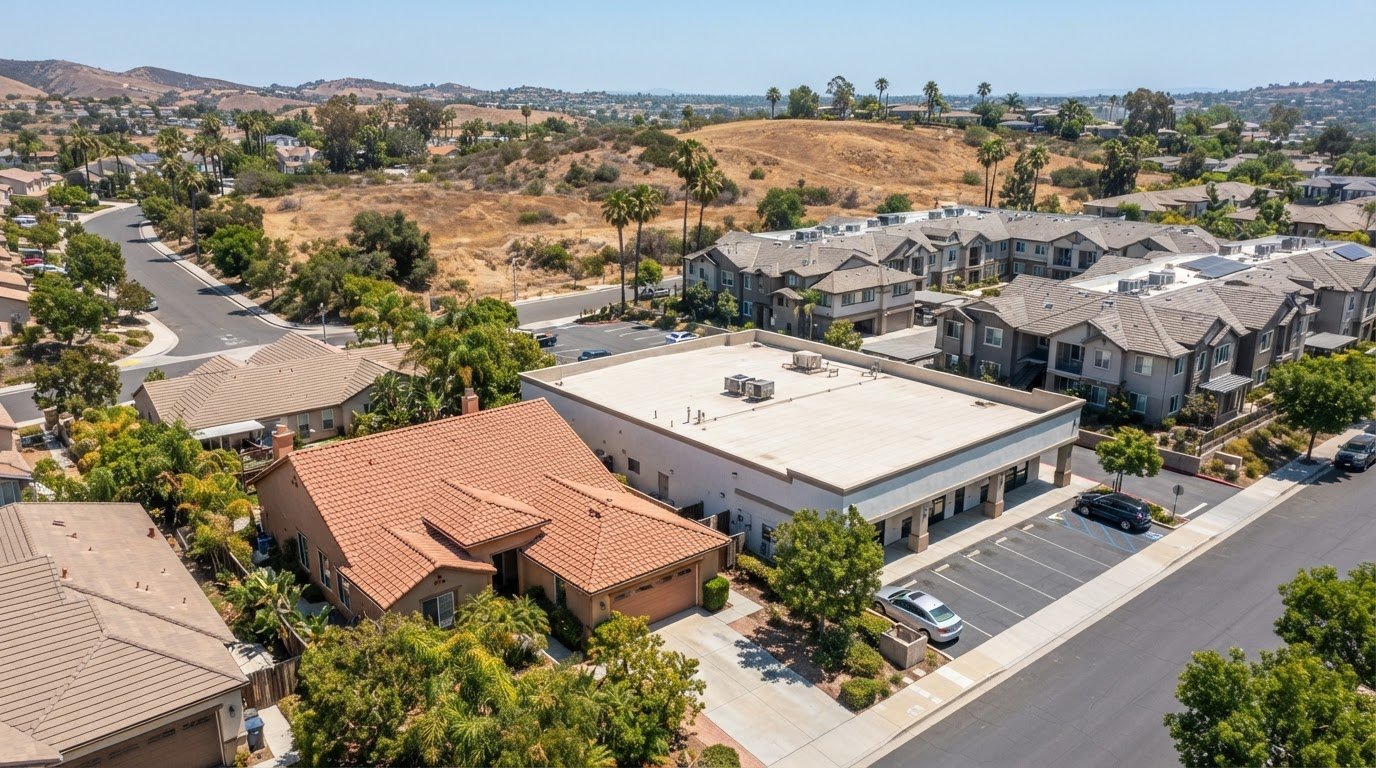
Choosing the best-rated roofers near El Cajon starts with finding a team whose work fits your property, whether it’s a home, commercial building, or multi-family complex. El Cajon’s summer temperatures regularly exceed 100°F in the valley, and roof surfaces can reach 150°F or higher on peak days.
It’s reasonable to want more than a quick fix: a roof must protect a building through intense sun and changing conditions. The right roofing plan depends on the roof’s condition, material, and needs, from a targeted repair to a full replacement.
This guide explains what residential, commercial, and multi-family roofing can involve near El Cajon, what to consider when planning repairs or replacement, and how routine inspections can help spot concerns early. You’ll also learn how local experience and a clear understanding of the property’s needs can support a sound, long-term roofing decision.
Key Takeaways
- Match the roofing plan to the property: a single-family home, commercial building, and multi-family complex can each have different needs.
- Understand how licensing, insurance, and warranty terms contribute to a clear, accountable roofing project.
- Learn how repairs, replacement, inspections, and maintenance address different roof conditions and support long-term protection.
- Recognize warning signs of roofing scams and use practical steps to protect your property and decision-making.
- See how a local roofing company’s service area and available repair options can help guide your next step.
Licensing, insurance, and warranties
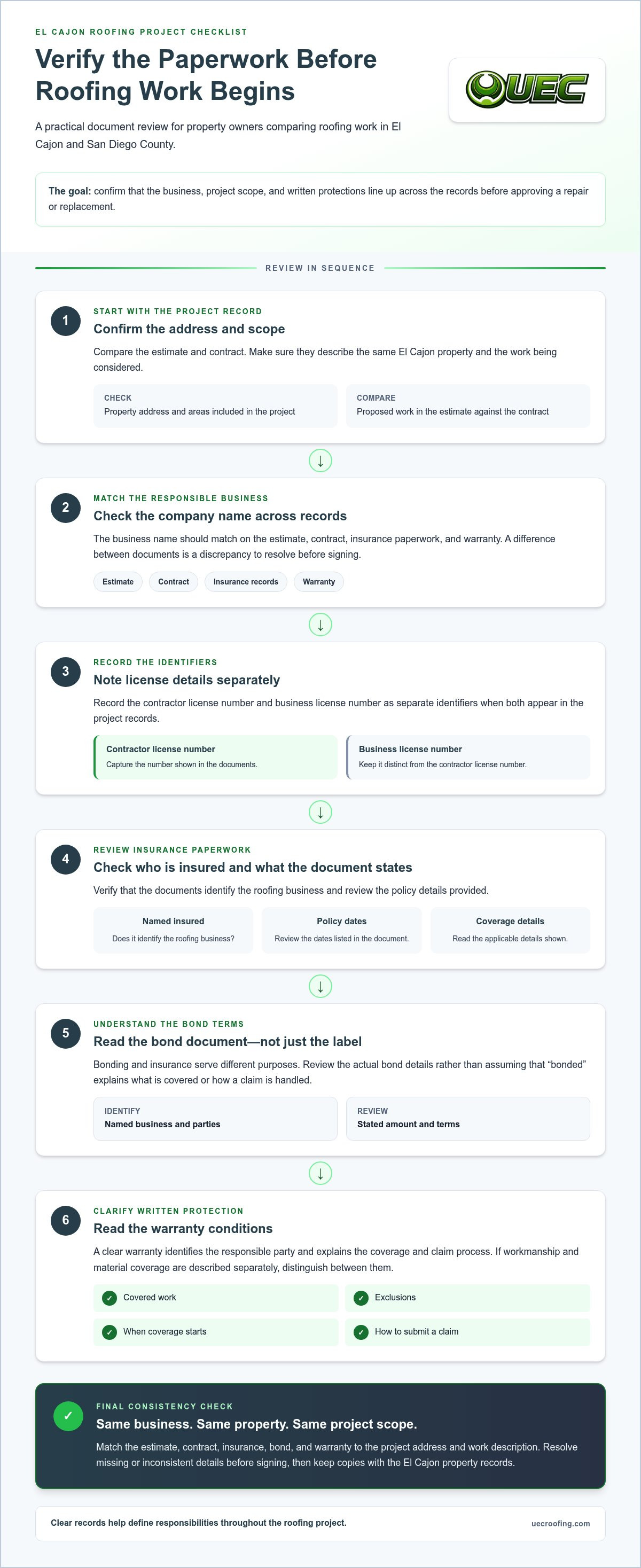
When comparing roofers near El Cajon, review the contractor’s identifying details, insurance documents, and written warranty before work begins. These records clarify which business is responsible, what protection applies, and how the agreement defines the work.
A reliable choice starts with paperwork that matches the company name and project address. Compare the estimate, contract, and insurance documents line by line instead of relying on a verbal explanation.
Licensing and Insurance
Look for contractor and business license numbers wherever they appear in the project records. Treat each as an identifying detail, not a substitute for reviewing the full agreement. The company name should match across the estimate, contract, and insurance paperwork.
Check that insurance documents identify the roofing business and include applicable policy details, such as coverage dates and the named insured. If the estimate lists one business name but the insurance document lists another, resolve the discrepancy before signing. Keep copies with the El Cajon property records.
Bonding and Warranties
Bonding and insurance serve different purposes. Read the bond document for the named business, stated amount, and terms, then compare those details with the contract. Don’t assume that the word “bonded” explains what the bond covers or how a claim would be handled.
Review the warranty for covered work, exclusions, when coverage starts, and how to submit a claim. Distinguish workmanship coverage from material coverage if the documents describe them separately. A clear written warranty identifies the responsible party and explains which records the property owner should keep.
Before approving a repair or replacement, make a short checklist of the contractor’s business name, any license numbers listed, insurance details, bond terms, and warranty conditions. Match each item to the same project address and scope. This comparison can reveal missing or inconsistent information without relying on broad claims.
- Business identity: Match the legal business name across the estimate, contract, insurance records, and warranty.
- License details: Record the contractor license number and business license number as separate identifiers when both appear.
- Insurance: Review the named insured, policy dates, and coverage details shown in the documents.
- Bonding: Read the bond’s named parties, amount, and stated terms instead of treating “bonded” as a complete explanation.
- Warranty: Note what work is covered, what is excluded, and how the written claim process works.
For San Diego County properties, organize these records with the roofing contract and project notes. If a document names a different business or describes a different scope, pause the paperwork review until the discrepancy is resolved. Clear records make it easier to understand responsibilities during the project and later, if warranty questions arise.
Residential, commercial, and multi-family roofing
El Cajon properties need roofing plans suited to the building’s use and roof design. A house, commercial building, and apartment complex can require different scopes, even when the concerns seem similar. Identify the property type, roof material, and issue before planning work. These details help define what the project needs to address.
For a home, the roof protects living space and belongings. An assessment can consider visible roof conditions alongside indoor signs, such as water marks. Commercial projects need a clear description of the roof areas involved. On multi-family buildings, shared roof work can affect several units, so communication about the scope matters.
UEC Roofing works with tile, shingle, and TPO roofing. The appropriate material depends on the building and project. If your home has a tile roof, describe the existing system and the concern rather than assuming another material is appropriate. Commercial property owners can note whether their building has a TPO roof when discussing the work.
A written scope should identify the property and the areas of work. For an apartment complex, it can specify which buildings or shared sections are included. For a business, it can describe the roof areas covered. For a home, it can distinguish a localized repair from a broader project. Clear descriptions make the proposed work easier to understand.
- Residential: Note the roof material, visible changes, and interior signs, such as ceiling discoloration.
- Commercial: Identify the building areas involved and whether the roof is tile, shingle, or TPO.
- Multi-family: Record which buildings or shared roof sections need attention and how residents will receive project information.
Keep roofing records current. Note visible damage, previous work, and areas where water has appeared indoors. For a shingle roof, record where the concern is and whether it appears in one area or several sections. These observations give an assessment a useful starting point without assuming every roof needs the same work.
A sound roofing plan connects the building’s use, existing material, and specific concern. Before approving a project, check that the written scope names the areas involved and describes the work plainly. A roofing project plan can help organize those property details for a home, business, or multi-family building.
Roof repairs, replacements, inspections, and maintenance
In El Cajon, the roof’s condition helps determine whether repair, maintenance, or replacement is the practical next step. An assessment can clarify the concern and identify the areas involved.
Roof Installation and Replacement
For residential roof installation or replacement, consider the existing material, visible condition, and areas needing attention. A full roof replacement in El Cajon typically takes 1-2 days, depending on the property size and roofing materials. The project plan should identify included roof areas and explain how the selected material relates to the home.
Replacement isn’t the only possible approach. In some circumstances, building code permits a roof system to be re-covered before total replacement is required. Whether that approach fits depends on the existing roof and proposed work. A useful assessment explains the observed condition and why repair, re-covering, or replacement is appropriate.
When assessing the best rated roofers near El Cajon, consider whether the recommendation connects the roof’s condition to the proposed work. The scope should identify the relevant areas and clarify whether the project involves a repair, re-covering, or replacement. This makes it easier to understand what the work addresses before approving it.
Roof Repairs and Leak Detection
A repair assessment should connect visible damage with the likely point of water entry. A ceiling stain, for example, can help identify the affected area, though the source may be elsewhere on the roof. An inspection should trace the concern across relevant sections and explain which materials or details need attention.
Leak repair, tile replacement, and felt replacement address different roofing concerns. The appropriate work depends on the roof material and location of the damage. Ask for the affected area and proposed repair to be described clearly, so the scope addresses the roof issue rather than only the indoor symptom.
Plan periodic roof inspections, preferably twice a year. At least one professional roof inspection per year is recommended for El Cajon homes. Keep notes on leaks, visible changes, and previous repair areas. These records can help focus later inspections on changes since the previous assessment.
Roof coatings and torch-down systems need to be assessed in relation to the existing roof and intended work. The assessment should identify the area involved and explain how the proposed approach relates to the roof system. Coatings or torch-down work are not universal solutions for every leak or roof condition.
- Before an assessment: Note where water appears indoors and record visible roof changes from a safe location.
- During the review: Identify which roof area and material the proposed work addresses.
- After work: Keep the project scope and repair details with the property’s roofing records.
A defined scope, clear explanation, and maintenance record connect the roof’s condition to the next step. Check that the written work description matches the areas discussed and the repair or replacement being considered.
Company background and service area
A roofing company’s local presence gives readers useful context when considering work near El Cajon. UEC Roofing has a brick-and-mortar location in Lake Elsinore, providing a specific Southern California connection. Its regional project record includes more than 2,000 successful projects. These facts help describe the company’s background, while the property’s location and roofing needs remain central to planning a project.
UEC Roofing serves Riverside County and surrounding communities, including El Cajon, San Diego, Riverside, Menifee, Temecula, and Lake Elsinore. Other named communities include Anaheim, Orange, Carlsbad, Vista, and Poway. These locations provide context for property owners considering roofing work in Southern California. The city and building type help establish the details relevant to each project.
Regional familiarity matters because roof conditions and building needs vary from property to property. For an El Cajon home, identify the roof material and the specific concern before discussing a project. The company’s confirmed materials include tile, shingle, and TPO. For example, a property owner with a tile roof can describe the current roof system and the issue needing attention, giving the project discussion a clear starting point.
Southern California service areas include communities across the Inland Empire and surrounding regions. Riverside, Orange, and San Diego are among the named localities. Lake Elsinore provides another location reference, while El Cajon is a relevant community for this article. These locations should be treated as distinct places, not as proof that each property has the same roof design or project requirements.
Use a few practical details to connect a roofing company’s background with your property:
- Property location: Name the city, such as El Cajon, and identify the property type.
- Roof system: Describe whether the existing roof is tile, shingle, or TPO.
- Project concern: Explain the observed issue or planned work in direct terms.
- Written scope: Compare the proposed work with the roof areas and concerns discussed.
A brick-and-mortar presence in Lake Elsinore and a track record of more than 2,000 regional projects offer background, not a substitute for a property-specific plan. For an El Cajon project, select a scope that reflects the building, existing roof, and work required. Reviewing those details together helps keep the decision grounded in the needs of the property.
What warning signs or common roofing scams should homeowners watch for in San Diego County?
For a San Diego County property, pause if a roofing proposal feels rushed. Someone who appears after a storm and insists on immediate work hasn’t established the roof’s condition or defined a clear scope. Ask for the concern, affected area, and proposed work in writing. Pressure to sign before reviewing those details is a reason to stop and reconsider.
Start with the paperwork. Compare the business name, property address, and work description on the estimate and contract. If the estimator describes tile replacement but the contract only says “roof work,” request a more precise scope before signing. The agreement should identify the roof areas involved, materials or tasks, and how changes will be documented.
Be cautious of a diagnosis without specific evidence. A contractor might claim the entire roof needs replacement after a brief glance without explaining the observed damage. Request a plain-language description of the condition and its location. Photographs can clarify the discussion, especially when paired with an explanation of why repair or replacement is appropriate.
Read payment terms just as carefully. Compare the requested payment schedule with the written project milestones, and keep receipts for every payment. Don’t rely on a verbal promise that a deposit will secure materials or guarantee a start date. The contract should state what each payment covers and how changes to the agreed work will be recorded.
- Unclear scope: Ask for named roof areas and specific tasks, not broad wording such as “fix everything.”
- Urgent pressure: Take time to read the agreement before approving work, even after a claimed leak or storm concern.
- Changing business details: Compare the name on the estimate, contract, and payment instructions.
- Unsupported diagnosis: Request an explanation connecting the observed condition to the recommended work.
- Verbal changes: Keep revisions in writing, including added tasks and updated payment terms.
Keep a simple record for your San Diego County property. Save the estimate, signed agreement, project messages, receipts, and any photographs shared during the assessment. If a representative identifies roof damage, note its location and description. These records help you compare the original scope with the work proposed or completed.
Read the proposal from beginning to end before approving it. Confirm that the property address, roof areas, work description, and payment terms match your understanding. If a key detail is unclear, request a written revision before signing. Clear documentation helps prevent confusion, unexpected changes, and disagreements about what the roofing work includes.
UEC Roofing: leak repair
UEC Roofing provides leak repair and roof repair for property owners near El Cajon. If you notice water intrusion or visible roof damage, an assessment can identify the affected area and clarify the repair needed. A roof tune-up can address maintenance concerns before they develop into larger issues.
Share what you’ve observed, such as a ceiling stain or damaged roof section, to help clarify the concern. UEC Roofing’s roofing services offer a practical next step for discussing your roof’s condition and repair needs.
Visit uecroofing.com to contact UEC Roofing.
Take the Next Step Toward a Well-Protected Roof
Choosing the best-rated roofers near El Cajon means making a sound decision for the property you own or manage. Let the roof’s condition guide your next step, whether that means addressing a leak, planning maintenance, or identifying necessary repairs. A clear conversation about the concern can turn uncertainty into a practical plan.
UEC Roofing offers leak repair, roof repairs, and roof tune-ups for property owners with roofing concerns. If you’ve noticed signs of water intrusion or want to discuss maintenance, contact the team to plan the next appropriate step for your property.
Contact UEC Roofing today to discuss your roofing needs. A thoughtful next step can help you protect your property with greater confidence.
Frequently Asked Questions
What are the highest-rated roofing contractors in El Cajon, CA?
Ratings change, so compare recent reviews on the same platform rather than relying on a remembered ranking. Look for feedback about the work you need, such as leak repair or a tile roof project. Consider what customers say about communication, workmanship, and follow-up. A high star rating alone doesn’t show whether a roofer’s experience fits your El Cajon property.
Which El Cajon roofers have the most recent verified customer reviews?
Check review posting dates and whether the platform labels reviews as verified. Read several entries, not just the newest one, and look for concrete project details, such as the repair type or communication. A review describing completed roofing work offers more context than a brief rating. Compare businesses on the same platform and over the same date range.
How do local roofers compare on ratings, review counts, and customer complaints?
Compare businesses on the same review platform, then consider ratings, review volume, and complaint themes together. A large review count provides more feedback to assess, but doesn’t establish workmanship by itself. Look for recurring concerns, such as unclear scopes or missed follow-up, and note whether replies address the issue directly. Give detailed, project-specific comments more weight than star averages alone.
What roofing services do top-rated El Cajon contractors offer?
Roofing work can include leak repair, maintenance, roof tune-ups, and repair or replacement, depending on the property and roof condition. UEC Roofing offers leak repair, roof repair, roof tune-ups, tile replacement, felt replacement, lift and relay, roof rejuvenation, and new roof installations. A localized leak and widespread aging call for different discussions. Match the proposed work to the roof material and observed condition.
What is the typical cost to replace or repair a roof in El Cajon?
Roofing price depends on the property and the work required, and is provided after a quote request. Factors include roof area, material, current condition, access, and whether the scope involves a focused repair or broader replacement. A written proposal should identify the work and affected roof sections. Compare proposals by scope and materials, not by a total alone.
Do El Cajon roofers offer free inspections, estimates, warranties, or financing?
Terms vary by roofing agreement, so don’t assume an inspection or estimate is free, or that financing or a particular warranty is included. Read the written proposal for any inspection or estimate charge, payment terms, and warranty coverage. Before approving the project, check what the warranty covers, its exclusions, and the process for making a claim.
What questions should I ask before hiring a roofer in El Cajon?
Ask what roof areas the proposal covers, what materials and tasks are included, and how changes will be documented. Request an explanation of the observed issue and why the proposed scope addresses it. Clarify the payment schedule, warranty terms, and who handles project communication. For a multi-family building, also ask how the work areas and schedule will be communicated to residents.