
Peace of Mind Roof Inspections in Carlsbad: Cost and Coverage

A roof inspection’s cost in California depends on the roof’s size, material, accessibility, and the depth of the review; the price depends on the case and is provided after a quote request. A peace-of-mind roof inspection in Carlsbad can also be timed to help identify damage before it worsens, rather than waiting for a leak to show inside.
Before arranging an inspection, it helps to understand what the review covers. The scope differs for a home and a commercial building, and useful documentation should make findings and recommended next steps easy to understand.
This guide explains what affects inspection scope, which areas residential and commercial reviews may cover, and how photographs and written findings can help organize information for an insurance claim or warranty discussion. It also covers when to schedule an inspection in Carlsbad, including after damaging weather and as part of routine roof care.
Key Takeaways
- Understand which roof characteristics influence inspection costs and what to look for in a written report or repair estimate.
- See how inspection coverage can differ between residential and commercial roofs, from visible materials to drainage and flashing.
- Recognize early warning signs of roof damage so you can arrange an inspection before a small issue worsens.
- Learn how dated photos and clear inspection records can help organize information for insurance claims and warranty discussions.
- Choose a practical time to schedule a Carlsbad inspection, including after severe weather and as part of routine roof care.
How much does a roof inspection cost in CA?
In California, roof inspection costs depend on the property and the inspection’s scope. The price depends on the case and is given after a quote request; roof size, material, access, and complexity affect the estimate. A Carlsbad home with steep sections or hard-to-reach areas can require a different inspection approach from a simple, accessible roof.
Ask for a written estimate that separates the inspection from any proposed repair. An inspection assesses visible roof conditions; a repair estimate describes recommended work and its scope. These are different services, so an inspection report is not a commitment to repair. A useful report identifies each issue’s location, describes visible damage, and supports findings with photographs where possible.
A roof inspection documents observed conditions and concerns. A roof certification is a separate formal statement about the roof’s condition against stated criteria. An inspection report is not automatically a certification, so confirm which document a transaction or insurer requires.
Roof reports help you understand whether a concern calls for monitoring, repair, or broader evaluation. A report might note damaged flashing near a vent, signs of moisture inside, or a drainage concern. A repair estimate should connect each recommendation to a finding, explain the work involved, and distinguish active water entry from maintenance. When reviewing estimates, compare the documented scope, not just the total.
Early repair can address a localized defect before water reaches more roof areas or interior finishes. Replacement is a broader decision based on the roof’s overall condition, material, and repair needs. An inspection does not mean replacement is necessary. In Carlsbad, a concrete or Spanish clay tile roof may have aging felt beneath sound-looking tiles, so findings should distinguish surface condition from underlayment concerns.
California buyers and sellers don’t face one identical inspection requirement for every transaction. Inspections are recommended when buying, selling, or leasing, and many homeowners, insurers, and lenders require one for a purchase or insurance decision. Clarify whether the request calls for an inspection report or certification, then keep the requested document with transaction records.
If an inspection finds damage, review the photos and written findings first. Ask which locations need repair, what work addresses each issue, and whether moisture has affected interior areas. A leak near flashing may call for focused roof repair, while broader deterioration may require assessing repair and replacement options. Keep estimates with the report so you can match proposed work to documented conditions.
- Separate inspection findings from repair estimates.
- Use photographs and specific locations to understand each reported issue.
- Compare repair and replacement recommendations against the roof’s documented condition.
Residential and commercial roof inspections
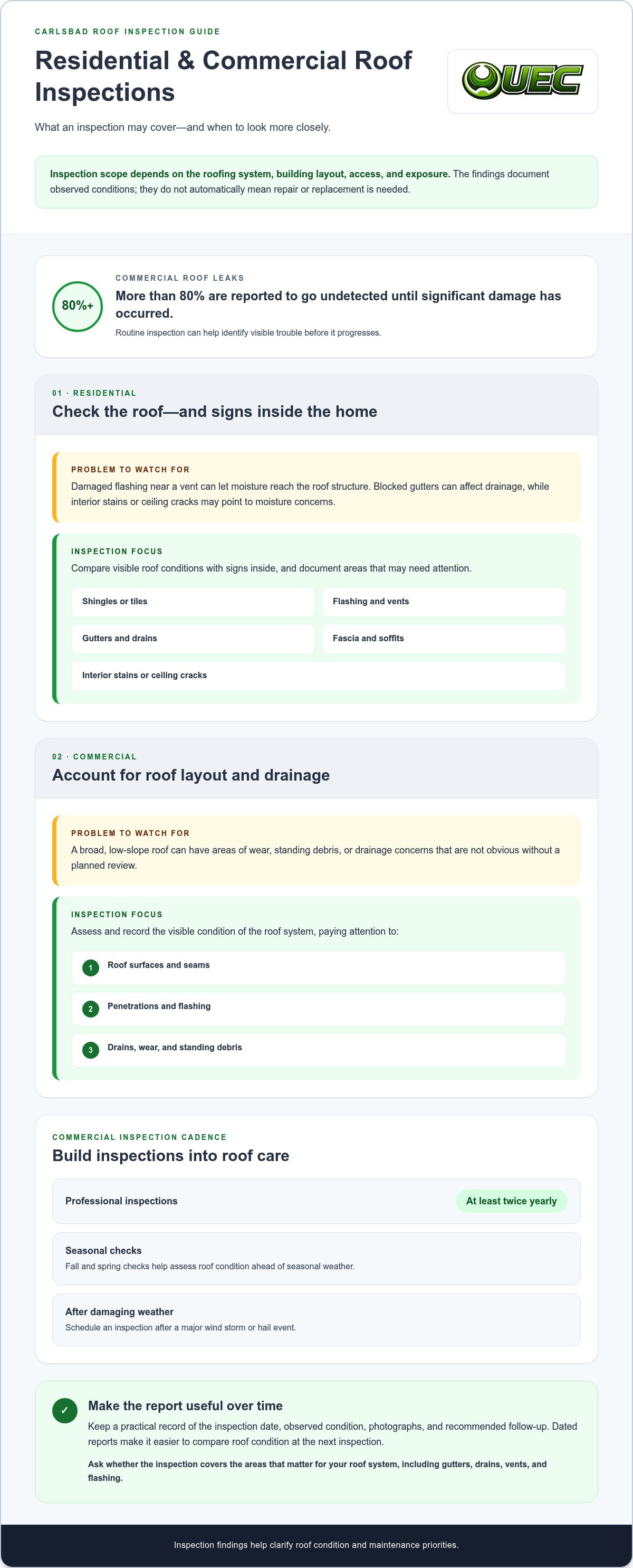
In Carlsbad, inspection scope depends on the building’s roofing system, access, and exposure. A house with tile roofing needs a different review from a commercial property with a broad, low-slope roof. Both inspections should document visible conditions and identify areas needing attention. A thorough review helps owners understand roof integrity without assuming every finding requires repair or replacement.
For a residence, an inspector can check shingles or tiles, flashing, vents, gutters, drains, fascia, and soffits. These details matter: damaged flashing near a vent can let moisture reach the roof structure, while blocked gutters can affect drainage. Inside, stains or ceiling cracks may point to moisture concerns that should be compared with the roof’s exterior condition.
Commercial inspections consider the same basic goal, protecting the building, but the roof’s size, layout, and drainage can make the review more complex. The inspector may assess roof surfaces, seams, penetrations, drains, and flashing, then record areas of wear or standing debris. In Carlsbad, more than 80% of commercial roof leaks are reported to go undetected until significant damage has occurred. Routine inspection can help identify visible trouble before it progresses.
These figures refer to inspections, not repair work. Roof access, layout, and the level of detail requested affect the scope, so compare what each inspection includes rather than looking only at the amount.
Commercial buildings should receive professional roof inspections at least twice yearly. Fall and spring checks help assess condition ahead of seasonal weather, and an inspection is also recommended after a major wind storm or hail event. Property managers can keep a practical record of the date, observed condition, photographs, and recommended follow-up. This makes comparison easier at the next inspection.
- Ask whether the inspection covers gutters, drains, vents, and flashing.
- For commercial buildings, schedule inspections twice yearly and after major wind or hail events.
- Keep dated reports so you can compare roof condition over time.
A Carlsbad roof inspection should reflect the property’s roofing system and access needs. The findings can help owners plan maintenance, understand repair priorities, and keep a clear record of the roof’s condition.
Where roof access is difficult, the Carlsbad drone roof inspection service offers another way to review conditions. It uses high-resolution cameras to capture detailed images of a roof’s condition, providing a visual record of the areas surveyed. The service is described as a safe and efficient way to inspect hard-to-reach roof areas.
Ask how the images relate to the inspection findings and whether a visible concern needs follow-up. Keep images with dated reports to compare conditions at later inspections, alongside notes on observed conditions and recommended follow-up. For properties with difficult access, this approach can include hard-to-reach areas in the review, but an image alone does not determine whether repair or replacement is needed. The roofing system and access needs guide the inspection scope.
Identifying roof damage early
In Carlsbad, roof surfaces can show wear before water reaches a room. Brittle, cracked roofing materials have been found on roofs as young as 10 years. That example is a reminder to assess the roof’s actual condition, not rely on age alone. A detailed inspection can identify changes in shingles, flashing, and other visible areas before damage spreads.
Look for signs indoors as well as outside. Ceiling cracks, stained or deformed interior walls, and peeling or discolored finishes can indicate moisture. These symptoms don’t identify the entry point by themselves. An inspector can compare their location with roof features above, such as vents, chimneys, or flashing, and document areas needing closer attention.
From the ground, note missing, cracked, curled, or visibly damaged shingles. Observe whether roof vents or chimneys appear damaged, or whether debris may be blocking them. Don’t climb onto the roof to investigate. A professional inspection can assess hard-to-see areas and help distinguish surface wear from concerns that may affect structural integrity.
- Record the location: Note which room has a stain or crack, and where it sits beneath the roof.
- Photograph visible signs: Capture a ceiling mark or a ground-level view of damaged roofing materials.
- Track changes: Compare dated observations to see whether a stain, crack, or shingle condition changes.
- Describe weather context: Record whether you noticed a new sign after a storm or during routine observation.
Regular inspections and maintenance can help identify potential problems before they worsen. A detailed record gives an inspector useful context, but it doesn’t replace examining the roof itself. A ceiling stain below a roof vent, for example, can guide attention to the vent and surrounding flashing. The report should describe what is visible and connect findings to their locations.
Roof age is another clue, not a diagnosis. A roof older than 20-30 years is a warning sign that it may need repair or replacement. Material, visible wear, and moisture evidence also matter. In Carlsbad, a professional evaluation can help determine whether a concern is localized or affects a larger part of the roofing system.
Take action when you notice interior moisture, damaged shingles, or a change around a chimney or vent. Save dated photographs, note the affected rooms, and arrange a professional assessment. This information can help focus the inspection and clarify whether the next step is maintenance, repair, or further evaluation.
During an assessment, an inspector can look for signs of moisture damage, including ceiling cracks, deformed or stained interior walls, and buckling or curling shingles. Documenting each sign by location and appearance keeps interior observations distinct from conditions visible on the roof. A record can note a stained or deformed wall, or buckling or curling shingles, without assuming that one observation identifies the precise source. The inspector can describe the areas examined and the signs found. Clear observations focus on the condition seen, rather than treating one mark as a complete explanation.
Inspection documentation for insurance claims and warranties
A roof inspection record helps owners organize information about the roof’s condition, observed damage, and completed work. For a Carlsbad home or commercial roof, keep the report with dated photographs, repair estimates, invoices, and relevant policy or warranty documents. Clear records make it easier to track what was observed and what happened next.
Are roof inspections covered by homeowners insurance in California? Coverage for an inspection or roof damage depends on the policy terms and circumstances of the claim. An inspection report documents conditions; it doesn’t establish that a loss is covered or that an inspection fee will be reimbursed.
For a useful file, organize documents in chronological order. Include the inspection date, areas examined, photographs that identify each location, and written findings. If a ceiling stain appears below a vent, label the interior photo and the corresponding roof-area image. This helps connect visible signs with the inspector’s observations without treating an assumed cause as confirmed.
- Inspection report: Save the written description of roof condition and any recommended follow-up.
- Photographs: Keep dated images of damaged areas, surrounding materials, and affected interior spaces.
- Repair records: File estimates, invoices, and a clear description of completed work.
- Policy and warranty papers: Store applicable documents beside the roof records for easy comparison.
For an insurance claim, keep the sequence clear: note when damage was first observed, preserve relevant photographs, and add the inspection report and repair documents as they become available. Active water entry may require immediate attention to limit further interior damage. When it’s safe, record the condition before and after temporary protection or permanent work.
Warranty records serve a different purpose. Review the written terms for maintenance, documentation, and claim procedures, then retain inspection reports and receipts that relate to those requirements. An invoice should identify the work performed and the roof area addressed. For example, an invoice describing flashing work near a vent is more informative than one that says only “roof repair.”
Owners of commercial roofs can use the same recordkeeping approach for inspections and maintenance. Group reports by date and building area, then note whether earlier findings were addressed. This creates a practical condition history for property management and insurance discussions. A thorough file supports a clear account of observations and work, but policy or warranty terms determine how those records apply.
Before submitting claim materials, arrange the report, photographs, and repair records in one file. Match each image to its location and each invoice to the work described. Organized documentation gives insurers and warranty administrators a clearer account to review.
Scheduling a Carlsbad roof inspection
Plan around weather, property access, and the reason for the visit. A peace of mind roof inspection in Carlsbad is easier to arrange when you know which areas need attention and can share relevant property details.
To verify an inspector’s license and insurance, review the documentation provided and ensure the names match the person and business performing the inspection. Keep the records with the final report for your files.
Carlsbad homeowners can compare local roofing companies’ reviews for specific details about communication, inspection reports, and documented findings. Reviews are most useful when they describe an actual inspection experience, rather than offering only a general rating. The region includes varied settings, from coastal Carlsbad and San Diego County to nearby inland communities and regional residential neighborhoods.
Inspection Frequency in Coastal Conditions
Schedule inspections in fall and spring to assess roof condition ahead of seasonal weather. Arrange another inspection after a major wind storm or hail event, and consider checks before and after monsoon season. Coastal exposure around Carlsbad differs from inland conditions, so note the roof’s location and materials when planning. Set a schedule that reflects the property rather than relying on one calendar date.
Before arranging a visit, write down the reason, such as a property transaction, recent weather event, or planned maintenance. This helps define the inspection’s purpose and the areas to prioritize. For homes in the local service area, include access instructions and relevant property records when sharing scheduling details.
Inspection Time and Home Presence
Inspection duration depends on roof size, material, access, and requested scope. A flat roof with multiple drains and a residential roof with several sections may require different inspection routes. Ask about the expected time window when arranging the appointment so you can plan around work, deliveries, or property access.
You may not need to be home for an exterior-only inspection if access is arranged. Be available if interior access is needed or you want to point out a concern. Secure pets, provide gate instructions, and keep paths clear for the visit.
- Share the inspection purpose and access details when booking.
- Schedule around seasonal checks and significant weather events.
- Keep the appointment window open if interior access may be required.
When you’re ready to arrange a visit and share property details, use this inspection scheduling option from UEC Roofing to get started.
UEC Roofing: leak repair
UEC Roofing helps property owners address roof leaks and documented repair needs. Based in a brick-and-mortar location in Lake Elsinore, the company has completed over 2,000 successful projects in the region.
If an inspection identifies a leak or roof damage, UEC Roofing provides leak repair and roof repair. A roof tune-up can address routine maintenance needs beyond a single problem area. Share the inspection findings and affected locations to focus the discussion on the roof’s condition.
For help with inspection findings, contact UEC Roofing to discuss leak repair, roof repair, or a roof tune-up.
Take the next step toward a well-maintained roof
A roof inspection can be a useful starting point for a deliberate maintenance plan. Turn the findings into clear priorities: address active leaks, keep records of completed work, and plan follow-up for areas showing wear. For homeowners seeking peace of mind, a roof inspection in Carlsbad can help make the next decision more informed.
UEC Roofing provides leak repair, roof repair, and roof tune-ups for property owners addressing inspection findings or routine maintenance. The right next step depends on the roof’s condition, whether that means addressing a leak or planning broader maintenance. Keep the report nearby to focus the conversation on observed conditions and relevant areas.
When you’re ready to discuss your roof, contact UEC Roofing to schedule an inspection. A considered next step can help you care for your roof with confidence.
Frequently Asked Questions
How much does a roof inspection cost in Carlsbad, CA?
The cost depends on the property and inspection scope, including roof size, material, access, and complexity. For a residential roof in Carlsbad, the estimate reflects those details and the level of review requested. Ask for a written estimate that describes the inspection scope and separates inspection charges from proposed repairs. This makes it easier to understand what the quoted amount covers.
What signs of roof damage should Carlsbad homeowners look for?
Look for changes such as a new ceiling stain after rain, dampness in an attic, or debris accumulating around roof vents and chimneys. From the ground, note visible shifts or missing pieces in the roof covering, but avoid climbing up to investigate. Record where and when you noticed each change. Noting a damp attic area beneath a roof opening, for example, can help focus the inspection.