
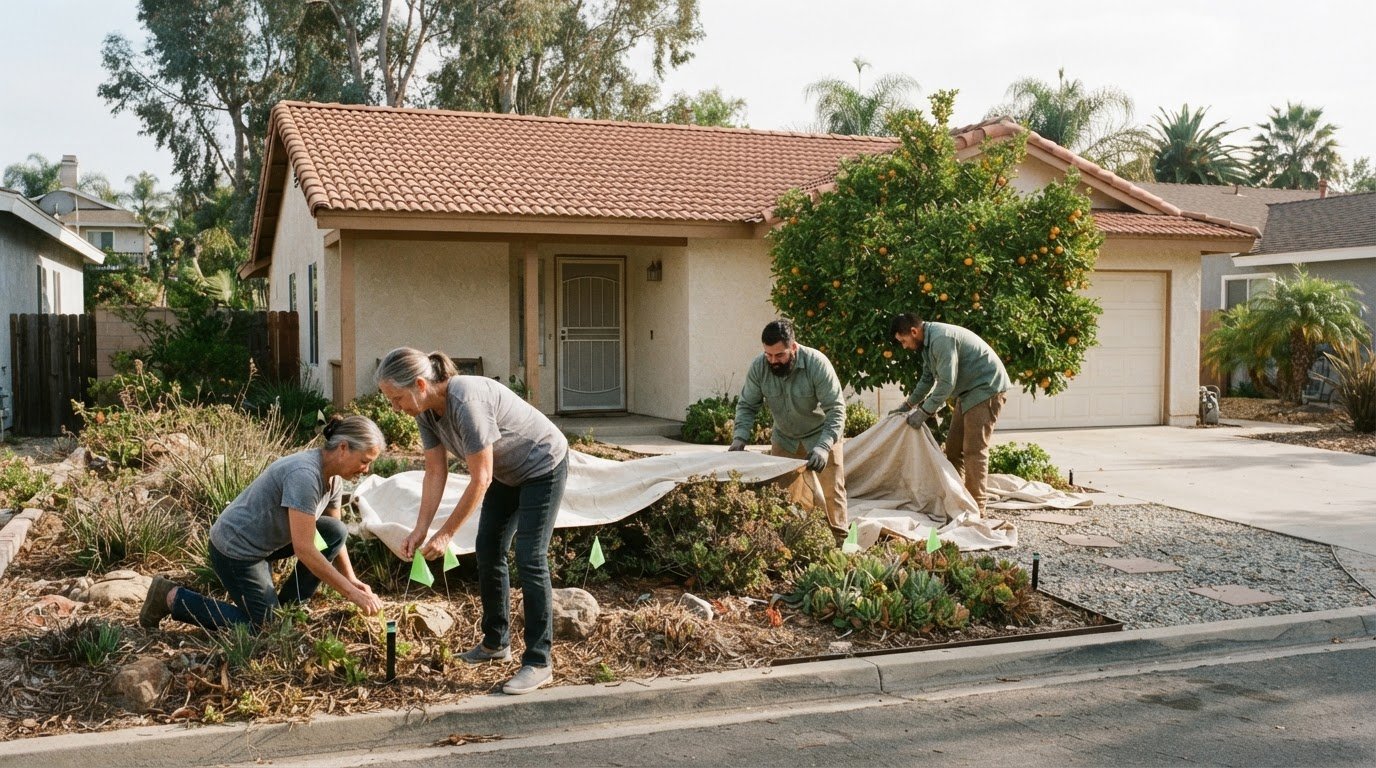
You can usually stay home while roofers replace your roof, but keep clear of the work zone and make room for safe access around the house. Preparing your home for roofers in Vista means planning for noise, moving vehicles and outdoor items, and protecting areas beneath the roof. Crews typically work outside, so they usually do not need to enter your home.
It’s reasonable to protect your property while keeping household disruption to a minimum. Professional contractors such as ALG Roofing Limited emphasize that proper site preparation is essential during complete roof replacements, as work can cause noise and vibration indoors while outdoor areas must stay clear for materials and debris.
This guide explains how to decide whether staying home makes sense for your household and what to prepare before work begins. Use the practical steps for the attic, plants, pets, children, driveway, and access points to help the crew work safely and protect your home.
Key Takeaways
- You can often stay home during roof replacement, but plan for noise and keep household members away from active work areas.
- Clear the driveway and access paths, and mark sprinkler heads so the crew can move around the property more safely.
- Protect attic belongings and items in rooms beneath the roof from dust and small debris before work begins.
- Move or cover outdoor belongings and discuss how plants and other vulnerable areas will be protected.
- Review the completed work and cleanup, including the yard and gutters, before treating the work area as clear.
Inspecting cleanup, the roof, and possible property damage
Keep children and pets away from the roof work zone, driveway, and debris areas. Set up a quiet, secure space indoors or elsewhere, and wait until the crew releases the work area before going outside.
Roof replacement brings noise and vibration indoors, and work may take a few days or longer. Materials, roof design, weather, and existing damage can affect the schedule, so don’t assume installation will finish in a single day. During tear-off, dust and small debris can enter the attic even when crews work outside.
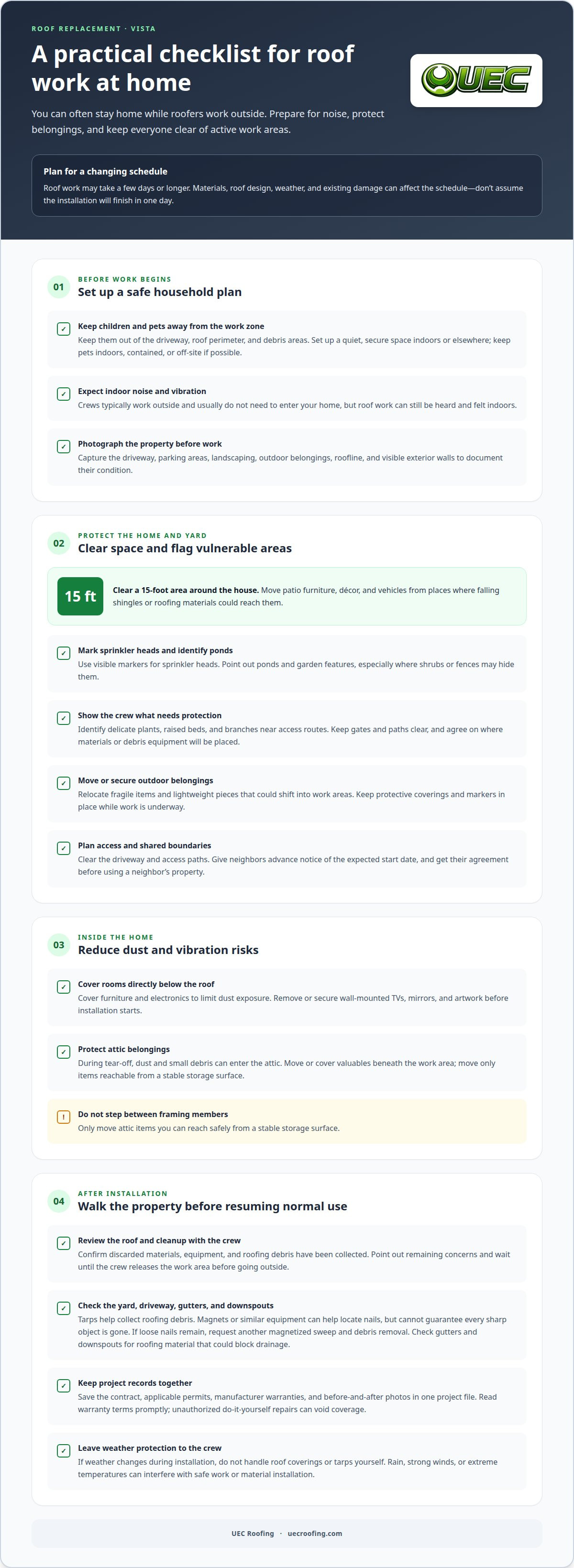
- Photograph the property before work. Capture the driveway, parking areas, landscaping, outdoor belongings, roofline, and visible exterior walls to document their condition.
- Keep clear of falling debris. Stay away from the roof perimeter and any area where tools or shingles could land; keep children and pets out of the driveway and work zone.
- Look for organized debris control. Tarps help collect roofing debris, while magnets, metal detectors, or similar equipment can help locate nails after installation.
- Walk the yard after cleanup. A magnetic sweep cannot guarantee every sharp object is gone; finding one or two nails in grass may signal more are hidden.
- Check gutters and downspouts. Roofing materials can block drainage, so look for debris after replacement work is complete.
At the final inspection, review the completed roof and surrounding property with the crew. Confirm that discarded materials, equipment, and roofing debris have been collected, and point out any remaining concerns. If loose nails remain, request another magnetized sweep and debris removal before using the yard normally.
Keep the work contract, applicable permits, and manufacturer warranties for the roofing materials or system together in a project file. Read warranty terms promptly, since unauthorized do-it-yourself repairs can void coverage. Store before-and-after photos with these records, including images of the roofline and visible exterior walls.
For roof repair or maintenance, note the area addressed and keep related paperwork in the same file. If weather changes during installation, leave roof coverings and tarps to the crew rather than handling them yourself. Rain, strong winds, or extreme temperatures can interfere with safe work or material installation.
Before work begins, make the household plan clear: keep pets indoors, contained, or off-site during roof replacement if possible, and keep children away from the work zone and driveway. Set up a quiet, secure area away from construction so children and pets have a protected place apart from the activity. Some roof replacement projects take a few days, while others take longer depending on materials, roof design, weather, and existing damage. Plan your household routine around the work rather than assuming it will be finished quickly.
Use the final walkthrough to review the completed work, raise any remaining concerns, and confirm that discarded materials have been collected, equipment removed, and roofing debris cleared. Roofers should use tarps to help collect debris during replacement, as one part of keeping the work area controlled; experienced teams like Heroic Roofing emphasize thorough post-project sweeps and property protection to keep homeowners safe. Inspect both the roof and surrounding property, and ask the crew to address anything that remains before considering cleanup complete.
Protecting plants and marking sprinkler heads and ponds
Before roof replacement, move or cover fragile belongings indoors and clear outdoor items near the house. Relocate patio furniture, décor, and vehicles from places where falling shingles or roofing materials could reach them.
Use this checklist to protect landscaping and make hazards visible:
- Clear a 15-foot area around the house. Move outdoor furniture and décor so materials and debris have less chance of striking them.
- Mark sprinkler heads. Use visible markers to show their locations and help prevent damage from foot traffic or equipment.
- Point out ponds and garden features. Identify their locations before work begins, especially where shrubs or fences may obscure them.
- Identify vulnerable landscaping. Show the crew delicate plants, raised beds, and branches near access routes so they can plan protection.
- Secure items that cannot be moved. Keep lightweight outdoor pieces from shifting into work areas or blocking access.
Established landscaping can be vulnerable to falling materials and movement around the property. Point out plants that need protection and keep sprinkler heads marked and visible. If a pond is near a work or debris area, make its boundary clear rather than relying on the crew to spot it through foliage.
Roof work can also transmit vibration indoors. Remove or secure wall-mounted TVs, mirrors, and artwork before installation starts. Cover furniture and electronics in rooms directly below the roof to limit dust exposure. In the attic, move or cover valuables stored beneath the work area. Only move items reachable from a stable storage surface, and never step between framing members.
For garage storage, clear the areas where materials or debris equipment will be placed. Move fragile belongings and anything that could obstruct access away from those spots. Agreeing on placement beforehand helps prevent last-minute rearranging and keeps outdoor paths clear.
Neighbors may be affected by material deliveries or work near shared boundaries. Give them advance notice of the expected start date, and get their agreement before using a neighbor’s property. Keep gates and paths unobstructed so crews can reach work areas without crossing protected garden beds.
Keep marked features visible throughout the roofing project, and don’t move protective coverings or markers while work is underway. For help planning roof work around property features, review roof work planning for your home.
Homeowners should mark sprinkler heads so roofers can see them and avoid tripping over or damaging the sprinkler system. Clear markers make the heads easier to identify as roofers move around the property. Keeping the sprinkler system visible to the crew helps them avoid these specific hazards while carrying out roof work nearby.
Should I Remove Items From My Attic Before Roof Work Starts?
Yes. Move valuable or delicate attic belongings, or cover them before roof work begins. Dust and small debris can enter the attic during tear-off and installation, even when the crew works outside. Crews usually do not need to enter the home, but the attic is still beneath the active work area.
First, confirm the start date and written work scope with UEC Roofing. Clarify which roof areas are included, where materials and debris equipment will be placed, and how changes will be communicated. A clear plan helps you prepare the right spaces and keep deliveries separate from household access.
- Move only reachable attic items. Use a stable storage area, and never step between framing members to retrieve a box.
- Cover belongings that must stay. Secure sheets over stored items to reduce dust exposure during tear-off.
- Clear the planned delivery area. Move garage or driveway items that could obstruct roofing materials or debris equipment.
- Save the project paperwork. Keep the contract, applicable permit copies, and roofing-material or roof-system warranties together.
Permits or inspections may apply depending on the project scope and location. Keep copies of applicable permits with the contract, and retain warranty documents for the installed materials. These records help you identify the agreed work and find relevant coverage details later.
Keep project records together, including applicable licensing and insurance documents. Treat them as paperwork, not as a substitute for the signed work scope. The contract should identify the planned work and start date, while warranty documents explain the terms attached to materials or the roof system.
Before the crew arrives, settle practical questions about access and staging with UEC Roofing. Confirm where materials will be delivered, where debris equipment will sit, and which gates need to be unlocked. If a satellite dish or solar panels are present, discuss removal, reinstallation, and reconnection arrangements before installation starts.
Roofing schedules can shift with weather or conditions uncovered during tear-off. Keep UEC Roofing’s contact details with your paperwork and establish how schedule or scope updates will reach you. If a change affects access, stored items, or the delivery area, adjust your preparation plan before work continues.
After the project, store the contract, permits, warranties, and completion records together. Avoid do-it-yourself roof repairs until you’ve read the warranty terms, since unauthorized repairs can void coverage. A complete file makes it easier to understand the work performed and maintain the roof responsibly.
Preparing for noise and household disruptions
Roof replacement brings repeated impacts, vibration, and debris movement around the home. Roofing work is typically described as 85-95 decibels, so plan for loud conditions rather than normal household noise. Crews often arrive between 7:00-8:00 a.m.; prepare bedrooms, work calls, and morning routines the evening before.
Choose a quieter room away from the active work area for calls, rest, or schoolwork. Move children’s activities indoors, away from windows beneath roof work, and keep shoes handy if they need to leave the house. Cover furniture and electronics in rooms directly below the roof to reduce dust exposure.
- Plan around the crew’s arrival. Set out needed items and adjust morning routines before the 7:00-8:00 a.m. start window.
- Protect rooms beneath the roof. Cover furniture, electronics, and delicate items before tear-off begins.
- Keep children clear of debris. Explain that roofing materials may be around the house, and have them wear shoes outdoors.
- Settle pets away from activity. Keep animals indoors, contained, or off-site when possible, with food and water in a quiet space.
- Wait for release before returning. Keep children, pets, vehicles, and outdoor furniture out of the work area until the crew clears it.
Notify neighbors two to three days before the roofing project and share the expected start date. This gives nearby households time to plan around noise, deliveries, and debris. If material staging or access may involve a neighbor’s property, get their agreement before using it.
Keep indoor routes clear in case workers need to enter the home. Roofing crews usually work outside and do not need interior access, but a clear path helps if an agreed task requires entry. Keep children away from doors that open onto active work areas, and don’t let pets follow crew members outside.
Debris management and cleanup can continue as installation progresses, so keep household routines flexible. Avoid scheduling outdoor play near the home while roof work is underway. If weather changes, leave roof coverings and tarps to the crew so they can manage the exposed work area.
Before the crew leaves, wait for the work area to be released and follow any instructions about returning furniture, vehicles, or pets. A thorough cleanup includes collecting roofing debris and removing equipment, but a magnetic nail sweep cannot guarantee every sharp object is gone. Keep children in shoes outdoors and report visible debris before resuming normal yard use.
Providing roofers with access around the home
Plan a clear route from the street to each side of the house before roofing begins. Move cars from the driveway the night before, since crews may need space for deliveries, equipment, and a dump trailer. The driveway is a work area, not just a place to park.
Aim for 15-foot clearance around the house where the property allows. That space helps crews reach the roofline and collect shingles, underlayment, and other debris. Walk the route from the driveway to the backyard, noting narrow gates, steps, low branches, and landscaping that could obstruct movement.
- Move vehicles before the crew arrives. An empty driveway leaves room for material deliveries and debris equipment.
- Unlock gates to every side of the house. Clear entry points let roofers reach areas that aren’t accessible from the front.
- Point out outdoor electrical outlets. Identifying usable power helps the crew plan equipment placement.
- Trim branches that hang over the roof. Removing overhead obstacles can improve roof access and reduce interference.
- Identify delicate paths and surfaces. Point out garden borders, pond edges, and sprinkler heads along likely crew routes.
Before installation, agree where materials and debris equipment will sit. A dump trailer in the driveway may affect parking and vehicle access, so plan another place for household cars. If the driveway is narrow, keep the approach clear and move bins or outdoor items away.
Access planning also includes delivery and placement. Roofing accessories may include underlayment, flashing, and ridge vents. The crew distributes materials across the roof to balance the load, while a clear ground route supports safe movement. Leave staged materials undisturbed once placement has been agreed.
Look above the access route as well as along the ground. A branch over a gate or roof edge can obstruct movement, while a low awning can restrict equipment access. Point out these obstacles during the walkthrough so the team can plan a practical route before construction starts.
Keep the route clear throughout the project, not just when the crew arrives. Don’t move vehicles, outdoor furniture, or children back into the work area until the crew releases it. Once the roof is finished, keep the driveway accessible for equipment removal and final cleanup.
For a roof improvement that requires coordinated site access, plan your roofing project with a clear route around the home.
UEC Roofing
UEC Roofing helps homeowners plan roofing work in Vista and throughout Southern California. With a brick-and-mortar location in Lake Elsinore and more than 2,000 successful regional projects, the company brings local experience to homes across the Inland Empire and communities in Riverside, Orange, San Diego, Los Angeles, and San Bernardino Counties.
UEC Roofing provides roof replacement, roof repair, leak repair, roof tune-ups, and rejuvenation, along with maintenance for residential and commercial properties. Its roofing work includes tile, composite shingle, metal, foam, flat, and TPO systems. Discussing access, household routines, and property concerns with the team helps shape a practical project plan.
Contact UEC Roofing to discuss your roofing needs and plan the next step.
Plan for the Next Step
Treat roofing work as part of caring for your home, not simply a day of construction. A practical plan for preparing your home for roofers in Vista can also help you consider how your roof fits into longer-term home maintenance.
Keep decisions that affect daily life in one place. Note household routines, access considerations, and questions about how the work will proceed. This gives you a useful reference if plans shift and keeps communication focused on details that matter to your property.
After the work is complete, retain project documents and make roof observations part of regular home care. Addressing changes early can support informed maintenance decisions and help protect your home over time.
When you’re ready to discuss your roofing needs, contact UEC Roofing to plan your project. Take the next step with a clear plan and care for your home.
Frequently Asked Questions
Can I Stay Home During a Roof Replacement?
Yes. Crews usually work outside, but expect disruptive noise and vibration. Choose a room away from the active work area for calls or quiet time.
Should I Move My Car Before the Roofing Crew Arrives?
Yes. Move it the evening before so deliveries and equipment can use the driveway. Keep it away until the crew clears the area.
How should homeowners prepare their property before roofers arrive in Vista, California?
Confirm the work scope and start date with UEC Roofing, then clear agreed access and staging areas. Point out gates, outlets, solar panels, and delicate property features before work begins.
How can homeowners protect landscaping, patios, vehicles, and outdoor furniture during roofing work?
Move vehicles, patio furniture, and décor away from work and staging areas. Mark sprinkler heads and show the crew ponds, garden beds, and fragile plants.
Should homeowners remove wall decor or protect valuables before roofers begin?
Yes. Secure mirrors, artwork, and televisions, and cover electronics and furniture beneath the roof work. Move attic valuables only from a stable, safe area.
What access, parking, and driveway arrangements do roofers need in Vista?
Clear the driveway and unlock gates leading around the home. Identify narrow paths, overhead branches, and accessible outlets. Get a neighbor’s agreement before using their property.
How long does a typical roof replacement take in Vista, and what should homeowners expect each day?
It may take a few days or longer, depending on materials, roof design, weather, and existing damage. The work can include tear-off, installation, and cleanup.
Should pets and children stay away from the home during roofing work?
Keep children away from the work zone and driveway. Keep pets indoors, contained, or off-site when possible, and wait for the crew to release the area before returning.