
Roof Maintenance Checklist for Huntington Beach Homeowners: When to Inspect

Regular roof inspections can catch small problems before they lead to leaks or wider damage. A roof maintenance checklist for homeowners in Huntington Beach should include a professional inspection at least once a year, ideally in fall before the rainy season. Homes closer to the ocean may benefit from inspections twice a year because of salt-air exposure.
It’s easy to put off an inspection when the roof looks fine from the ground. But missing or cracked materials, blocked drainage, and attic moisture can go unnoticed until water gets inside. A consistent maintenance routine helps you spot warning signs sooner and make informed decisions about repairs or replacement.
Here, you’ll learn when to inspect, what to look for after storms and during seasonal checks, and why attic ventilation matters in Southern California’s heat. You’ll also learn how maintenance can limit leak damage, when a roofing professional can help, and which signs may point to replacement rather than another repair.
Key Takeaways
- Schedule professional roof maintenance at least once a year, ideally in fall before the rainy season. Homes closer to the ocean may benefit from twice-yearly inspections because of salt air exposure.
- After major storms, look for signs of damage from the ground and note any new leaks or interior stains. Don’t climb onto a roof to inspect it yourself.
- Check the attic for damp insulation, moisture, musty odors, or unwanted daylight. Clear soffit and ridge vents help hot air escape.
- Keep gutters, downspouts, roof valleys, and drainage paths clear so water can flow away from the roof and foundation.
- Maintenance can help catch localized problems early, but widespread deterioration or structural issues may point to replacement rather than another repair.
How often should I schedule roof maintenance in Huntington Beach?
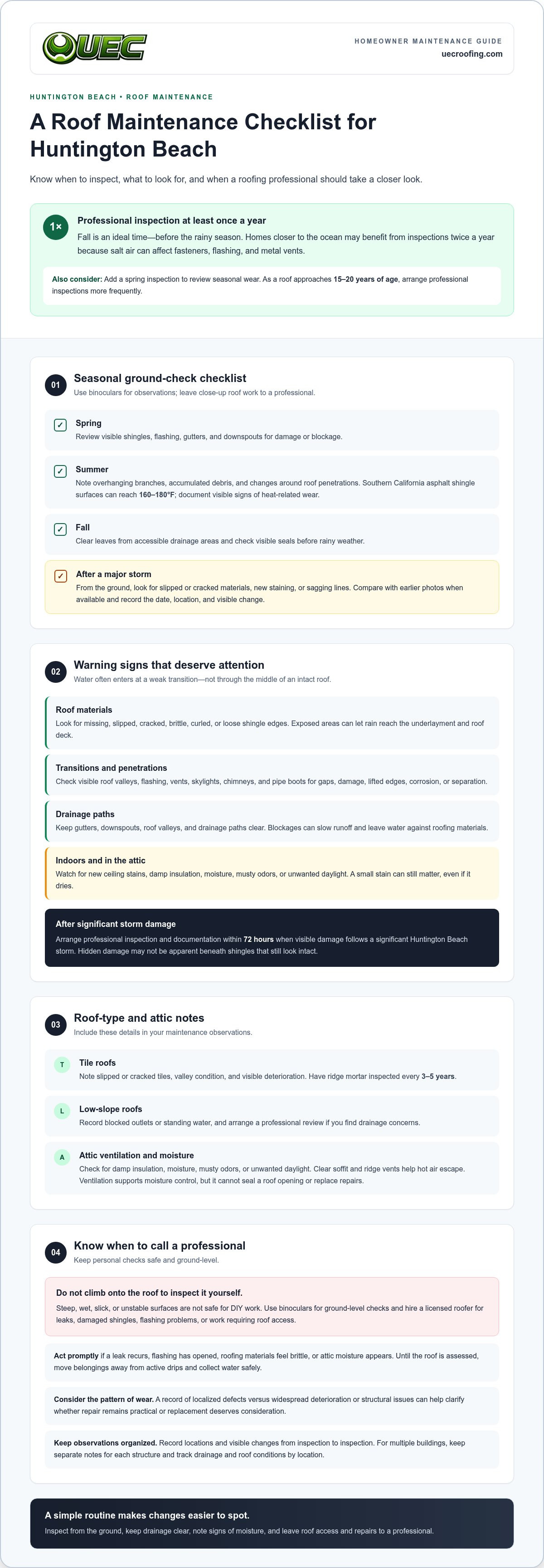
Schedule professional roof maintenance at least once a year, ideally in fall before the rainy season. Homes closer to the ocean may benefit from inspections twice a year because salt air can affect fasteners, flashing, and metal vents. Add a spring inspection to review seasonal wear. A roof maintenance checklist for homeowners in Huntington Beach helps keep observations organized.
Use binoculars for ground-level checks each season, and leave close-up roof work to a professional. Never climb onto a steep, slick, or unstable surface. In Huntington Beach, note any corrosion on visible metal details and changes around roof penetrations. Southern California asphalt shingles can reach 160-180°F at the surface during summer, so include visible signs of heat-related wear in your notes.
Use this seasonal schedule to guide observations:
- Spring: Review visible shingles, flashing, gutters, and downspouts for damage or blockage.
- Summer: Note overhanging branches, accumulated debris, and changes around roof penetrations.
- Fall: Clear leaves from accessible drainage areas and check visible seals before rainy weather.
- After a major storm: From the ground, look for slipped or cracked materials, new staining, or sagging lines.
On tile roofs, note slipped or cracked tiles, the condition of valleys, and visible deterioration. Have ridge mortar inspected every three to five years. For low-slope roofs, record drainage concerns such as blocked outlets or standing water, and arrange a professional review if you find them.
If you manage several buildings, use a recurring plan that identifies each building and records the maintenance completed at each visit. Keep separate notes for a home, garage, and shared structure, for example. Track drainage and visible roof conditions by location so you can compare changes between inspections.
Arrange more frequent professional inspections as a roof approaches 15-20 years of age. A record of localized defects versus widespread wear can help clarify whether repair remains practical or roof replacement deserves consideration.
When should homeowners repair a roof themselves versus hire a licensed roofer? Limit personal checks to safe, ground-level observations. Hire a licensed roofer for leaks, damaged shingles, flashing problems, or work that requires roof access. Steep, wet, or unstable surfaces are not safe for DIY work.
What permits or building codes apply to roof repairs and replacements in Huntington Beach? Before scheduling repair or replacement work, identify the permit and building-code requirements for that specific project in Huntington Beach. Keep the project scope clear when reviewing those requirements.
Using roof maintenance to reduce leak damage
Water often enters at a weak transition, not through the middle of an intact roof. In Huntington Beach, check roof valleys, flashing, vents, skylights, chimneys, and pipe boots for gaps or damage. These features interrupt the roof surface, so failed seals can let moisture into the roof assembly.
After storms, inspect from the ground and look for changes that may indicate water is getting through:
- Missing, slipped, or cracked shingles: Exposed areas can let rain reach the underlayment and roof deck.
- Open or lifted flashing: Check visible edges around valleys, walls, chimneys, and roof penetrations.
- Blocked drainage: Leaves in gutters or roof valleys can slow runoff and leave water against roofing materials.
- Interior warning signs: New ceiling stains, damp attic insulation, or a musty odor can point to moisture intrusion.
Clear drainage paths before rainy weather, and note any new indoor stains after heavy rain. Clogged gutters can cause water to collect against the roofing structure, damage the deck, and potentially lead to rot. Pay attention to even a small stain if it dries: the visible mark may not show where the water entered.
Huntington Beach’s coastal air can affect roof fasteners, flashing, and metal vents, so inspect those components for corrosion or separation. Summer heat also matters: asphalt shingle surfaces in Southern California can reach 160-180°F. UV exposure and heat can contribute to material wear, making brittle, curled, or loose shingle edges worth documenting rather than ignoring.
After a major storm, compare ground-level views with earlier photos when available. Record the date, location, and visible change, then check ceilings and attic corners for fresh marks. A professional inspection after a major storm can reveal damage hidden beneath shingles that still appear intact. When visible damage follows a significant Huntington Beach storm, arrange professional inspection and documentation within 72 hours.
Act promptly if a leak recurs, roofing materials feel brittle, flashing has opened, or attic moisture appears. Don’t climb onto a wet or unstable roof to investigate. Until the roof can be assessed, move belongings away from active drips and collect water safely. Don’t cover or alter damaged materials if doing so requires roof access. Good attic ventilation supports moisture control, but it cannot seal a roof opening or replace repairs.
If storm damage or a recurring leak needs a closer assessment, professional roofing services can help identify the affected area and the appropriate next step.
Attic ventilation
Check attic ventilation during annual roof maintenance, especially on a summer afternoon when Huntington Beach temperatures reach 90°F or higher. Ventilation helps hot air escape and limits moisture buildup, while insulation slows heat transfer into living spaces. These systems work together, so inspect both rather than treating a hot attic as only a vent problem.
Compare attic and outdoor temperatures on the same afternoon. A properly ventilated Huntington Beach attic should be around 110-125°F on a 95°F afternoon, and the attic should generally stay within 10-15°F of outdoor air. Unusually high attic temperatures on a warm summer afternoon may indicate a ventilation problem. These readings are clues, not a substitute for checking vents and insulation.
Use this inspection sequence during a warm-weather check:
- Look at soffit and ridge vents: Confirm both intake and exhaust openings are clear, since blocked airflow can trap heat.
- Check for debris: Remove leaves or other visible obstructions around accessible vent openings without damaging screens or roofing.
- Inspect insulation: Look for damp, compressed, or displaced insulation that may point to a leak or airflow issue.
- Scan roof penetrations from inside: Check around vents and other openings for moisture marks, rust, or daylight.
Attic warning signs include damp insulation, mold-like odors, rust on metal components, and unwanted daylight. A dark moisture mark near a vent may indicate water entry, while a musty smell with damp insulation calls for prompt investigation. Record the location and take a photo so you can compare changes at the next inspection.
Assess ventilation and insulation as a system. Insulation piled over soffit openings can restrict incoming air, while blocked ridge vents can prevent hot air from escaping. Keep vent paths open and avoid pushing insulation into the eaves. If temperatures remain unusually high despite clear openings, a professional can assess airflow and determine whether the roof layout or insulation is contributing.
In Huntington Beach, regular attic checks can reveal conditions that may shorten a roof’s service life or affect indoor comfort. They can also help you address moisture before it spreads into roofing materials. Keep inspection notes, photographs, and warranty documents together, since warranty terms may address maintenance and ventilation differently. Annual observations give you a useful reference when comparing temperature readings or new signs of moisture.
Can roof maintenance prevent replacement?
Roof maintenance can help delay replacement by limiting water exposure and catching small defects early. It cannot reverse widespread deterioration or structural problems. In Huntington Beach, keep vent screens, gutters, downspouts, valleys, and roof edges clear so rainwater drains instead of collecting against roofing materials.
Before the rainy season, inspect vent screens from a safe position for tears, loose edges, corrosion, or blockages. A damaged screen can let debris or pests into an opening, while a clogged one can restrict airflow. Clear loose material gently, and replace a screen if it is torn or no longer secure. Don’t climb onto an unsafe roof to reach it.
Use this drainage checklist during seasonal maintenance:
- Clear gutters and downspouts in spring and fall. Twice-yearly cleaning helps runoff leave the roof instead of backing up at the eaves.
- Remove leaves and organic debris before rainy weather. Debris in valleys and gutters can obstruct drainage and hold moisture against roof materials.
- Check downspout outlets. Confirm water can flow away from the building, rather than spilling beside the foundation.
- Inspect low-slope roof drains. Clear visible blockages and note standing water or slow drainage for closer review.
After cleaning, look for cracked gutters, separated joints, loose fasteners, or water marks beneath the eaves. A gutter can appear clear but still drain poorly if it has shifted or its outlet is blocked. Note each defect’s location and compare it after the next rainfall. Avoid leaning a ladder against gutters that look loose or damaged.
Clean roof vent screens without forcing tools through the mesh or bending the frame. If a screen is corroded, detached, or split, replacing it may restore its protective function. Check nearby flashing and roofing materials for gaps, too. A screen cannot stop water from entering through failed seals around a roof penetration.
Regular cleaning and prompt attention to drainage problems can help protect the roof deck from prolonged water exposure. If you find slipped tiles, cracked materials, or damaged underlayment, the needed work depends on the affected area and the condition beneath the surface. Localized damage may be repaired without replacing the entire roof, while widespread deterioration can make replacement necessary. Keep dated photos and notes to track changes between inspections.
Roof maintenance and replacement
Deciding between repair and replacement starts with the roof’s condition, age, and the extent of the damage. An inspection should record missing or damaged materials, recurring leak locations, and signs of deterioration beneath the surface. These details help show whether the problem is isolated or affects multiple areas of the roof.
Roofing materials have different service lives. Many roofing materials last between 20 and 30 years, asphalt composition shingles typically last about 20 years, and metal roofs can last 40 years or more. These figures are useful context, not a substitute for assessing the roof’s actual condition.
A 30-year shingle rating assumes reasonable maintenance. A shingle roof that is never inspected or cleaned might need replacement after 18 to 20 years. That example shows why the calendar alone cannot establish remaining service life: damaged materials, poor drainage, and recurring moisture can change the decision.
Use inspection findings to compare repair and replacement:
- Localized damage: A repair may make sense when the surrounding roof remains sound and the defect is limited to one area.
- Widespread deterioration: Replacement becomes a stronger consideration when multiple roof sections show failure or repairs no longer address the underlying condition.
- Tile system concerns: Slipped or cracked tiles may be visible while the waterproofing beneath them needs separate assessment.
- Uncertain roof history: Gather installation details, prior invoices, photographs, and warranty documents before reviewing the roof’s condition.
Keep a dated record of each inspection. Include the roof’s age, if known, observed materials, repair locations, interior signs, and ground-level photographs. After the next inspection, compare the notes: a newly damaged area or recurring stain reveals a clearer trend than memory alone. Records also help explain the reasons for targeted repairs or replacement.
For example, isolated damage on a relatively young roof differs from brittle materials and leaks across several slopes. The first pattern may support a localized repair; the second calls for a broader assessment of the roof assembly. A professional assessment should connect visible findings with the condition of the materials beneath them.
In Huntington Beach, ask for a clear explanation of which findings support repair and which support replacement. For a review of damaged roofing or tile concerns, schedule a roofing contractor assessment and discuss the inspection findings.
UEC Roofing: leak repair
UEC Roofing provides leak repair, roof repair, and roof tune ups for homeowners addressing roof damage or planning maintenance. Its brick-and-mortar presence in Lake Elsinore and record of more than 2,000 successful regional projects reflect its established Southern California roots.
That regional work spans the Inland Empire and communities across Riverside, Orange, and San Diego Counties, including Huntington Beach. Share the roof concern and any relevant inspection notes to help focus the conversation on the property’s needs.
If a leak, repair need, or maintenance concern calls for professional attention, contact UEC Roofing to discuss the next step.
Make your next roof decision with confidence
An inspection record is most useful when it leads to a clear next step. Keep dated photos and notes together, then use them to track changes and discuss whether a concern needs attention now or monitoring at the next inspection. This turns a roof maintenance checklist for homeowners in Huntington Beach into a practical record of your home’s condition, not just a list of tasks.
When you need help addressing a leak or planning maintenance, UEC Roofing provides leak repair, Roofing Services, and a Roof tune up. The right next step depends on the inspection findings, whether they point to a specific leak or broader maintenance needs. Share the issue and your observations to focus the discussion on your roof’s condition.
Contact UEC Roofing about roof maintenance and take the next step toward protecting your home with informed, timely care.
Frequently Asked Questions
Why Should I Schedule Regular Roof Inspections?
Regular roof inspections can reveal a loose vent collar, lifted tile, or failing seal before water damages insulation or ceilings. They also establish a baseline, making later changes easier to distinguish from existing wear. For Huntington Beach homes, inspect after unusual wind and compare dated photos of the same roof edges and penetrations. This helps prioritize an assessment instead of relying on memory.
How do I know if my roof has storm damage?
Look for lifted shingle edges, cracked tiles, displaced ridge pieces, or newly bent roof vents. From the ground, compare rooflines with earlier photographs and note changes around chimneys and other roof penetrations. Inside, check for fresh stains after a storm. A roof can look intact from below while concealed damage remains, so visible changes call for a closer professional assessment.
How do I know if my roof needs repairs or a full replacement?
A repair may suit a roof with one isolated defect and sound surrounding materials. Consider replacement when deterioration appears across several sections, failures recur, or an inspection finds problems beneath the visible surface. Compare the roof’s age, repair history, and underlying waterproofing. These details provide a stronger basis for a decision than one damaged tile or shingle alone.
Questions about your roof?
Contact UEC Roofing with a clear description of the concern, such as a stain that appears after rain or a section that looks uneven from the ground. Include when you first noticed it and whether it has changed. Dated photos and past repair records can help explain the roof’s history. For safety, don’t climb up to gather details; observe only from a secure location.
What goes on a year-round roof maintenance checklist?
Keep a calendar for seasonal observations, post-storm notes, and planned maintenance. Record the roof system type, known installation details, previous work, and any locations that have needed repeated attention. Add photos from consistent ground-level viewpoints, such as each side of the house. This record makes changes easier to notice and gives a professional useful context for an assessment.
What is the most important roof maintenance task?
Address signs of water entry promptly. A recurring stain, damp material, or drip should not wait for the next scheduled check, because ongoing moisture can affect more than the visible spot. Note when it appears, whether rain came beforehand, and which room or ceiling area is involved. This information can help focus an investigation while you stay safely off the roof.
What should a homeowner include in an annual roof maintenance checklist?
Include the roof’s age, if known, material type, previous repair dates, and warranty documents. Note any changed roofline, damaged material, or interior stain, including the date and location. Keep inspection notes and photos together rather than scattered across devices. A complete record helps distinguish a new concern from an old one and gives a roofing professional context for assessing the roof.
How often should roofs be inspected in Huntington Beach's coastal climate?
Schedule professional maintenance at least once a year, ideally in fall before the rainy season. Homes closer to the ocean may benefit from inspections twice a year because salt air can affect metal roof components. Include a spring review and note unusual wind events between appointments. For coastal homes, record changes around fasteners, vents, and flashing so their exposure can be considered during an assessment.