
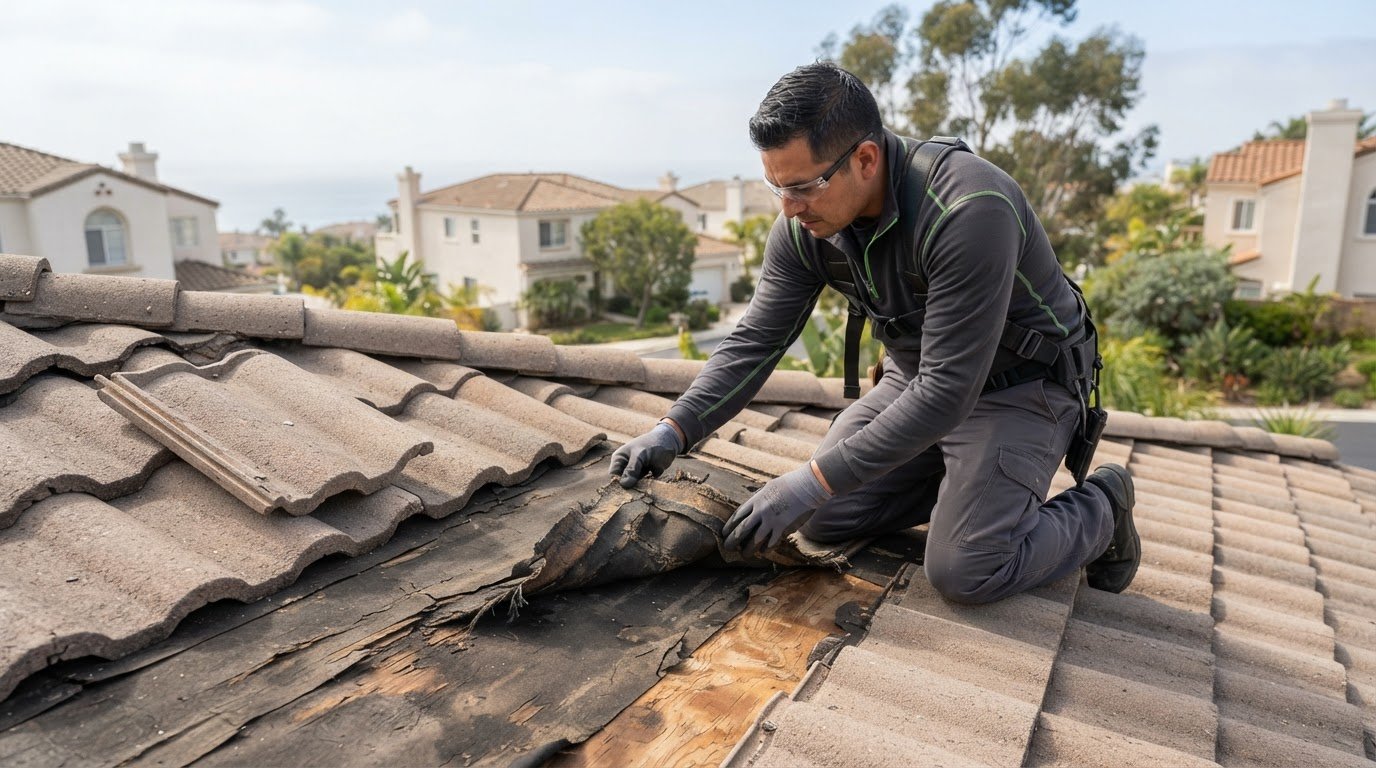
Recurring leaks are a clearer warning than roof age alone. To tell if roof felt needs replacing in Carlsbad, look for leaks that return after repairs, indoor water damage, and visible deterioration of the roof covering. These clues can point to failing underlayment, but an assessment can distinguish felt issues from problems with flashing, drainage, or ventilation.
It’s understandable to wonder whether another repair will hold or whether the roof needs more substantial work. Carlsbad’s coastal conditions matter, and roofing needs also vary across Southern California communities such as Menifee, Temecula, Lake Elsinore, Canyon Lake, Corona, Anaheim, Moreno Valley, Winchester, Wildomar, Murrieta, Riverside, Orange, Huntington Beach, Fallbrook, Vista, Escondido, San Diego, El Cajon, and Poway. This guide explains warning signs, safe ground-level observations, and how an assessment can identify an appropriate next step.
Key Takeaways
- Recurring leaks can point to deteriorating underlayment, but flashing, drainage, and ventilation also deserve attention.
- A roof assessment weighs its age, materials, slope, attic ventilation, drainage, and deck condition to guide repair-versus-replacement decisions.
- Watch for interior water stains, damaged roofing, and other signs of moisture; patterns across multiple areas can matter more than one isolated symptom.
- Inspect from the ground with binoculars or a zoom lens, and leave roof access and close-up evaluation to a professional.
- Carlsbad’s sun, heat, and moisture affect roof materials over time, making regular maintenance useful for spotting changes early.
1. Professional assessment and repair-versus-replacement decisions
In Carlsbad, a professional assessment helps distinguish failed roof felt from a leak caused by flashing, drainage, or ventilation. The inspection should consider roof age, material, slope, attic ventilation, drainage, flashing, penetrations, previous repairs, and the deck. These details show whether moisture is isolated to one area or reflects broader deterioration beneath the roof covering.
A roofer may examine the attic for water staining, damp wood, or daylight, then compare those clues with the roof’s exterior condition. Curled asphalt shingles can point to installation or ventilation problems, not automatically failed underlayment. A sagging or wavy roof needs immediate inspection because damage to the trusses or support system may be involved. At 15 years, schedule a roof inspection and review the insurance policy.
California Title 24 cool-roof requirements apply to specified new construction and roof replacements. Applicability depends on the building, roof assembly, and current code cycle, so the project scope matters when planning underlayment work.
Replacing roof felt in Carlsbad may require a building permit. Whether one is required depends on the work involved, property type, and project scope. Felt replacement as part of broader roof work may be treated differently from a limited repair.
To diagnose failed underlayment, a roofer traces the leak, checks the surrounding covering and flashing, and examines accessible roof decking or attic areas for moisture damage. The estimate depends on the affected area, roof material and slope, access, deck condition, and whether related flashing or ventilation work is needed. These factors define the scope; no single surface stain reveals the full repair.
Repair may be sufficient when damage is localized, nearby tiles or shingles remain serviceable, and the deck is sound. For example, a leak around one damaged flashing area may be addressed without replacing underlayment across the entire roof. A targeted repair is less likely to solve the problem if leaks recur in separate sections or repairs keep failing.
Replacement becomes more appropriate when underlayment has aged out, multiple roof sections are failing, or an inspection reveals widespread deterioration. A complete tear-off exposes the deck, allowing damaged wood, flashing, and ventilation issues to be addressed alongside the new underlayment. The decision should match the extent of damage, not just the roof’s age or one curled shingle.
Ask for a clear explanation of the observed damage and proposed scope. In Carlsbad, compare the inspection findings with the roof’s material, drainage, and repair history before choosing between a localized repair and broader replacement.
2. Recurring leaks and roof maintenance
A roof leak that returns after repair deserves closer attention. Water can travel along rafters or roof decking before appearing inside, so a ceiling stain may sit far from the entry point. Note the room, stain location, and weather conditions each time moisture appears. Those details help a roofing contractor trace the leak rather than treating only the visible mark.
Look for patterns after rain. A damp patch near a chimney, for example, may point to flashing, while moisture near an eave can involve drainage or roof edges. Missing or damaged tiles and shingles create openings for water, but the covering is not the only possible cause. Underlayment beneath tile acts as a key water barrier, so repeated leaks can warrant checking its condition.
Inside, watch for water-stained ceilings, peeling paint, damp insulation, or musty odors near the attic. These signs show moisture has reached interior materials, though they don’t identify the exact roof defect. Photograph visible changes and note whether the mark grows after rainfall. Don’t paint over a stain before addressing its source, since that hides evidence without stopping water intrusion.
Delaying attention to failing felt can let water reach the roof deck and interior materials. Unchecked leaks can damage belongings and contribute to structural damage, mold, or mildew.
Maintenance helps distinguish an isolated defect from a developing pattern. Before the rainy season, arrange a roof inspection and review earlier repair records. After wind or storms, look from the ground for displaced or missing roofing and visible debris. Keep gutters clear enough to carry water away; blocked drainage can leave moisture against roof edges and adjacent materials.
Track these details after each leak or inspection:
- The date and weather when water appeared.
- Each affected room and the location of visible staining.
- Any recent repair, missing roofing, or gutter blockage.
- Whether the same area becomes damp again after rain.
Repeated leaks in separate roof areas are more concerning than one isolated leak with a clear cause. If a repair stops one entry point but moisture returns elsewhere, the roof may have broader underlayment wear. The deciding evidence includes the roof covering, flashing, drainage, and accessible deck condition, not simply the number of ceiling stains.
When moisture returns after repairs, a roof leak assessment can help locate the entry point and identify whether felt needs attention. Clear notes and photographs give the inspection a useful starting point.
When reviewing a recurring problem, include deteriorated flashing and evidence of interior leaks or water-stained ceilings among the possible signs of roof trouble. Rusted gutters can indicate standing water or debris that interferes with drainage. These observations add context to the repair record and help a contractor assess more than the visible ceiling mark.
Roof leaks should be addressed promptly because they can damage belongings and, if left unchecked, cause structural damage or introduce mold and mildew. Roof underlayment is a key line of defense against water, especially beneath tile roofing. Repeated repairs and leaks in multiple areas can indicate a need for broader roof assessment, since the trouble may extend beyond one repairable spot.
3. Signs that roof underlayment may be aging or failing
Roof felt sits beneath the visible roofing material, so deterioration often appears indirectly. In Carlsbad, inspect for changes after wind or severe weather, including displaced tiles, torn felt visible at an exposed edge, or water marks inside the attic. A damaged covering can expose underlayment to further weather and moisture. One isolated defect does not prove the felt has failed, but it gives an inspector a specific area to examine.
On shingles, blistering that exposes the surface and broad areas of missing granules signal wear in the roof covering. Granules in gutters can occur on a relatively new roof, so look for continued loss across several sections rather than treating one handful as proof. Areas with fewer granules can collect water and debris, accelerating aging. Curled shingles also deserve attention, since installation or ventilation problems can cause that shape.
Check the roof’s supporting details, too. Worn roofing nails, deteriorated sealants, or visible damage to wooden supports can point to materials needing attention. From the attic, daylight through roof tiles or slates signals a gap in the covering. Damp or discolored wood near that gap adds evidence of water reaching the structure. These clues help direct an inspection, but the felt itself may remain hidden until roofing is lifted.
- After wind: Look from the ground for missing tiles or shingles, lifted edges, and debris on the roof.
- At the eaves: Note torn or brittle-looking felt visible beneath the roof covering.
- In gutters: Record granule buildup and compare it with continued loss across the roof.
- In the attic: Check for daylight, damp wood, and stains beneath damaged sections.
Material and roof condition shape the meaning of these signs. Tile and metal roofs generally last longer than asphalt shingle roofs, but severe weather or a fallen limb can speed deterioration in any roofing material. A cracked tile may be a localized covering issue; widespread damage across several sections raises a broader concern. The key is whether the exposed felt, deck, or surrounding materials show deterioration beyond one repairable spot.
Keep dated photographs of visible changes after a storm, and mark each affected section on a simple roof sketch. Share those observations during a roof inspection. A professional can compare the covering, accessible underlayment, and deck condition, then explain whether the damage is localized or widespread. That evidence helps answer how to tell if roof felt needs replacing in Carlsbad without treating every missing shingle or granule as a reason for full replacement.
A UK roofer identified deterioration of roof felt as a warning sign that a roof may need replacement; old, black roof felt may be past its guarantee.

4. Coastal moisture, salt air, and sun exposure
Carlsbad roofs face changing moisture, sunlight, and coastal air conditions. Sun, heat, and moisture gradually reduce the effectiveness of roof coverings. That wear can leave aging underlayment more vulnerable when tiles or shingles shift, crack, or stop shedding water effectively. A roof inspection should consider the whole assembly, not just the most visible surface.
Dark stains can offer a clue, but they don’t identify failed felt by themselves. Algae can darken shingles, while a changing roof color may point to algae, mold, or another moisture-related cause. Look for whether the discoloration is spreading, whether it appears near damaged covering, and whether the same area shows interior moisture. Those details help an assessment separate surface growth from water intrusion.
Coastal exposure also makes drainage details worth checking. Rust or corrosion can develop on gutters over time, including aluminum gutters. Look for visible deterioration, standing water, or debris that interferes with runoff. Poor water movement can affect nearby roof areas, fascia, and soffits. A gutter issue doesn’t prove underlayment failure, but it can help explain why one roof section stays damp.
No single underlayment material is best for every Carlsbad roof. The suitable choice depends on the roofing material, roof slope, and the assembly being repaired or replaced. Those conditions guide an inspection and determine the next step.
For shingles, roof slope influences underlayment selection. Tile roofs rely on underlayment as an important water barrier beneath the visible tiles. A professional assessment should identify the existing roof type and slope before recommending replacement materials. That avoids treating every roof as if it had the same exposure or construction.
Compare conditions across the roof. For example, fading on a sun-exposed slope may appear alongside intact covering, while a damp area near a gutter may suggest drainage trouble. If color changes appear across several sections, note their location and photograph them from the ground. An assessment can then compare those observations with attic moisture, flashing, and the roof’s overall condition.
Commercial roofing needs the same focus on the specific assembly and drainage path. A flat or low-slope area handles water differently from a pitched shingle roof, so the inspection should follow the roof’s design rather than assume one solution fits both. The estimate should reflect the actual affected area and the work needed to address the cause.
- Photograph visible stains and deterioration from safe ground-level positions.
- Note which slopes receive strong sun and where moisture or debris collects.
- Record gutter corrosion, blocked drainage, or changes near fascia and soffits.
- Share those observations during an inspection so the assessment can focus on affected sections.
These observations help narrow the issue, but surface color alone cannot show felt condition beneath the roof covering. The next step is an assessment that connects sun and moisture exposure with roof material, slope, drainage, and any signs inside the attic.
5. How can you inspect roof felt without removing shingles?
You can’t directly see most roof felt while shingles or tiles remain installed. Start from the ground, using binoculars or a camera’s zoom lens to examine the roof. Check each visible slope for lifted edges, displaced covering, gaps, or exposed material. This approach gives you useful clues without climbing onto the roof.
Choose a clear view of each roof face and take photographs from the same ground position. Compare the eaves, ridges, valleys, and areas around chimneys or vents. A close-up image can reveal a shifted shingle or damaged flashing that’s difficult to distinguish from across the yard. Keep the date with each photograph so changes are easier to track.
Look for clues from inside the home, too. In the attic, examine accessible areas beneath roof slopes for damp wood, water marks, or daylight showing through the covering. A stain near one rafter can help narrow the location for a later roof assessment. Don’t move insulation or enter a cramped, poorly lit space to reach a suspected leak.
- Use binoculars or camera zoom from the ground, not a ladder placed against the roof.
- Photograph each visible roof slope, ridge, valley, and penetration.
- Record the location of any interior water mark and compare it with roof images.
- Note changes after wind or rainfall, including shifted tiles or exposed edges.
These observations cannot confirm felt condition beneath intact roofing. They help identify where a closer inspection should focus. For example, a missing tile above an attic stain points to an area worth examining, but the underlayment may extend beyond the visible opening. A professional can inspect the roof covering and relevant attic areas, then assess whether concealed felt shows damage.
Keep your inspection notes specific. Write down which slope faces the street, where a visible gap appears, and whether interior staining sits below it. A simple roof sketch can identify the spot without relying on memory. If you see a sagging or wavy roofline, stop the ground inspection and arrange prompt professional attention, since the roof’s support system may be affected.
Don’t climb onto the roof to lift shingles or probe underlayment. Those actions can disturb the covering and create a fall risk. Ground observations and attic clues are useful, but they aren’t a substitute for a hands-on roof assessment. The felt itself usually remains hidden until the roof covering is carefully lifted during repair work.
Share your photographs, notes, and any recurring interior marks during a professional assessment. This gives the inspector a clear starting point and helps connect visible clues with concealed roof conditions. If you’ve noticed a gap, water mark, or changed roofline, arrange an assessment before attempting to inspect beneath the shingles yourself.
UEC Roofing: leak repair
UEC Roofing provides leak repair and roof repair for homeowners addressing roof concerns. Based in a brick-and-mortar location in Lake Elsinore, the company has completed over 2,000 successful projects in the region.
UEC Roofing provides roof tune-ups, leak repairs, and roof maintenance for homeowners. Across Carlsbad and surrounding Southern California communities, the team can help identify a practical next step for your roof.
For roof concerns, contact UEC Roofing.
Make a confident plan for your roof
Knowing how to tell whether roof felt needs replacing in Carlsbad is only the beginning. The next step is turning visible clues and repair history into a clear plan for protecting your home. Keep inspection photos and dates together, so future decisions rely on a useful record rather than memory.
UEC Roofing provides leak repair, roof maintenance, and roof tune-ups for homeowners addressing active leaks or planning maintenance. An assessment can connect the signs you’ve noticed with an appropriate next step. If the issue is localized, repair may be suitable; broader deterioration can call for a different scope. The goal is a durable decision, not simply another temporary patch.
Bring your notes, photographs, and concerns to the conversation. Contact UEC Roofing for an assessment and take a practical step toward a better-informed plan. Clear findings can help you make considered decisions that protect your roof and home over time.
Frequently Asked Questions
What are the signs roof felt or underlayment needs replacing?
Visible clues can suggest a problem, but the roof’s installation and repair history adds useful context. Check invoices or past inspection notes for earlier underlayment work, recurring repairs, or roof sections that have been opened. Share those records during an assessment. For example, if one slope has been repaired several times while another remains untouched, that difference can help focus the examination and clarify whether the issue is isolated.
Can roof felt be replaced without replacing the whole roof?
Yes, a limited replacement can be suitable when the affected area is contained and adjacent roof materials can be carefully lifted and reinstated. The important detail is how the repaired area meets the existing underlayment. A clear scope should identify the work boundary and any related materials being addressed. Keep the written assessment with your roof records, so future maintenance can account for the repair location.
How does salt air, sun exposure, or moisture affect roof felt in Carlsbad?
Exposure can differ across one Carlsbad roof. A south-facing slope may receive different sun and heat than a shaded slope, while overhangs can shelter some edges from direct weather. Note which roof faces show changes and compare them with available installation or maintenance records. This gives an assessment useful context about exposure history without treating coastal location alone as proof that underlayment needs replacement.