
New Roof Replacement in Carlsbad: Costs, Warranties and Process
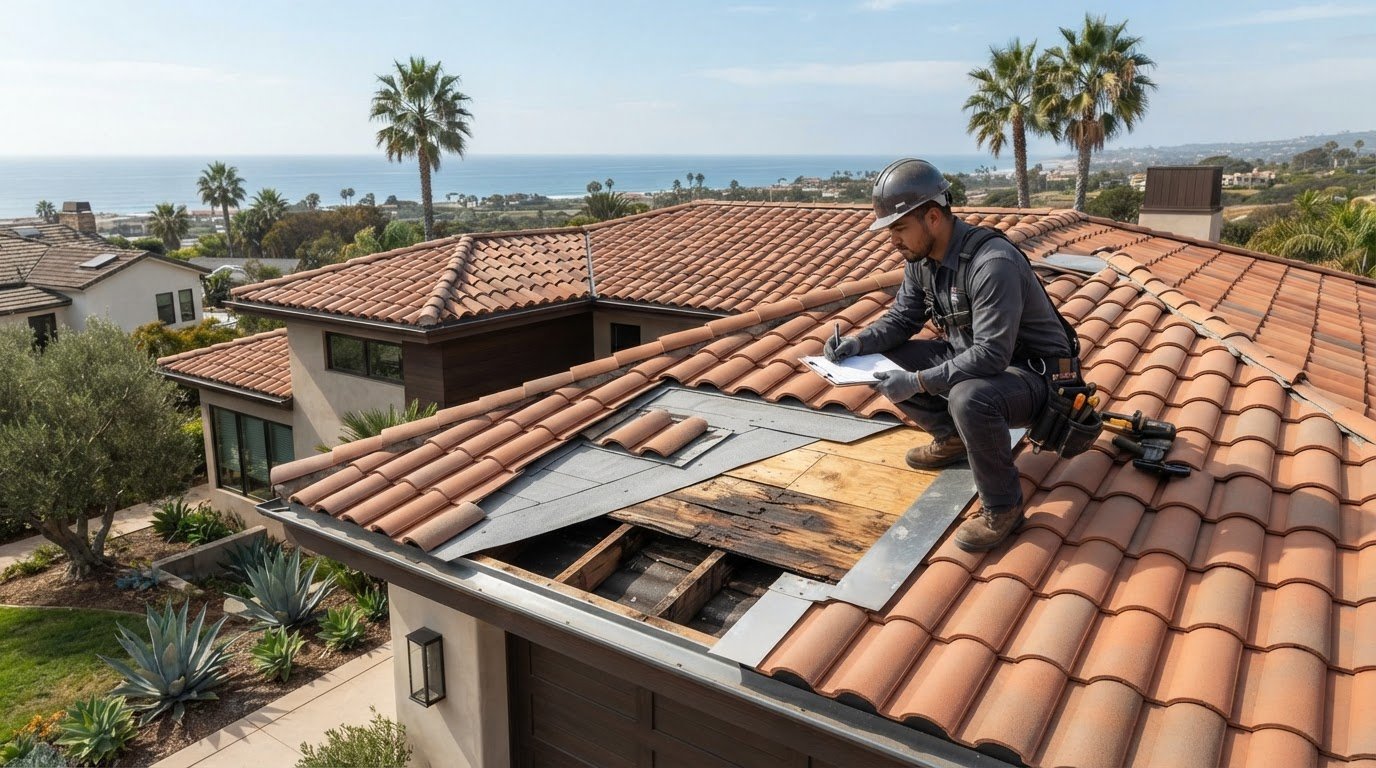
An original La Costa tile roof may have underlayment that has failed or is close to failure after 35-plus years. For a new roof replacement in Carlsbad, the right scope depends on what an inspection reveals about the roof, not its age alone. A written estimate then explains the proposed work and materials.
It’s reasonable to want clear answers before committing to a major home project. This guide explains how roof design, materials, and concealed damage affect the scope; how an inspection differs from an estimate; what material and workmanship warranties generally cover; and what to expect during replacement. You’ll also learn why coastal conditions and the existing tile system matter when planning a new roof replacement in Carlsbad.
Key Takeaways
- An original La Costa tile roof may need attention to its underlayment, even when the tiles still look serviceable.
- A documented inspection helps explain roof condition and recommended work; an estimate outlines the proposed project and its cost factors.
- Read warranty terms closely to distinguish coverage for roofing materials from coverage for installation workmanship.
- Before hiring a roofer, Carlsbad homeowners can check the contractor’s C-39 license through the California Contractors State License Board.
- Understanding the work sequence, permit requirements, and project scope can help you plan for a residential roof replacement.
My La Costa tile roof is original, what should I expect?
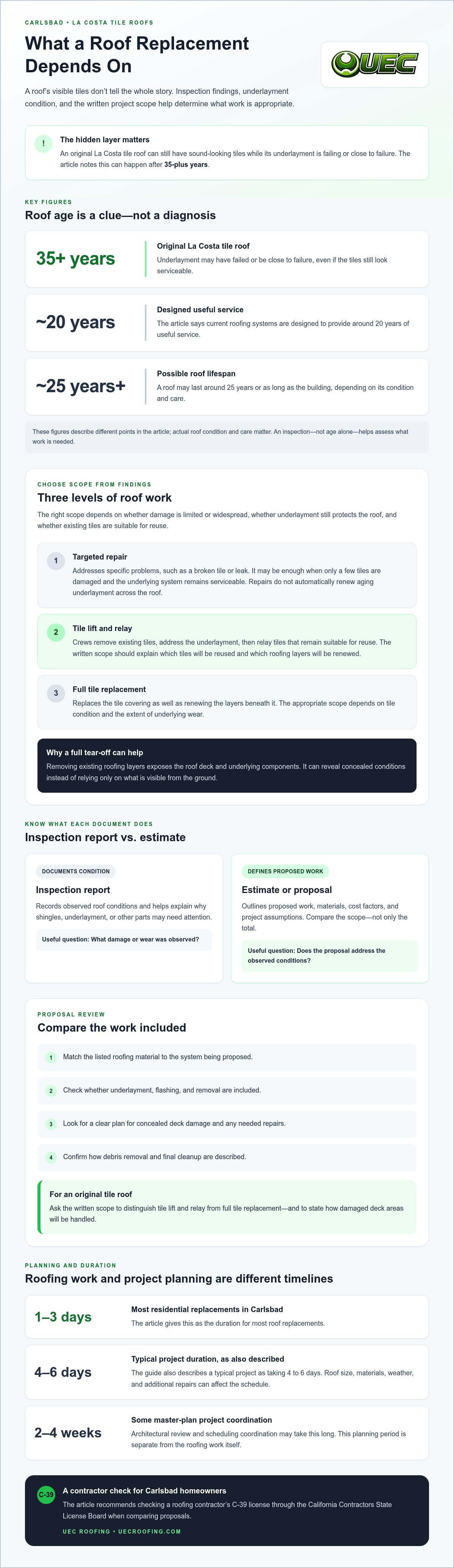
An original La Costa tile roof can have sound-looking tiles over underlayment that has failed or is close to failure after 35-plus years. Current roofing systems are designed to provide around 20 years of useful service, while a roof may last around 25 years or as long as the building, depending on its condition and care.
Repair or Replace the Roof
Roof repair addresses specific problems, such as a broken tile or leak, while full residential roof replacement renews the roofing system across the home. In La Costa, look beyond the visible tile: the underlayment beneath it can deteriorate even while the tile surface remains intact.
An inspection should establish whether damage is isolated or widespread and whether the underlayment still protects the roof. If only a few tiles are damaged and the underlying system remains serviceable, targeted repairs may be enough. If underlayment failure affects broad areas, replacing visible tiles alone won’t renew that layer.
Carlsbad homeowners can check a roofing contractor’s C-39 license through the California Contractors State License Board. This is a practical step when comparing proposals for roof repair, tile replacement, or a full roof project.
Full Roof Tear-Off
A full roof tear-off removes existing roofing layers so the roof deck and underlying components can be assessed. On an original La Costa tile roof, this exposes the underlayment hidden beneath the tiles instead of relying only on what’s visible from the ground.
With tile lift and relay, crews remove existing tiles, address the underlayment, then relay tiles that remain suitable for reuse. Full tile replacement replaces the tile covering as well as renewing the layers beneath it. The appropriate scope depends on the tile’s condition and the extent of underlying wear.
Ask the written scope to distinguish lift and relay from full tile replacement. It should explain what happens to existing tiles, which roofing layers will be renewed, and how damaged deck areas will be handled. These details clarify what the work includes.
Repairs focus on limited areas and don’t automatically renew aging underlayment across the roof. A full tear-off can reveal conditions concealed by the tile surface and help define the replacement work. For Carlsbad homes, inspecting the roof’s layers is more useful than judging the project by tile appearance alone.
Free estimates versus documented inspection reports
In Carlsbad, most residential roof replacements take 1-3 days, while a typical project takes 4 to 6 days. The schedule depends on roof size, materials, weather, and whether the work uncovers additional repairs.
Estimates and Inspection Reports
A free estimate focuses on the proposed work and its cost factors. A documented inspection report records observed roof conditions, helping explain why shingles, underlayment, or other parts of the roofing system need attention.
For example, an estimate might propose replacing an asphalt shingle roof, while an inspection report identifies damaged areas and visible wear. Compare the findings with the recommended scope. A report helps show whether the proposal addresses specific conditions or assumes a broader replacement.
Quotes and Proposals
A roof replacement quote should describe the work, materials, and project assumptions. Compare proposals by scope, not just by the total. One estimate may include underlayment replacement, while another mentions shingles without the same detail.
Ask for a written breakdown of removal, installation, flashing, and cleanup. If a proposal specifies metal roofing instead of shingles, check that the materials and installation scope are clearly identified. These details explain differences between estimates better than a headline figure alone.
Carlsbad roof replacement costs depend on roof area, shape, access, selected material, and the condition beneath the surface. Deck repairs can also affect the scope. A reliable estimate explains these factors without assuming every home needs identical work. For an original tile roof, clarify whether the proposal covers lift and relay or full replacement.
Use a simple comparison when reviewing proposals:
- Match the listed roofing material to your chosen system.
- Check whether underlayment, flashing, and removal are included.
- Look for a clear process for handling concealed deck damage.
- Confirm how debris removal and final cleanup are described.
Scheduling is another part of the written plan. A master-plan Carlsbad project may require two to four weeks for architectural review and scheduling coordination. Ask how the proposed start date relates to approvals, material delivery, and the work sequence. The roofing work itself may take a different amount of time than the full planning period.
Cleanup should be described as part of the project closeout. The proposal can explain how crews will remove roofing debris and leave the work area. Compare that description across bids, alongside the installation scope. A documented roof inspection can help connect observed conditions to the replacement plan.
Manufacturer-backed warranties
A roof project can include separate protections for roofing materials and installation. In Carlsbad’s coastal communities, review each warranty document alongside the proposed roofing system and project records.
Manufacturer Warranty Coverage
A manufacturer warranty addresses defects in products covered by its written terms. It doesn’t automatically cover every roof component or cause of damage. For example, tile and underlayment warranties may define coverage differently, so match each document to the materials named in the proposal.
Review the warranty’s covered products, exclusions, claim steps, and stated remedies. Check whether coverage applies to the material alone or includes other costs. Terms vary by manufacturer and product. The document, not a general description, defines the coverage.
Coastal exposure matters for a Carlsbad roof, but don’t assume it changes coverage in a particular way. Read the exclusions for environmental conditions and maintenance requirements. Keep product names, installation records, and final paperwork together so you can find the applicable terms if a concern arises.
Workmanship Warranty
A workmanship warranty concerns installation work performed by the roofing contractor and is separate from a manufacturer’s product warranty. If a concern arises, the two documents help distinguish a product issue from an installation issue.
Review the workmanship document for covered work, exclusions, the claim process, and the remedy. For example, check whether it addresses installation of the roofing system’s layers or only specific work described in the agreement. Keep a signed copy with the final scope, permit records, and completion documents.
Clear paperwork matters. Product and workmanship warranties are different, even when both relate to the same roof. Keep the responsible party and claim instructions easy to find.
Review warranties before approving the proposal, not after installation. Compare the material names in the proposal with those in the manufacturer documents. Confirm that the written scope and warranty paperwork describe the same roofing system. If the proposal lists tile, underlayment, and flashing, organize the documents by component.
Financing paperwork is separate from warranty coverage. Read each agreement on its own terms, including payment obligations, fees, and conditions. Financing doesn’t itself expand the manufacturer’s coverage or the contractor’s workmanship terms. Keep copies of both agreements with your project records.
Use this review sequence:
- Match each warranty to the product or installation work it covers.
- Note exclusions, claim steps, and stated remedies.
- Store signed agreements, permit records, and final documents together.
- Compare the installed materials with the names in the proposal.
For Carlsbad homeowners, an organized review creates a clear record of the roof project. It also separates material coverage from installation responsibilities without assuming either warranty covers every future repair.
Roof replacement process
A residential project in Carlsbad also involves decisions you can prepare for before crews arrive. Knowing what to review, protect, and document helps keep household needs aligned with the work plan.
Roof Assessment
Use the assessment to identify details that affect household preparations. Note skylights, chimneys, vents, and other roof penetrations, then compare their locations with the proposed work area. Clear stored items from attic access points so they remain reachable if needed. Ask which parts of the home may be affected by overhead work, and plan around those areas.
Consider access around the home, too. Move patio furniture, planters, and vehicles away from likely work and material-handling areas. Arrange access to gates or side yards before the scheduled start if needed.
Inspection and Quote
Use the inspection discussion to resolve practical questions about the home, not just the roof surface. Ask how the crew will work around a skylight or chimney and whether attic ventilation features are included in the planned work. These details clarify how existing roof features relate to the proposed installation.
Keep a copy of the accepted proposal and record any changes agreed on during planning. If concealed conditions change the scope, document the revised work and approval in writing. This creates a clear project record instead of relying on recollection.
Installation Process
Before work begins, prepare the household for noise and activity overhead. Secure fragile items on shelves, remove breakables from walls beneath the roof, and keep children and pets away from active work areas. Ask where the crew will need access, then keep those paths clear.
During installation, direct questions through the designated point of contact. If a detail differs from the accepted plan, ask for an explanation before treating the change as approved. Keep personal belongings and vehicles clear until the work area is released.
At closeout, walk the accessible areas around the home and note any questions about the finished work. Gather the final project documents, including the approved scope and any written changes. These records help with future maintenance and provide a useful reference if the roof is inspected later.
For Carlsbad homeowners, preparation is part of a well-managed project. Clear access, protected belongings, and written records make it easier to follow the work without confusing household arrangements with technical decisions.
Residential roof replacement in Carlsbad
Carlsbad homes have different roofing needs based on material, location, and roof design. Coastal moisture, salt air, and marine-layer conditions can accelerate underlayment wear and flashing failure. A residential replacement plan should account for local exposure, not just the visible roof surface. Identifying the existing system is a practical first step toward a new roof replacement in Carlsbad.
Asphalt and concrete tile roofs need different removal and installation plans. Original tile may remain usable while the layers beneath it need renewal. Asphalt shingles, by contrast, are replaced as part of their roofing system. Inspection findings help determine whether the work calls for targeted roof repair or full replacement. That distinction shapes the project scope.
Carlsbad is in California climate zone 7, and steep-slope residential roof replacements must meet Title 24 cool roof requirements. Material selection is therefore part of project planning. Ask how the proposed roofing material fits the home’s roof design and applicable requirements. A written scope should identify materials, flashing, permits, warranty terms, and a deck-repair allowance.
The City of Carlsbad requires a building permit for residential roof replacement. Include the permit in the project plan, along with removal, installation, and cleanup. A full replacement may reveal deck damage after existing materials come off, so the written scope should explain how that work will be handled.
Material choice also affects how a roof suits its setting. Concrete or clay tile can suit hot, dry coastal weather. Near the shoreline, give flashing close attention: standard galvanized flashing and drip edge can corrode quickly within a mile of the coast. Ask for flashing materials to be specified in writing instead of relying on a general description.
Compare proposals by their full scope. Check that each describes the roof system, underlayment, flashing, permit, warranty, and cleanup. A lower total may reflect different included work, not better value for the same project. For a tile roof, confirm whether tiles will be reused or replaced. For asphalt, confirm the planned removal and replacement layers.
Choose roof repair when inspection findings point to a limited issue and the surrounding system remains serviceable. Widespread underlayment or flashing concerns may call for broader work. The deciding evidence is the documented condition, not simply the roof’s age or appearance.
Roofing needs vary across Southern California, from Carlsbad to Lake Elsinore and the Inland Empire, including Riverside, Orange, Los Angeles, and San Bernardino Counties. In Carlsbad, use local exposure, inspection findings, and a clear written scope to guide the project. Plan a residential roof replacement around the home’s roof system and installation needs.
UEC Roofing: leak repair
UEC Roofing helps Carlsbad homeowners address active leaks and assess roof concerns with leak repair, roof repair, and roof tune-ups. A ceiling stain, water intrusion, or damaged tile needs attention. Identifying the source helps clarify whether the issue is localized or affects a wider area.
For a leak, share where you’ve seen water and any visible roof damage. That context helps focus the inspection. A tune-up can address maintenance needs, while roof repair targets identified damage. The right next step depends on the roof’s condition and the source of the problem.
If you’re concerned about a leak or other roof problem, contact UEC Roofing to discuss your home’s needs.
Take the Next Step With Confidence
Planning a new roof replacement in Carlsbad is also an opportunity to make a clear plan for ongoing roof care. The right next step depends on the roof’s current condition. A concern limited to one area may call for a different response than broader wear across the system.
UEC Roofing offers leak repair, roofing services, and roof tune-ups for homeowners assessing what their roof needs. Share the concern you’ve noticed and the roof type, such as original tile or asphalt shingles. That context helps frame a useful discussion about maintenance or repair.
A careful decision starts with clear information and a scope that matches the home. If you’re ready to discuss your roof, contact UEC Roofing. Take the next step at your pace, with your home’s protection in mind.
Frequently Asked Questions
How do I find a good roofing contractor in Carlsbad?
Choose a contractor who explains the proposed work in writing and answers questions clearly. Compare proposals for material choices, project communication, and how changes discovered during work are handled. Industry professionals like Royalty Construction emphasize transparent scopes and detailed planning for major exterior and roofing projects. Ask who will share updates and how revisions to the agreed scope will be documented. For a Carlsbad home, written records help keep decisions and expectations clear from planning through completion.
How long will my Carlsbad roof system last?
A roof’s useful life depends on its materials, installation, upkeep, and exposure. Rather than relying only on its age, record repairs, maintenance, and recurring concerns. Note which areas have needed attention and whether the same problem returns. This history gives you a clearer basis for planning maintenance and deciding when a professional assessment may help.
What do Carlsbad roofs need?
Carlsbad roofs benefit from routine attention to drainage, penetrations, and attic conditions. Keep gutters and roof drainage paths clear of leaves and debris, and watch for loose or damaged components around vents and chimneys. Inside, note signs of moisture or poor airflow in the attic. A maintenance record helps track observations over time and identify recurring concerns.
What is the average cost to replace a roof in Carlsbad, California?
There’s no single average that applies to every Carlsbad home. Costs depend on the project and are provided after a quote request. For a useful comparison, make sure estimates describe the same work, such as removal, installation, disposal, and any listed allowances. Without a clearly defined scope, different projects can appear comparable based on the total alone.
How much does roof replacement cost per square foot in Carlsbad?
A per-square-foot figure is a comparison aid, not a complete project quote. Roof surface area differs from a home’s interior floor area, especially with slopes and complex roof shapes. Costs depend on the project and are provided after a quote request. Compare the measured roof area and included work before using a unit figure to assess proposals.
What factors affect the price of a new roof in Carlsbad?
The selected roofing assembly and the home’s roof details influence the project price. Complex transitions around skylights, chimneys, and vents can require more detailed work than broad, uninterrupted roof areas. Review how the written scope addresses these details and describes any allowances for additional work.
Which roofing materials are best for homes in Carlsbad’s coastal climate?
Concrete or clay tile can suit Carlsbad’s hot, dry coastal conditions. The right choice for a particular home also depends on its roof design, structural suitability, and maintenance priorities. Discuss how the selected material works with the complete roof assembly, including edges and penetrations. Consider the home as a system, not just appearance or surface durability.
How do asphalt shingle, tile, and metal roof replacement costs compare in Carlsbad?
There’s no reliable cost ranking without matching the scope and specifications for each material. Asphalt shingle, tile, and metal proposals can differ in the materials included and installation details required. For a fair comparison, request separate written scopes based on the same roof measurements and clearly defined work.