
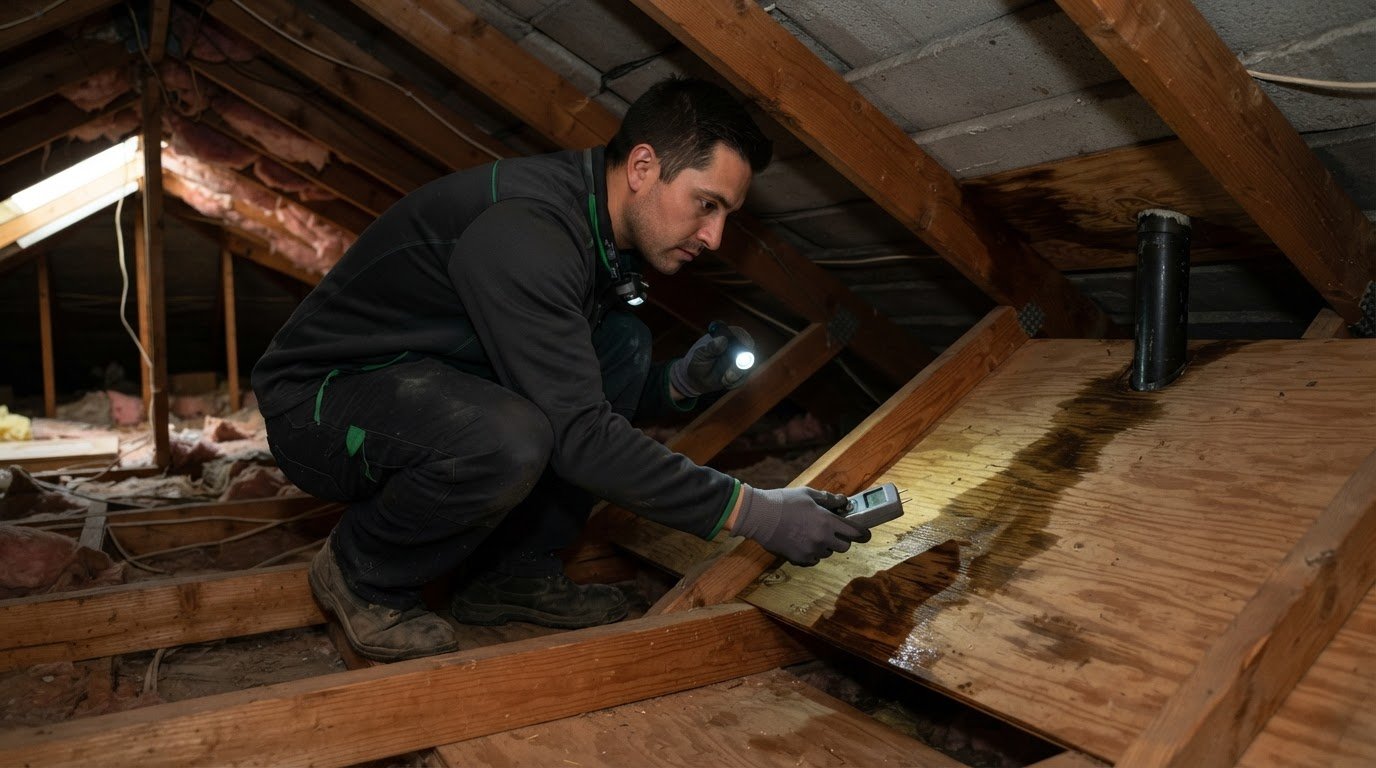
Preventing water damage from roof leaks in Poway starts with inspecting the roof twice a year and after major weather events, then checking the attic and ceilings for signs of moisture. A leak in a roof over 10 years old may signal a failing roofing system, while a newer roof may need a targeted repair. The roof’s age helps guide the response, but it isn’t the only clue.
It’s easy to assume a small stain or occasional drip can wait. But water can travel along roof framing before it appears indoors, so the visible mark may be away from the actual leak. These checks matter for Poway homeowners and across Southern California, including Lake Elsinore, the Inland Empire, and Riverside, Orange, San Diego, Los Angeles, and San Bernardino Counties.
This guide explains what to look for in the attic and on the roof, how age, wear, and maintenance affect leak risk, and when to bring in a roofing professional. You’ll also find practical steps to limit interior damage while addressing the source of the water.
Key Takeaways
- Check the attic for dampness, staining, or musty odors, and stay on the wooden rafters to avoid stepping through the ceiling.
- Inspect the roof twice a year and after major weather events; a leak in a roof over 10 years old may signal a failing system.
- Watch for damaged shingles, flashing, pipe boots, or gutters, and address signs of wear before water intrusion spreads.
- Use a ground-level visual check for warning signs, then arrange a professional inspection to locate the leak source when needed.
- Catch indoor drips with containers and protect belongings, but don’t climb onto a wet roof to place a tarp.
1. Checking the attic for water infiltration
Start your attic check with a flashlight. Inspect the underside of the roof deck for dark stains, damp patches, or discolored wood, and look at the ceiling and walls below. Water can travel along a rafter and drip several feet from the roof opening, so the indoor stain may not be directly beneath the leak. A careful check can narrow the search without assuming the visible mark shows where water entered.
Move slowly, stepping only on wooden rafters, never on drywall or ceiling material. If insulation hides the framing, don’t step into the covered area. Look around roof penetrations and flashing, and note any missing or damaged shingles visible from a safe vantage point. Rain can enter through an opening in the roofing; wind may lift or tear shingles, and aging materials can become less effective at keeping water out. These are possible pathways, not proof of the leak’s exact source.
In California, many homeowners insurance policies cover weather-related water damage from a roof leak, while flood damage requires separate insurance. Document affected areas promptly with notes and photographs.
Check for moisture clues beyond visible drips. Mold or mildew, a musty odor, damp insulation, and water staining on the roof deck can all signal moisture. Inside, look for stains, damp patches, or bubbling paint on ceilings and walls. A musty smell may be the only obvious clue at first. If attic humidity is persistently high, the cause may include air leaks from rooms below, inadequate ventilation, or a continuing roof leak. The stated target is below 50 percent relative humidity; a dehumidifier, improved ventilation, or insulation adjustments can address rising readings, but lasting prevention means addressing the moisture source.
If water is entering, move furniture and valuables away, then place a bucket or bowl under active drips. Photograph stains on the ceiling, walls, and in the attic, and note when you first noticed the damage. If a ceiling bulges with pooled water, carefully making a small hole can let water drain and relieve pressure. Don’t climb onto a wet roof to place a tarp; wet surfaces can be slippery.
Keep the attic check focused on evidence, not guesswork. A rafter stain, damp insulation, or ceiling mark several feet away can indicate a leak, but water’s path may obscure its entry point. Record what you find and avoid disturbing wet materials. If the source remains unclear or moisture continues, a roofing professional can trace the leak and assess whether shingles, flashing, or another roof area needs attention.
2. Assessing roof age and repair needs
Roof age gives Poway homeowners useful context, but it doesn’t determine the repair by itself. A leak in a roof over 10 years old may signal a failing roofing system. A newer roof can still need a targeted repair after damage. Consider the roof’s age alongside visible wear, leak location, and whether the problem appears isolated or widespread.
Begin with a ground-level visual inspection. Look for missing, uneven, lifted, or damaged shingles, and compare roof planes for changes in color or appearance. Use binoculars to see details without climbing. Don’t walk on the roof to check a suspected problem. Note where damage appears, then compare it with any ceiling stains or attic moisture.
For Poway and San Diego County, permit and stormwater requirements can depend on the repair’s scope and site conditions. Establish applicable requirements before work begins, and don’t assume a small repair and a broader roof replacement follow identical rules.
One damaged shingle or a localized opening may point to a limited repair, while wear across several areas can suggest broader deterioration. A ceiling stain below one roof edge and a nearby damaged shingle provide a useful starting point, but don’t prove that shingle is the only cause. Water can move beneath roofing materials before appearing indoors, so include both the attic and roof surfaces in your assessment.
Find the roof’s approximate installation date in available home records, then document visible changes with dated notes and photographs. Compare new photos with earlier ones when possible. A growing area of missing or damaged shingles may indicate spreading deterioration. If a leak returns after a repair or several roof areas show wear, a professional assessment can help distinguish localized damage from a roof nearing failure.
- Age: A leak in a roof over 10 years old may indicate broader system failure.
- Distribution: One damaged area differs from wear visible across multiple roof sections.
- Interior evidence: Match ceiling stains with attic and roof observations, without assuming they align exactly.
- Change over time: Dated photos can show whether missing or damaged shingles are increasing.
Use these clues to describe the problem clearly: roof age, visible wear, leak history, and affected indoor areas. This information helps focus the next inspection and supports a practical choice between limited repairs and more extensive work.
3. Damage caused by poor maintenance and ordinary wear
In Poway, routine roof care can reveal small defects before rain reaches the roof deck. Inspect the roof twice a year and after major weather events. From the ground, look for shingles that are missing, torn, cracked, curling, lifted, or visibly damaged. Any of these can create a path for water, especially when nearby materials are worn.
Pay close attention where roofing materials meet other surfaces. Cracked caulk around flashing or missing flashing pieces can let water seep beneath the roof covering. A pipe boot may leak if its base or rubber surround cracks. Holes left by removed shingle nails, including after equipment such as a satellite dish is removed, can also expose the roof to water intrusion.
Gutters are another part of the roof drainage system to check. Drooping gutters or overflow during rain may signal a problem, while leaves and other blockages can prevent proper drainage. Keep gutters clear and trim tree limbs so they don’t touch the roof. Branches rubbing against shingles can contribute to wear, while blocked drainage can leave water near vulnerable areas.
- Look for damaged or missing shingles from a safe ground-level position.
- Check visible flashing for cracked caulk or missing pieces.
- Note cracks around pipe boots and holes left by removed nails.
- Clear gutter blockages and keep tree limbs from touching the roof.
Maintenance also matters when homeowners consider insurance. Most homeowners insurance policies don’t cover damage caused by lack of maintenance. Nearly a third of homeowners think their insurance will pay for damage caused by neglect or ordinary wear, so don’t assume a maintenance-related leak will be covered. Report signs of roof damage promptly; delays can allow additional damage that may not be covered.
Keep a simple record of changes: note the inspection date, roof area, and observed defect. For example, write “cracked pipe boot above the garage” rather than “roof looks worn.” Ground-level photos can show whether a visible defect has changed over time. After major weather, compare new observations with earlier notes, then arrange a closer inspection if you see damage or a leak develops.
These steps support preventing water damage from roof leaks in Poway by focusing on defects homeowners can spot and maintenance they can carry out safely. Don’t climb onto a roof to investigate wear. If shingles, flashing, or drainage features appear damaged, prompt attention can help limit further deterioration and show whether the issue is isolated or part of a broader maintenance problem.

4. Professional roof inspections
A ground-level check can reveal visible damage, but it cannot show every roof detail. A roofing professional can inspect areas homeowners can’t safely reach and trace water toward its entry point. In Poway, a closer look is useful when a ceiling stain returns, attic moisture persists, or visible damage doesn’t explain where water appears indoors.
Poway homeowners should inspect roofs twice a year and after major weather events. Professional inspection and maintenance can help identify developing issues before water reaches interior materials. Ground checks are useful between appointments, but don’t climb onto the roof. A professional can examine roof surfaces and junctions more closely and safely.
Pay particular attention to flashing around pipes and chimney vents. Lifting or tearing at these penetrations may indicate damage that lets water pass beneath roofing materials. Water-damaged spots on an exterior wall can point to an issue with step flashing where the wall meets the roof. For example, a high interior wall stain may warrant checking the roof-to-wall junction, rather than focusing only on the nearest shingle.
A roof leak’s visible drip doesn’t always mark its source. Water may travel beneath roofing or along structural materials before reaching a ceiling. A specialist can compare the indoor stain, attic evidence, and exterior roof details to narrow down the entry point. Repairing the wrong area may leave the leak active, even if the visible symptom temporarily dries.
- Describe when the leak appears and which rooms show signs of moisture.
- Share photographs and notes documenting the affected ceiling or wall.
- Point out relevant attic staining or dampness, if safely observed.
- Ask for the suspected entry point and the roof condition supporting that finding.
These details give an inspector a clearer starting point without treating a stain as a diagnosis. The inspection should consider visible roof damage, penetrations, flashing, and roof-to-wall transitions. If the source remains uncertain, continued investigation is more useful than simply covering the indoor mark.
For preventing water damage from roof leaks in Poway, pair twice-yearly checks with professional attention when warning signs appear. A recurring leak, lifting flashing, or water-marked exterior wall calls for a closer assessment. Addressing the source, rather than only the ceiling damage, guides the repair and helps reduce continued intrusion.
For next steps, check the roof from the ground and contact a roofing professional for a closer look when needed. Professional inspection and maintenance can help identify issues before they lead to further damage.
5. What tools and materials are needed for a temporary roof leak repair?
For a leak inside a Poway home, start with a bucket, bowl, or other container to catch dripping water. Choose one wide enough for the drip area and place it beneath the leak. If water lands across a broad area, use more than one container. Check and empty them as needed so water doesn’t spill onto floors or belongings.
A waterproof tarp can temporarily protect an affected roof area when it can be placed safely. It may reduce water intrusion until the roof receives an assessment and repair. A tarp is not a permanent fix: it may not stop water entering elsewhere, and covering the wrong area won’t address the leak’s actual source.
Don’t climb onto a wet roof to spread or secure a tarp. Rain can make roof surfaces slippery and create a fall risk. If reaching the damaged area requires walking on a wet roof or working near an edge, leave the roof alone and focus on catching water indoors. Temporary protection should never require a risky climb.
- Bucket or bowl: Catch a steady drip beneath its landing point.
- Additional container: Cover a wider indoor area where water is splashing or moving.
- Waterproof tarp: Temporarily protect an affected roof area only when placement is safe.
Keep the response simple. Set the container directly beneath the drip, and check whether water is missing the opening or splashing beyond it. Move the container if the drip’s direction changes. If water spreads along a ceiling instead of falling in one spot, place containers beneath the wettest visible area and keep the surrounding floor clear.
A bulging or wet ceiling needs careful attention because pooled water can put pressure on the ceiling material. Carefully making a small hole can let pooled water drain and relieve pressure. Don’t attempt this if you can’t do so carefully or safely. Keep clear if the ceiling appears unstable, and arrange professional attention for the leak and resulting damage.
These supplies manage water temporarily; they don’t identify or fix the roof opening. A tarp may limit intrusion, while a container catches water already inside. Once immediate dripping is contained, the underlying leak still needs attention. A recurring drip, spreading ceiling stain, or water entering around a roof penetration calls for locating the source, not relying on a temporary covering as a repair.
For a safe temporary response in Poway, use containers indoors and a waterproof tarp only when roof placement is safe. If the wet roof makes access unsafe, don’t climb it. Keep temporary measures separate from a lasting repair, which must address where water enters.
UEC Roofing: leak repair
UEC Roofing provides leak repair and roof repair when a drip returns, water staining spreads, or the source remains unclear after a visual check. Based in Lake Elsinore, the company has completed over 2,000 successful projects in the region. For Poway homeowners, timely attention can help limit further damage to ceilings, walls, or attic materials.
UEC Roofing can assess the leak and determine an appropriate repair based on the roof’s condition. Contact UEC Roofing to discuss a roof leak and next steps.
Make roof care part of your home plan
Make roof maintenance part of your home’s regular care routine. Keep inspection notes with other property records and track whether concerns change over time. These records can help you explain what you’ve observed and make decisions based on the roof’s condition, not guesswork. A clear next step supports preventing water damage from roof leaks in Poway while protecting the home’s structure and interior.
UEC Roofing provides roofing services, including leak repair and roof tune-ups, for homeowners addressing a current concern or planning ongoing care. A tune-up can be a practical step when you want to handle maintenance before another leak appears. Choose the service that fits the issue, whether water is entering now or you’re planning ahead.
Contact UEC Roofing for roof help and take the next step toward a well-maintained roof.
Frequently Asked Questions
What are the first steps to take after discovering a roof leak to limit water damage?
Protect people and belongings first, then contain the water and keep a clear record of what happened. Move electronics, rugs, and stored items away, and note which rooms and surfaces are wet. If water is near electrical equipment, avoid touching it and seek appropriate help. Keep receipts for emergency purchases and photograph damaged belongings as well as building materials.
How can you find the source of a roof leak and prevent it from spreading?
Compare where water appears indoors with clues in the attic and on the roof, but don’t assume the points line up. Water may travel before it drips. Mark the edges of a ceiling stain with a pencil and date the mark; if it expands, you’ll have a clearer record of ongoing intrusion. A professional can trace the leak, and prompt attention to its entry point can help limit further spread.
When should you call a roofer or water damage restoration company in Poway?
Call a roofer when water is actively entering, a leak returns, or the source remains uncertain. UEC Roofing provides leak repair for roof-related concerns. Consider water damage restoration when water has soaked interior materials, affected several rooms, or left wet contents needing specialized drying or removal. A roofer addresses the roof opening; restoration focuses on affected indoor areas and materials.
How can you prevent mold after a roof leak, and how quickly should wet materials be dried?
Dry wet materials promptly and address the leak source so moisture doesn’t continue entering. When practical, move damp belongings to a dry, ventilated area and separate wet items from dry ones. Check concealed spaces, such as behind stored boxes near an affected wall, for lingering dampness or musty odor. If moisture persists or mold appears, arrange an appropriate professional assessment rather than covering the area.