
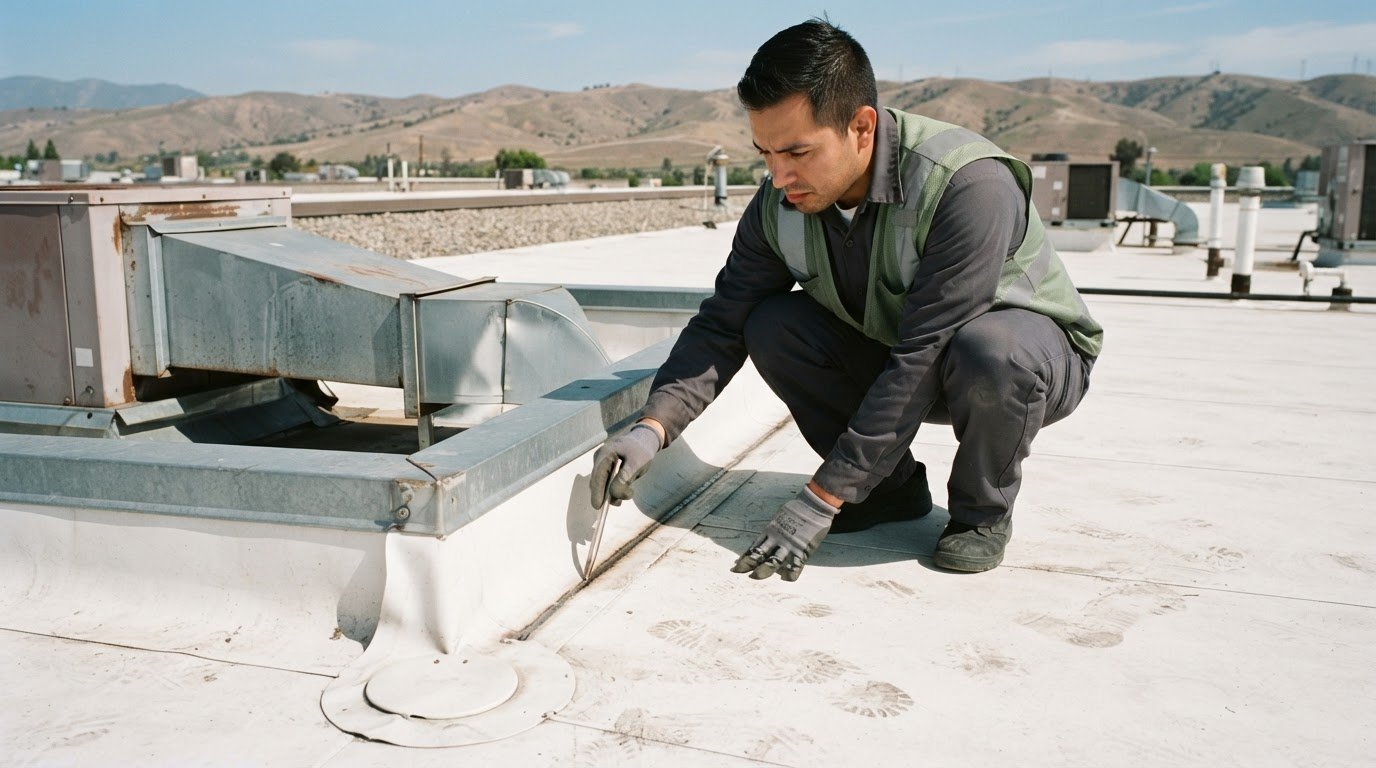
Routine maintenance can help delay commercial roof replacement, but it cannot prevent it indefinitely. A commercial roofing maintenance plan in Winchester should include professional inspections twice a year, typically in spring and fall, with additional attention after major storms. Regular inspections and timely repairs can identify developing problems before they cause more extensive damage.
A clear schedule helps you understand what maintenance your roof needs and how it relates to the warranty. The right approach depends on the roofing system, its condition, and the warranty’s terms. Keep inspection reports and records of completed work together to document how the roof has been maintained.
This guide explains what inspections and service should cover, how maintenance relates to warranty coverage, and when repairs or roof rejuvenation may help extend a roof’s useful life. It also describes signs that maintenance may no longer be enough, so you can plan the next step with a clearer picture of your commercial roof.
Key Takeaways
- Plan professional roof inspections in spring and fall, and arrange an additional inspection after a major storm.
- Have service address emerging issues such as blocked drainage, damaged flashing, and membrane wear before they develop into larger problems.
- Keep a record of inspection findings and completed maintenance; documented care may support warranty requirements, which depend on the specific warranty terms.
- Timely repairs can help extend a roof’s useful life, but maintenance cannot prevent eventual replacement when the system is too worn or damaged.
- UEC Roofing provides roof tune-ups, leak repair, and roof repair to address maintenance needs and developing problems.
How Often Should Commercial Roofs Be Inspected in Winchester, CA?
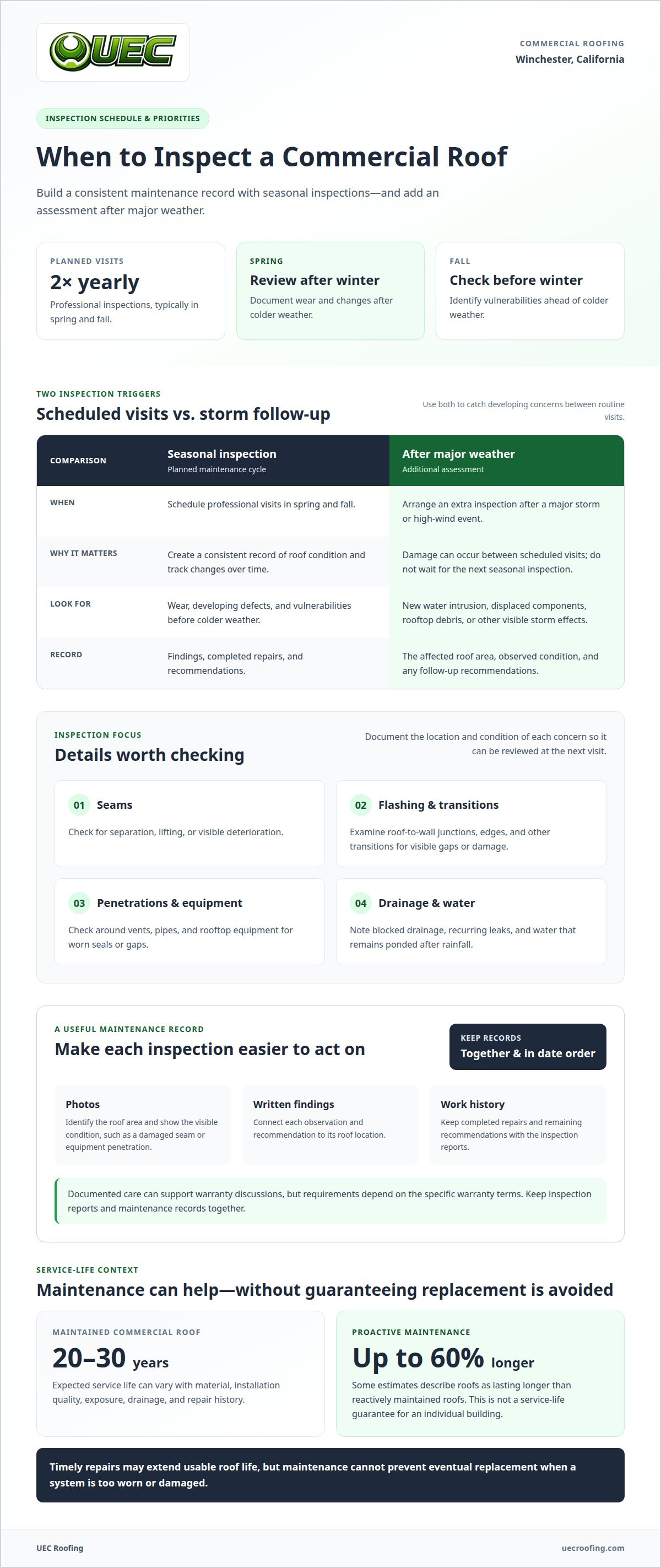
Commercial roofs in Winchester, California, should receive professional inspections twice a year, typically in spring and fall. Arrange an additional inspection after a major storm or high-wind event, since damage can occur between scheduled visits.
Routine inspections are distinct from construction or alteration work. Whether a permit applies depends on the work and local requirements. An inspection alone does not establish whether a permit is needed.
Recommended Inspection Frequency
Schedule two professional inspections each year, using spring and fall visits to build a consistent record. A spring assessment can document wear after winter, while a fall visit can identify vulnerabilities before colder weather. After a major storm or high winds, arrange an extra assessment instead of waiting for the next scheduled visit.
Inspections before an insurance review, warranty renewal, or capital-improvement budget can provide useful information about roof condition. Reports should record findings, completed repairs, and recommendations. Keeping these details together helps building managers track recurring concerns and compare the roof’s condition over time.
Seam, Flashing, and Penetration Checks
Check roof seams for separation, lifting, or visible deterioration. Examine flashing where roof surfaces meet walls, edges, or other transitions. These junctions can be vulnerable to water entry, so document visible gaps and note where repairs may be needed.
Check around vents, pipes, and rooftop equipment for damaged seals, gaps, or wear. Photos should identify each location and show its condition. Comparing images at a later inspection can help determine whether a concern has changed or needs follow-up.
Weather Effects on Maintenance
In Winchester, California, storms and high winds can damage roofs between scheduled visits. Arrange an inspection after a major weather event, particularly if building staff notice new water intrusion, displaced components, or rooftop debris. This assessment supplements the planned seasonal visits.
Seasonal timing also shapes inspection priorities. A fall visit can identify vulnerabilities before winter, while a spring assessment can document changes after colder weather. The roofing system and its condition determine which areas need closer attention.
Photo reports make inspection records easier to use. Each image should identify the roof area and show a visible condition, such as a damaged seam, flashing junction, or equipment penetration. Pair photos with written findings, completed repairs, and recommendations. Managers can then review these records during warranty discussions, insurance reviews, and budgeting.
Keep reports in date order and connect each recommendation to its roof location. This makes it easier to distinguish a recurring concern from a newly observed problem. A twice-yearly schedule, supplemented by assessments after major storms, gives building teams a documented basis for planning maintenance and repairs.
How often should a commercial roof be serviced?
Schedule routine service around the roof’s inspection cycle, adjusting the work to its observed condition. A commercial roof with clear drainage and intact details needs different attention from one with recurring leaks or loose components. During each visit, the maintenance team can address identified defects and record completed repairs and remaining recommendations. This history helps managers track the roof’s condition over time.
For a maintained commercial roof, expected service life can range from 20 to 30 years. Proactive maintenance may extend a roof’s lifespan, with some estimates describing roofs as lasting up to 60% longer than reactively maintained roofs. These figures are not a service-life guarantee for an individual building. Roof material, installation quality, exposure, drainage, and repair history all influence how long the system remains serviceable.
Maintenance can also help limit the consequences of delayed repairs. A small opening near a roof penetration, for example, can let water reach insulation or interior finishes if left unattended. Repairing a specific defect early may limit related damage and reduce repeated troubleshooting. The value of maintenance lies in preserving usable roof life and reducing preventable disruption, not in promising that replacement will never be needed.
A practical plan should reflect the roof and site conditions. Its scope can account for roof material, age, existing trouble spots, drainage paths, rooftop equipment, and access routes. A roof with recurring debris near drains may need closer attention in those areas. On a large roof with multiple equipment penetrations, clearly mapped findings help direct follow-up to the right locations.
When choosing a commercial roofing maintenance provider, compare the inspection scope, repair documentation, and clarity of recommendations. A useful report identifies the affected roof area, describes the observed condition, and separates completed work from recommended repairs. The plan should address drainage, seams, flashing, and penetrations where relevant. These details make maintenance decisions easier to evaluate and changes easier to track between visits.
Visible leaks, recurring interior water stains, damaged seams, loose flashing, and water that remains ponded after rainfall can signal a need for repair. Replacement may become a consideration when deterioration is widespread or repeated repairs no longer address the roof’s overall condition. An assessment should explain the observed damage and the reasons for recommending repair or replacement, rather than treating every leak as proof that the entire roof has failed.
Peace of mind comes from knowing what was found and what happens next. A maintenance record shows the sequence of inspections, repairs, and recommendations, helping managers plan work before a small defect spreads. Regular service cannot stop normal aging, but attention to drainage and localized damage can help extend the roof’s useful life and support informed replacement planning.
Does maintenance keep a warranty valid?
Regular maintenance can support warranty requirements, but it does not automatically keep every warranty valid. Many commercial roof warranties require documented maintenance, and manufacturers commonly recommend yearly inspections. The written warranty determines which inspections, repairs, and records apply to a specific roof in Winchester, California.
A maintenance program should include checks of the membrane, flashing, seams, drains, and gutters. It should also record observed conditions, completed work, and recommendations. This documentation gives building managers an organized maintenance history if questions about warranty coverage arise. Keep each report with the property’s warranty documents and repair records.
Give drainage direct attention. Clear roof drains twice a year and remove debris that can obstruct water flow. Leaves and dirt around drain openings can contribute to ponding, wear, or damage. A maintenance visit should also examine gutters and drainage paths for blockages, standing water, and signs that water is not flowing off the roof properly.
Flashing protects transitions where the roof meets walls, edges, and equipment. Inspect these locations for separation, gaps, or visible deterioration. Check membrane seams for lifting or damage, then note each affected area. A photo and written description make it easier to track changes at a later visit.
Inspection findings should lead to clear next steps. The report can distinguish debris removal from repairs and identify areas needing follow-up. For example, a blocked drain may need cleaning, while damaged flashing calls for repair. Recording both the issue and the completed action creates a more useful history than simply noting that the roof was serviced.
- Drainage: Clear drains and gutters, and document obstructions or ponding.
- Flashing: Record gaps or deterioration at roof transitions.
- Membrane: Photograph damaged seams or other visible defects.
- Follow-up: List completed work and remaining recommendations.
Debris removal matters because accumulated material can impede drainage and contribute to water pooling. Keeping drains clear helps reduce avoidable stress on the roof, while documented inspections show that maintenance took place. Neither step replaces repairs when the membrane or flashing is damaged, and maintenance cannot prevent eventual replacement when a roof reaches the end of its serviceable life.
Use the written warranty requirements to guide the maintenance schedule and recordkeeping for a Winchester commercial property. Keep dated inspection reports and repair documentation together. An organized history can show what was inspected, which work was completed, and which recommendations remain open.
Workmanship and manufacturer warranty coverage
A roof warranty may include separate coverage for workmanship and roofing materials. Workmanship coverage generally concerns installation, while a manufacturer warranty addresses covered materials. The specific terms, exclusions, maintenance duties, and claim process depend on the warranty document. A roof maintenance plan supports careful recordkeeping but does not replace those written terms.
Keep a single warranty file with the original documents, inspection reports, photographs, and roof repair records. Each entry should identify the inspection date, affected roof area, observed condition, and completed work. For example, a report about ponding should note its location and the drainage action taken. Clear records help establish the roof’s maintenance history if a coverage question arises.
Preventive maintenance can reveal conditions that need attention before they worsen. A documented inspection might identify worn flashing, a damaged membrane, or debris obstructing drainage. The next record should state whether the item was repaired or remains a recommendation. This distinction helps separate completed repairs from outstanding maintenance concerns.
Warranty compliance depends on following the applicable document’s requirements. Some commercial roof manufacturer warranties require documented maintenance, and manufacturers commonly recommend yearly inspections. Keep dated reports with invoices or work records, and note any follow-up actions. Before planned roof repairs or alterations, review the relevant warranty terms so the work and its documentation align with the stated conditions.
Manufacturer material warranties for some roofing systems may extend up to 20 years. That period does not establish the length or scope of every warranty, and it should not be treated as a promise of service life. Coverage depends on the specific system and written terms. The warranty should be read alongside the maintenance record, not as a substitute for inspections or timely repairs.
GAF states that an annual inspection by a GAF Certified Maintenance Program contractor can extend an eligible manufacturing warranty by up to 25%. This applies to eligible warranties under that program, not automatically to every commercial roof or manufacturer. The relevant warranty paperwork determines eligibility and the required maintenance documentation.
- File: Store warranty documents, dated inspection reports, and repair records together.
- Track: Record roof locations, observed conditions, photographs, and completed work.
- Follow through: Mark recommendations as completed only after the work is documented.
- Review: Use the specific warranty terms to guide maintenance and repair records.
A complete record can make warranty discussions more orderly, but documentation alone does not guarantee coverage. The roof’s condition, maintenance history, and precise written terms all matter. When ponding or visible damage appears, prompt assessment and a clear repair record help preserve an accurate account of the roof’s care.
Commercial roofing services in Winchester
Commercial roofing services should match the roof’s condition and the building’s needs, not follow a one-size-fits-all checklist. In Winchester, begin with a documented assessment that identifies the roofing system, visible defects, drainage concerns, and areas needing follow-up. The findings help distinguish routine upkeep from repair work or larger planning decisions.
Commercial roofing systems have different components and potential failure points. A membrane roof, for example, calls for attention to seams and penetrations, while a roof with multiple equipment units needs careful review around each curb and service route. The inspection scope should reflect the actual system and rooftop layout rather than treating every roof alike.
A useful service process moves from assessment to prioritized recommendations. First, the inspection records the roof’s condition and photographs relevant locations. Next, the report identifies urgent defects, developing concerns, and routine maintenance needs. Finally, the property manager can plan repairs and track unresolved items. This process supports clearer decisions without assuming every issue requires extensive work.
Recommendations should explain the reason for each proposed action. For example, a report might distinguish a localized seam defect from widespread membrane deterioration. This helps managers understand whether a targeted repair may address the issue or whether a broader assessment is appropriate. A clear report also gives facilities teams a useful reference for future inspections.
Commercial roof maintenance can help manage conditions that affect roof performance, including drainage obstructions, damaged flashing, and visible membrane wear. Building managers can support the process by sharing known leak locations, prior repair records, and rooftop equipment access details. This helps focus inspections on both areas with a history of problems and newly observed concerns.
To evaluate a proposed scope, compare the inspection findings with the recommended work. Each repair should connect to a documented condition, and each maintenance task should have a clear purpose. If a recommendation involves replacing a larger roof area, the report should explain the condition behind that conclusion. Clear reasoning helps decision-makers weigh repair needs against longer-term planning.
Roofing systems can remain serviceable when developing problems are identified and addressed appropriately, but maintenance cannot reverse every form of deterioration. Repeated leaks, widespread material damage, or recurring failures in the same area may call for a more extensive assessment. The roof’s overall condition, repair history, and performance of key components all inform that decision.
For Winchester businesses, the practical takeaway is to treat maintenance as a documented management process: assess the roof, prioritize findings, complete appropriate work, and preserve the records. This gives building teams a clearer basis for planning repairs and making informed decisions about extending the life of a commercial roof.
A plan can include a roof-specific inspection with photographs and a review of seams, penetrations, equipment curbs, drainage, flashing, and visible membrane wear. It can also include follow-up on known leak locations and prior repairs, plus prioritized recommendations that distinguish urgent defects, developing concerns, routine upkeep, and repair needs. Tie each proposed task to a documented condition.
UEC Roofing
UEC Roofing brings local experience to commercial roof care, with a brick-and-mortar location in Lake Elsinore and more than 2,000 successful projects across the region. Its work is rooted in the Inland Empire and communities in Riverside, Orange, San Diego, Los Angeles, and San Bernardino Counties.
UEC Roofing provides commercial roof maintenance, roof tune-ups, roof repairs, and leak repairs in Winchester and surrounding communities. These services address maintenance findings and developing problems with a practical focus on the building’s needs.
Schedule Today with UEC Roofing to discuss a commercial roof maintenance plan.
Make Roof Care Part of Your Business Planning
A maintenance plan works best when roof care is part of facility planning. Assign responsibility for keeping inspection records, tracking recommendations, and noting changes such as new equipment or recurring interior leaks. This continuity helps your team connect roof decisions with building needs and plan next steps with less guesswork.
A commercial roofing maintenance plan in Winchester can give your business a practical framework for ongoing roof care. UEC Roofing provides commercial maintenance programs, roof tune-ups, and leak repairs to address conditions identified during maintenance. The appropriate work depends on the issue and the roof’s condition.
Make the next step straightforward. Gather relevant inspection notes or photos and share the roof concern when you reach out. A clear account of what you have observed helps focus the conversation on your building’s needs.
Contact UEC Roofing about maintenance to discuss your commercial roof. A considered plan can help your team manage roof care with confidence.
Frequently Asked Questions
Can maintenance prevent roof replacement?
No. Maintenance cannot stop a roof from aging, but addressing damage can help delay replacement. For example, a localized issue may be repaired without replacing the entire roof. A commercial roofing maintenance plan in Winchester, California, can organize decisions around the roof’s condition and repair history. Replacement becomes a consideration when deterioration is extensive or repairs no longer address the roof’s overall condition.
Can you cover several buildings?
For several buildings, keep records separate by property and roof area. Note each building’s roofing material, known leak locations, equipment layout, and previous work. A warehouse and an office, for example, may have different roof layouts and maintenance needs. Building-specific records help property managers track recommendations without confusing one property’s repair history or inspection findings with another’s.
Do you provide reports after each visit?
A useful visit record documents the property, roof areas reviewed, observed conditions, completed work, and follow-up recommendations. Photos can show where a finding occurred and make later comparisons more useful. Keep reports with the building’s repair and warranty records. This gives facility managers a clear reference when planning work or reviewing a roof concern with their maintenance team.
How often are inspections performed?
Professional commercial roof inspections are generally recommended twice a year, often in spring and fall. Arrange an additional inspection after a major storm or high-wind event. Warranty requirements and roof condition may also affect the schedule. For properties with several buildings, maintain a separate inspection calendar for each roof so visits and findings remain linked to the correct structure.
Is it worth it on an older roof?
Maintenance can remain useful on an older roof if targeted work can address its current condition. For example, a localized defect may be repairable even when other parts of the roof show wear. Reviewing recurring concerns, previous repairs, and the extent of deterioration helps clarify whether continued maintenance is practical or replacement planning should take priority.
What happens if major repairs are needed?
Assess major repair needs by the affected area, extent of damage, and whether similar problems recur elsewhere. A repair may address a defined defect, while widespread deterioration can lead to broader replacement planning. Documenting the location and condition helps building managers understand the recommended scope and coordinate decisions with facility plans.
Which commercial roofing contractors offer maintenance plans in Winchester, CA?
UEC Roofing provides commercial roofing maintenance programs in Winchester and surrounding communities. Monthly and yearly programs focus on identifying issues early, helping extend roof life, and reducing costs. Organize roof records by building and note known concerns before discussing maintenance needs. This gives property managers a practical starting point for planning service across a commercial property.
How do commercial roof maintenance plans differ by roof type, such as TPO, tile, and shingle?
Maintenance priorities depend on the roof material and construction. TPO roofs have a membrane, while tile and shingle roofs use different coverings and details. An inspection should focus on the components and transitions present on that system, along with the building’s known concerns. The roof’s material and condition guide which findings need attention and how they should be documented.