
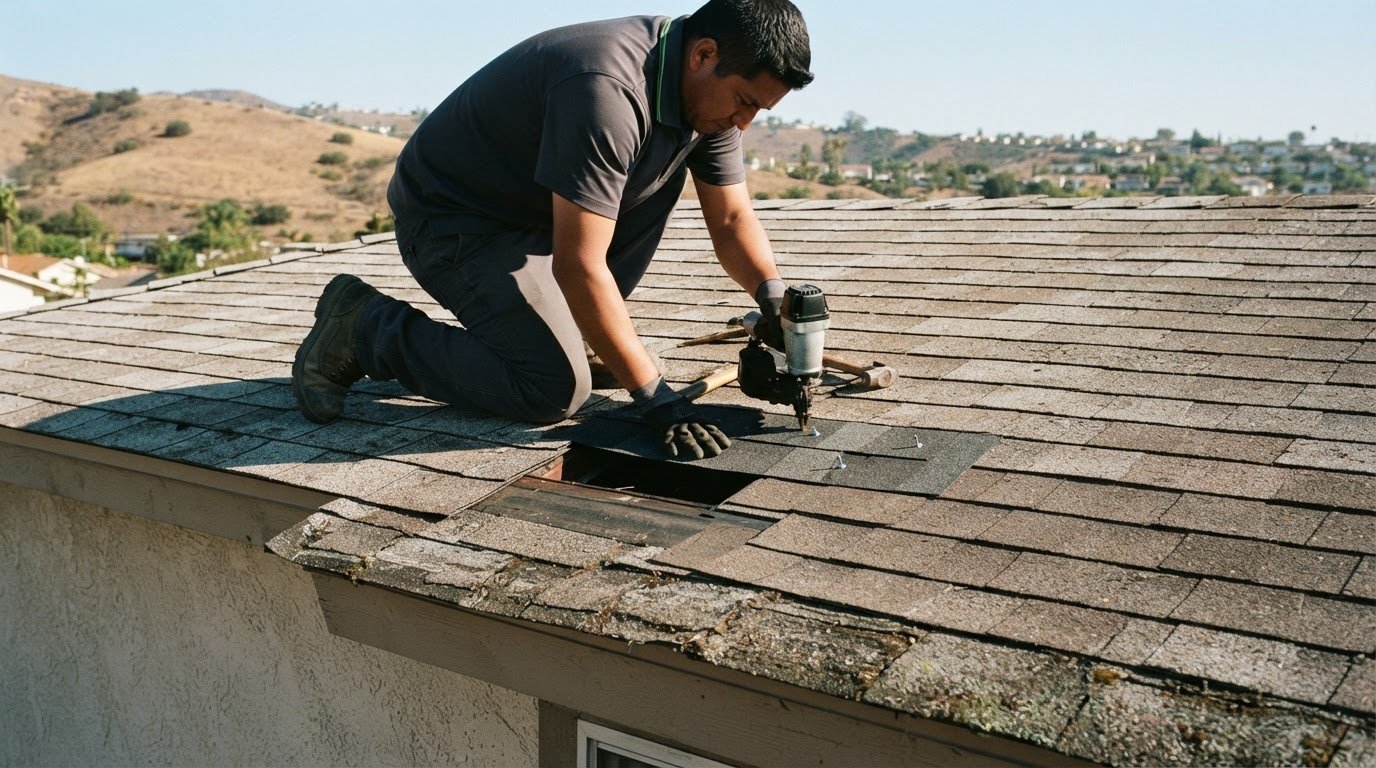
Older El Cajon roofs may have layers of past roofing work that affect maintenance decisions. An inspection can clarify whether the next step is a repair, routine upkeep, or replacement.
Before deciding, homeowners often want to know what an estimate covers and how it differs from a documented inspection report.
This guide explains how roof age, visible damage, and El Cajon’s inland conditions shape roof maintenance in El Cajon, and what to consider when weighing repair against replacement.
Key Takeaways
- Learn how roof age and the extent of wear can help distinguish a targeted repair from a replacement plan.
- Understand how a project estimate differs from a documented inspection report, and which may suit your situation.
- See why isolated damage to a younger roof may call for a different response than widespread deterioration.
- Find out what to consider when evaluating customer reviews and assessing a roofing professional’s work.
- Explore how layered roofing history and El Cajon’s inland heat can shape maintenance needs for older roofs.
Roof repair and replacement
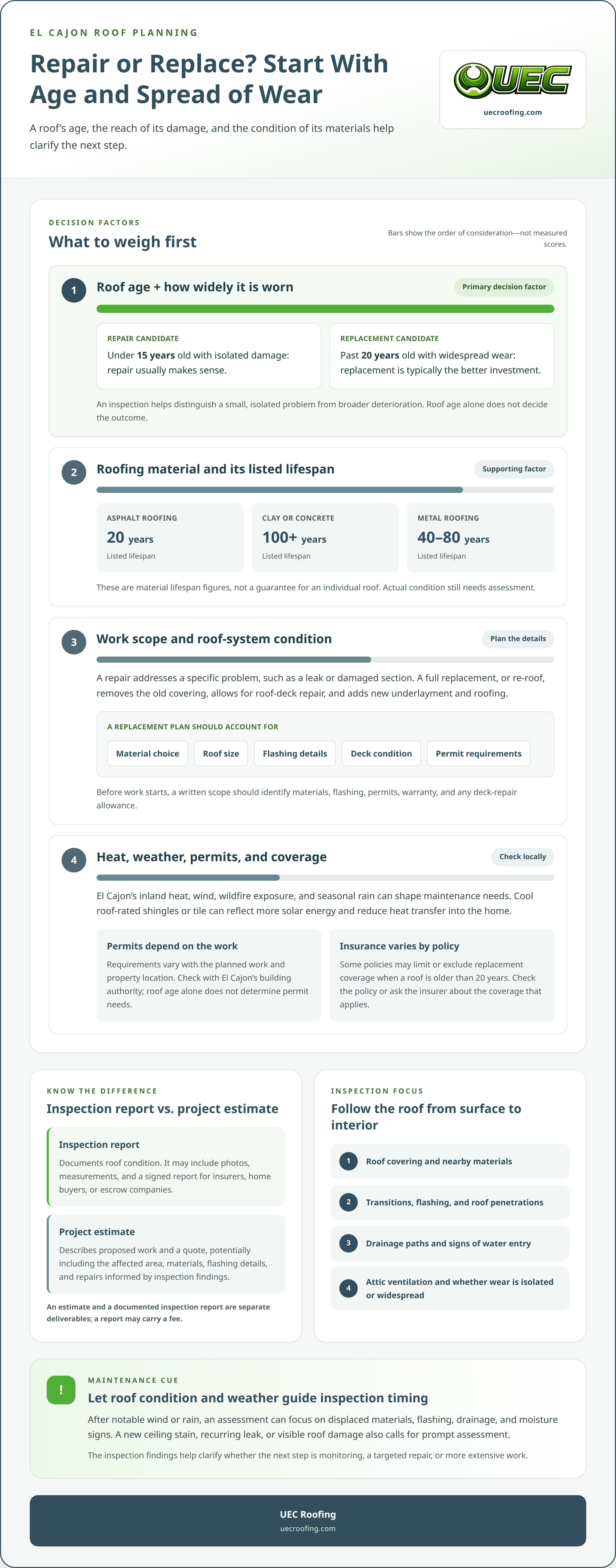
In El Cajon, the decision between repair and replacement starts with the roof’s age and the spread of its wear. A roof under 15 years old with isolated damage is usually a repair candidate. For a roof past 20 years old with widespread wear, replacement is typically the better investment. An inspection helps show whether damage is limited to a small area or points to broader deterioration.
Permit requirements depend on the planned work and the property’s location. Before repairs or replacement begin, identify the permit requirements with El Cajon’s building authority. Roof age alone does not determine which permits a project needs; the scope of work matters.
A full replacement, also called a re-roof, removes the old covering, allows the roof deck to be repaired, and adds new underlayment and roofing. A repair, by contrast, addresses a specific problem, such as a damaged section or leak. Inspection findings should explain why a repair is sufficient or why replacement is recommended.
- Roof age: Asphalt roofing has a listed lifespan of 20 years. El Cajon tract homes built from the 1960s through the 1990s may therefore need closer assessment as roofs age.
- Material: Clay or concrete roofing has a listed lifespan of 100+ years, while metal roofing is listed at 40-80 years. These figures describe material lifespans, not a guarantee for an individual roof.
- Project scope: Material choice, roof size, flashing details, deck condition, and permit requirements affect a replacement plan. A written scope should identify materials, flashing, permits, warranty, and any deck-repair allowance before work starts.
Replacement material also affects how a roof performs in El Cajon’s heat. Cool roof-rated shingles or tile can reflect more solar energy and reduce heat transfer into the home. El Cajon’s building authority and the insurer can clarify which roof assembly applies to a specific property, including any insurance considerations.
Some homeowners insurance policies may limit or exclude coverage for roof replacement when a roof is older than 20 years, but coverage varies by policy, roof condition, and the cause of damage. Check your policy or contact your insurer to understand the coverage that applies. That makes roof condition and documented inspection findings especially relevant when planning work. For roofing projects, a licensed contractor’s qualifications and a clear written scope help homeowners understand who is responsible for the work and what the installation includes.
Do you offer free roofing estimates in El Cajon?
Free project estimates are commonly available for roofing work in El Cajon. An estimate outlines a proposed scope and quote; a documented inspection report is a separate, more detailed deliverable that may carry a fee.
For residential roofing, start by describing the concern: a ceiling stain, a cracked tile, or shingles lifted after wind. A roof inspection helps locate visible damage and assess nearby components. Leak diagnostics aim to trace the water entry point, which may not be directly above the indoor stain. This distinction helps determine whether the need is a focused repair or broader maintenance.
A documented inspection report serves a different purpose from a project estimate. Insurers, home buyers, or escrow companies may request photos, measurements, and a signed report. A written project quote describes the proposed work and may identify the affected roof area, materials, flashing details, and repairs based on the inspection findings. A report documents the roof’s condition; a quote describes the job.
A useful professional inspection follows the roof system from its surface to signs inside the home. Roofers assess the visible covering, transitions, flashing, drainage paths, and signs of water entry. They can also consider attic ventilation and whether damage appears isolated or widespread. The roof’s material and condition determine what the inspection prioritizes.
- After severe weather: Wind can loosen roofing materials, while seasonal rain can reveal weaknesses around flashing or drainage points.
- When symptoms appear: A new ceiling stain, recurring leak, or visible roof damage calls for prompt assessment.
- As preventative care: Periodic inspections can identify wear before it develops into interior water damage. The roof’s age, condition, and recent exposure guide the timing.
El Cajon’s wildfire exposure, wind, and seasonal rain create distinct maintenance concerns. The National Weather Service defines Santa Ana winds as strong, dry gusts moving from inland deserts toward the coast. Wind can disturb roof coverings, while dry conditions increase concern about fire exposure. Seasonal rain can reveal leaks where coverings, flashing, or drainage have weakened.
Inspection timing should respond to roof condition and local weather, rather than rely on one schedule for every home. After notable wind or rain, a professional assessment can focus on displaced materials, flashing, drainage, and signs of moisture. For maintenance planning, a professional roof inspection can help clarify whether the next step is monitoring, repair, or more extensive work.
Roof repair for cracked tiles and damaged shingles
A cracked tile or lifted shingle can expose the layers beneath it to water. For an El Cajon roof under 15 years old with isolated damage, repair usually makes sense. The inspection should identify the damaged area, nearby materials, and any opening where water could enter. Matching the repair to the cause helps prevent a small defect from becoming a wider roofing problem.
Tile and shingle repairs involve different approaches to the surrounding roof. A cracked tile may need replacement while leaving sound nearby tiles undisturbed. A damaged shingle may require attention to its fasteners and the underlying layer, not just the visible surface. A roofing contractor should also assess flashing at roof edges, valleys, and penetrations, since these transitions can contribute to leaks.
Low-slope roofs need particular attention at seams, drains, and flashing, where water can collect or enter if materials have deteriorated. California Title 24 requires a minimum aged solar reflectance of 0.63 for low-slope roofs. That requirement applies to the roof assembly and does not replace repairs to damaged flashing or worn materials. A professional assessment considers the roof’s condition alongside its existing system.
A roof leak can damage the home’s interior even after the exterior issue is addressed. A ceiling stain, softened drywall, or damp insulation may require interior repairs as well as roof work. In cases where hidden moisture causes microbial growth or water damage behind ceilings, property restoration specialists like Coastline Environmental Solutions, Inc. can address the interior cleanup while roofing contractors fix the exterior source. The repair scope should identify the water entry point and distinguish roof repairs from affected interior finishes. For example, a stain beneath a valley may not be directly below the roof opening.
Repair costs depend on the location and extent of damage, roofing material, access, flashing work, and whether interior repairs are also needed. The price depends on the case and is given after a quote request. A written quote should connect each recommended task to an inspection finding, rather than bundle unrelated work into a vague line item.
Customer reviews can provide context about communication and completed work. Look for specific examples of how a roofing contractor explained a leak diagnosis, documented the repair scope, or handled follow-up concerns. A review describing the roof problem and resolution offers more detail than a rating alone. Compare those details with your roof’s needs, especially if it has tile, shingles, or low-slope areas.
Customer reviews
Reviews are most useful when they describe a specific job, not just a star rating. A homeowner’s account of a shingle leak, inspection, and completed repair offers more context than a brief comment that the service was good. For El Cajon roofing, details about the roof type and problem help you judge whether the experience relates to your home.
Look for the sequence of events in a review. A clear account might explain how a contractor identified a roof leak, outlined the work, and communicated what the repair addressed. Those details help distinguish feedback about roofing services from general praise. They can also show whether the homeowner understood the difference between fixing a symptom and addressing the underlying roof condition.
Reviews can also describe how the work affected a homeowner’s investment. For example, an account of replacing damaged shingles may explain how the contractor handled nearby materials or described the completed installation. These specifics are more informative than a rating alone. They show what communication and workmanship looked like on a defined project, without suggesting every roof needs the same solution.
Use a simple review-reading framework:
- Identify the project: Was the work a roof leak repair, tile or shingle work, maintenance, or a larger roofing job?
- Read for process: Does the account explain inspection findings, the proposed scope, and communication during the work?
- Look for a clear outcome: Does the reviewer describe what was addressed, such as a damaged area or recurring leak?
- Separate detail from rating: A rating summarizes a reaction, while a specific example explains the experience.
A review that mentions a roof leak without context may not explain whether the source was found or what repair followed. Another might describe a contractor documenting damage and clarifying the scope before work began. Both can be positive, but offer different levels of practical insight. Read the details rather than treating a rating as a technical assessment of your roof.
Reviews have limits: each account reflects one property, roofing system, and project. A shingle repair on a sloped roof does not establish what a low-slope roof needs. A comment about communication can help describe the customer experience, but it cannot replace an inspection of your roof’s materials, flashing, and visible damage.
Connect each review detail to the question you need answered. If you’re concerned about a recurring leak, focus on accounts describing diagnosis and repair communication. If you’re planning maintenance, look for reviews that explain the work scope. This makes customer feedback more useful without treating a rating as a promise about your own roofing outcome.
Maintenance needs of older El Cajon roofs
El Cajon’s older homes need roof care that accounts for material age and past work. Many local homes were built between the 1950s and the 1980s, and many older roofs have a second or third layer of roofing material. Those layers can make it harder to understand the roof’s history from its surface alone. A professional roof inspection should consider visible wear alongside the roof assembly’s condition.
Heat adds a local strain. El Cajon roof surfaces can reach 150°F or higher on peak days, while summer temperatures in the valley regularly exceed 100°F. South- and west-facing asphalt-shingle slopes age faster in that heat than coastal north-facing slopes. A cracked shingle or brittle-looking area on those exposures deserves close attention, especially if nearby sections show similar wear. This local climate context also matters for homeowners across the Inland Empire.
Older roofs benefit from an assessment that tracks related signs of deterioration, rather than focusing on one visible defect. An inspection can note cracked or displaced materials, worn transitions, signs of moisture, and attic ventilation. These observations help distinguish a localized maintenance need from a broader pattern. Age alone does not determine whether repair or replacement makes sense; the roof’s condition and extent of wear matter for properties in El Cajon and Lake Elsinore.
- Record the roof history: Note known installations or prior roofing layers, because a second or third layer changes what an inspection needs to assess.
- Pay attention to exposure: Include south- and west-facing asphalt-shingle slopes in the inspection, since El Cajon’s heat can accelerate their aging.
- Track recurring signs: A repeated leak, fresh ceiling stain, or newly cracked material can show that the issue extends beyond one isolated spot.
- Keep condition records: Inspection notes and photographs can help homeowners explain observed changes when discussing roof condition with an insurer.
For older properties, a clear maintenance plan links each finding to a next step. A single cracked tile among sound surrounding materials may call for focused attention, while widespread wear across several sections points to a different scope. If underlayment or other concealed components are involved, the surface alone may not reveal the full extent of the work. The inspection should explain these distinctions in plain language for homeowners in Menifee, Temecula, Lake Elsinore, Canyon Lake, Corona, Anaheim, Moreno Valley, Winchester, Wildomar, Murrieta, Riverside, Orange, Huntington Beach, Fallbrook, Vista, Escondido, Carlsbad, San Diego, El Cajon, and Poway.
Roof maintenance in El Cajon is most useful when it reflects the home’s age, roofing layers, and sun exposure. If an older roof has cracked tiles or worn felt, discuss tile replacement or felt replacement as part of a condition-based maintenance plan.
UEC Roofing
UEC Roofing serves El Cajon and homeowners across Southern California, including San Diego, Riverside, and Orange Counties. Based at its brick-and-mortar location in Lake Elsinore, the company has completed over 2,000 projects in the region. Services include roof repair, leak repair, tune-ups, replacement, rejuvenation, and tile, composite shingle, metal, foam, and flat roofing.
For an older roof, inspection findings help match work to the home’s condition. Describe concerns, such as a recurring leak or visible damage, to focus the discussion on your property’s roofing needs.
For expert help with your roof maintenance El Cajon homeowners can trust, contact UEC Roofing today.
Plan the next step for your roof
A clear next step begins with the concern that prompted you to seek help. Note where you noticed a leak or interior stain, when it appeared, and whether it returned. Sharing these observations helps focus the conversation on your roof’s condition and the work that may protect your home. A roof maintenance plan in El Cajon should address the property’s needs, not rely on a one-size-fits-all schedule.
UEC Roofing provides roofing services for homeowners addressing upkeep or damage, including leak repair and roof tune-ups. The goal is to match the observed issue with an appropriate scope of work, helping you make an informed decision about your roof and property.
Contact UEC Roofing today to discuss your roofing concern. A well-informed next step can help you move forward with greater clarity.
Frequently Asked Questions
How do I choose the best roofing contractor?
Choose a roofing contractor who explains the inspection findings and connects each recommended task to a clear scope. For a recurring leak, for example, the proposal should identify the affected roof area and describe the planned repair. Confirm the contractor is licensed, and review whether the written scope names the materials and work details. Clear explanations make it easier to understand the proposal before deciding how to proceed.
How do you know when you need a new roof?
A new roof may be appropriate when deterioration affects broad areas rather than one repairable spot. Recurring leaks, multiple damaged sections, and widespread material wear call for an overall condition assessment. An inspection can also reveal whether previous repairs addressed symptoms without resolving broader problems. The decision should consider roof condition, material, and the work needed to restore reliable coverage, not appearance alone.
When should I get my roof inspected?
Arrange an inspection if you notice a ceiling stain, recurring moisture, or visible changes to roofing materials. An assessment can also help after weather that may have disturbed the roof, even if damage is not obvious indoors. For a home purchase or insurance matter, clarify whether you need a project estimate or a documented inspection report. They serve different purposes and provide different levels of detail.
Are your El Cajon roofers licensed and insured?
UEC Roofing identifies its team as licensed. Licensing and insurance are separate matters, so one does not prove the other. For a roofing project, make sure the written scope clearly identifies the work and materials involved. This keeps attention on the project details and avoids confusing a contractor’s license with other business credentials.
How can a homeowner identify a malfunctioning roof system?
Interior symptoms can signal that a roof system needs professional attention. Watch for recurring ceiling stains, dampness near roof penetrations, or moisture that returns after the area dries. Water can travel through roof layers before appearing indoors, so the stain may not line up with the entry point. Note the affected room and when the symptom appears; an inspection can trace the issue and assess related components.
How often should roofs be inspected and maintained in El Cajon, California?
Inspection timing should reflect the roof’s condition, material, and exposure, rather than follow one schedule for every El Cajon property. A roof with past leaks or visible wear needs closer attention than one without reported concerns. Schedule a professional review when symptoms appear and after weather raises concerns about damage. The findings can guide future maintenance and show which areas need continued observation.
What roof maintenance tasks are recommended for El Cajon’s hot, dry climate, and which should a roofing professional handle?
Homeowners can note interior signs, such as new stains or recurring moisture, and share them with a roofing professional. Roof-surface inspections, flashing assessment, leak diagnosis, and repairs are professional work. El Cajon’s heat can affect roofing materials, so an assessment should consider the roof’s exposure and condition. Don’t treat a visible symptom as a complete diagnosis; concealed damage may need professional evaluation.
What does roof inspection and maintenance cost in El Cajon?
Inspection and maintenance costs depend on the project and the requested work. The scope may depend on roof material, access, the damage’s location and extent, and whether the work involves diagnosis or repair. A written quote should explain the proposed tasks and how they relate to inspection findings. This helps distinguish a limited maintenance visit from work addressing a specific roof problem.