
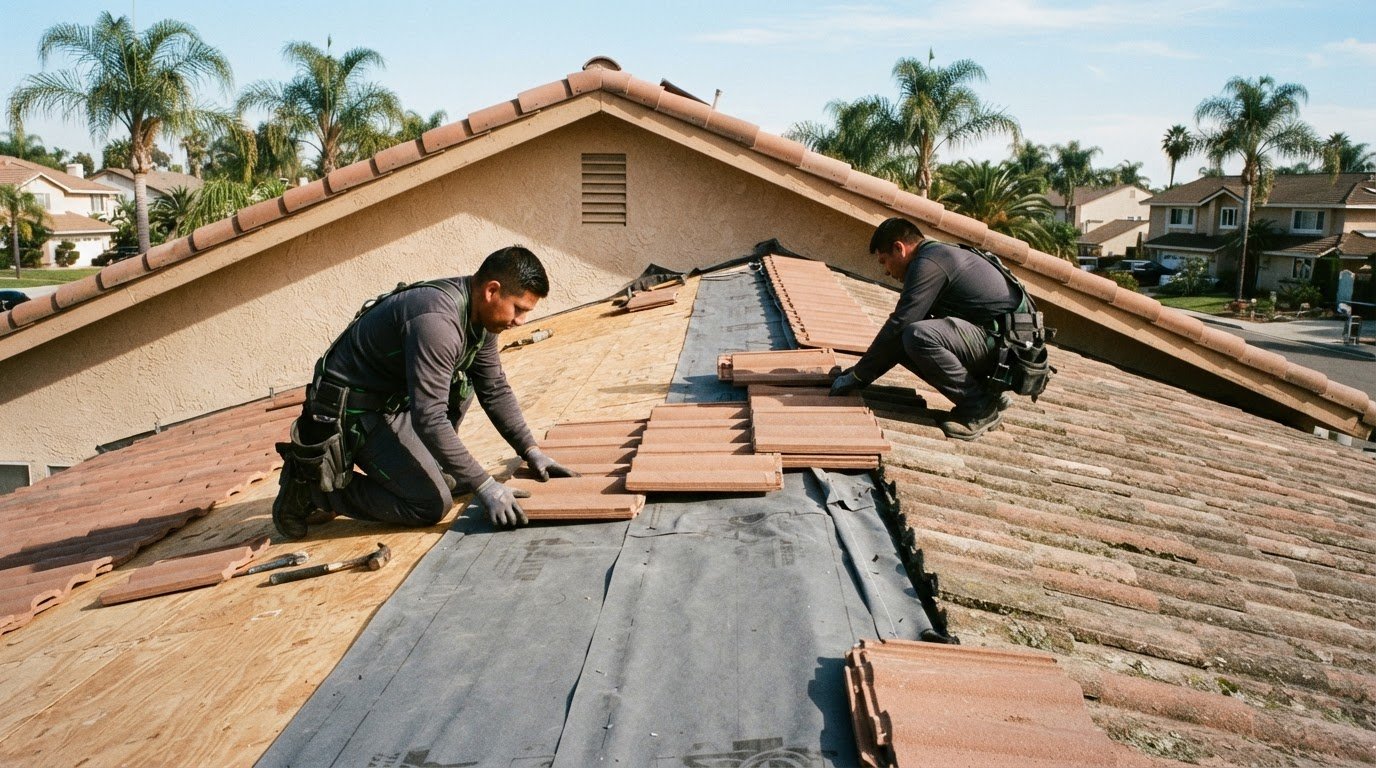
A roof replacement estimate is useful only when it accounts for the whole roof, not just the visible surface. For Anaheim homeowners, the work depends on the roof’s condition, size, material, and whether repair or replacement is the right scope. A residential roofer in Anaheim should assess these factors before recommending work.
It’s reasonable to want a clear comparison before making a major home decision. The right option depends on whether damage is localized, whether the underlayment or decking needs attention, and how the existing roof is built. Project costs are specific to the home and are provided after a quote request.
This article explains what can affect repair and replacement costs, what a professional assessment considers, and how Anaheim’s local conditions may shape roofing decisions. You’ll also learn how tile, shingle, and other roof systems can affect the work, so you can weigh options before choosing a long-term solution.
Key Takeaways
- Roof replacement cost depends on the home’s roof condition, materials, and scope of work, so the inspection findings matter more than a generic estimate.
- In Anaheim Hills, fire-hazard considerations can influence permitted reroof choices, including assembly rating and ember-resistant detailing.
- Localized damage may call for repair, while widespread underlayment failure beneath tile can point to a more extensive roof project.
- Understand what affects a project’s schedule, from the roofing system and repair scope to the work needed beneath the visible surface.
- Use a professional assessment to clarify the practical options for your Anaheim home before deciding on the next step.
Roof Replacement Cost Near Anaheim, CA
Replacement estimates in Anaheim depend on roof size, material, access, and any concealed damage. A residential roofer in Anaheim should assess the roof before recommending repairs or replacement.
Residential Roofing in Anaheim
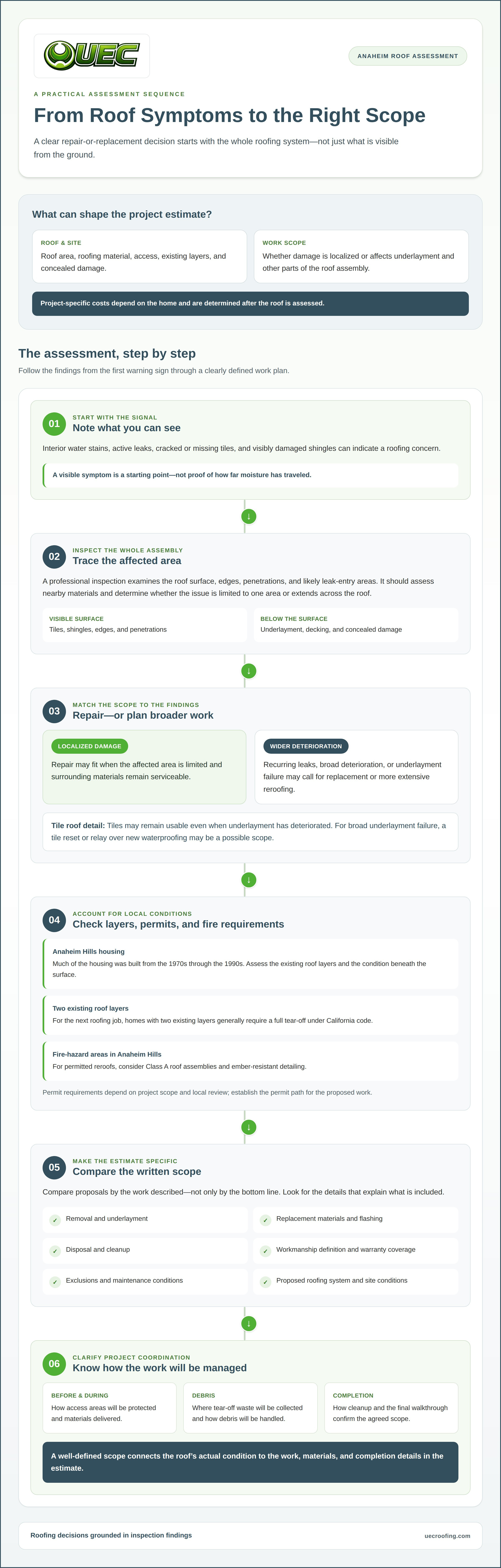
Anaheim roofing work can address leaks, damaged shingles or tiles, worn underlayment, and full roof replacement. In Anaheim Hills, much of the housing was built from the 1970s through the 1990s, so an assessment should consider the existing roof layers and the condition beneath the surface. Tile can remain usable even when its underlayment has deteriorated, making a tile reset or relay over new waterproofing a possible scope for broad underlayment failure.
For permitted reroofs in Anaheim Hills fire-hazard areas, Class A roof assemblies and ember-resistant detailing are important considerations. A clear estimate should identify the proposed roofing system and explain how site conditions affect the work. Replacement costs also depend on roof area, material, access, existing layers, and concealed damage; the project-specific amount follows a quote request.
Estimates, Warranties, and Workmanship
Compare estimates by scope, not just by the bottom line. Check whether each proposal describes removal, underlayment, replacement materials, flashing, disposal, and cleanup. Review how workmanship is defined, what the warranty covers, and which exclusions or maintenance conditions apply. These details help clarify how the proposed work fits the home’s condition and selected products.
Rebates for cool roofs or energy-efficient roofing aren’t automatic. Include an incentive in your budget only when the applicable program’s terms identify the product and property as eligible. Keep rebate assumptions separate from the roofing estimate, and compare energy-related product claims using their documented terms.
Roofing project coordination should explain how access areas will be protected, materials delivered, debris handled, and cleanup completed. Ask where tear-off waste will be collected and how the final walkthrough will address leftover materials. Clear responsibilities help homeowners understand the work sequence and completion criteria.
California contractor licensing is another point to include in due diligence. Request the contractor’s license number and compare the business name and status with state licensing records. Review ratings and complaint history as separate checks: Anaheim roofing professionals have an average homeowner rating of 4.1, while the BBB directory shows 355 residential roofing results across 15 pages near Anaheim. Look for recurring concerns, response patterns, and documented resolutions rather than relying on a rating alone.
Roofing services including repair, replacement, and installation
A roof inspection can distinguish a localized repair from work across a larger roofing system. In Anaheim, the roof’s visible condition and the layers beneath it help determine the next step.
Roof Inspection and Replacement
A professional inspection examines the roof surface, edges, penetrations, and areas where leaks may enter. On a tile roof, the tiles may remain serviceable while the underlayment beneath them fails. The inspection should explain whether the problem is limited to one area or affects the broader roof assembly.
Replacement planning defines the removal, installation, and cleanup scope. Anaheim homes with two existing roof layers generally require a full tear-off for the next roofing job under California code. The estimate should account for this condition rather than treating a new roof as a simple surface overlay.
Permit requirements depend on the project scope and local review. Before scheduling a replacement, establish the permit path for the proposed work and include it in project coordination.
Roof Damage and Repair Needs
Interior water stains, active leaks, cracked or missing tiles, and visibly damaged shingles can signal a need for roof repair. These signs identify concerns but don’t show how far moisture may have traveled. An inspection should trace the affected area and assess nearby roofing materials before defining the repair.
Repair may suit localized damage when surrounding materials remain serviceable. Broader deterioration, recurring leaks, or underlayment failure across a tile roof may call for replacement or more extensive reroofing. The deciding factor is the damage beneath the exposed surface, not one symptom alone.
For flat-roof repairs and sealing, an assessment should identify the leak source and the condition of the affected area. The repair plan should describe which section will be treated and how the work addresses the observed problem. Sealing over a symptom without finding its source may leave the underlying issue unresolved.
Roofing services can include inspection, repair, and replacement, with the installation scope shaped by the existing system. A small leak near a roof penetration, for example, calls for different work than widespread deterioration across several sections. A written scope helps distinguish the work, materials, and cleanup included in each option.
Clarify how material delivery, debris handling, and final cleanup fit into the project sequence. A final walkthrough can identify remaining debris and confirm that the agreed scope is complete. These details make repair and replacement plans easier to understand before work begins.
Anaheim service area and inspection booking
An inspection request for an Anaheim home is more useful when it identifies the property, roof concern, and preferred next step. Roof layouts and access conditions vary across Anaheim and nearby Southern California communities, so a clear description helps the UEC Roofing professional prepare for the visit.
Include the Anaheim address, a contact name, and a concise description of the issue. Note whether a ceiling stain appeared after rain or a tile shifted near the eaves. Photos taken from the ground can show visible symptoms before the inspection. Avoid climbing onto the roof; the professional should assess elevated areas.
Share practical access details when booking. A locked side gate, limited driveway space, or detached garage may affect how the professional reaches the property. Mention where the inspector can park and which rooms have visible staining. These details help focus the visit without replacing a roof assessment.
Across the wider Southern California service area, inspection logistics may also involve homes in Lake Elsinore and the Inland Empire, as well as Riverside, Orange, and San Diego Counties. An accurate property address helps distinguish the location and access needs of each home. A nearby Anaheim Hills property, for instance, may have different roof access from a home with a flat addition.
A useful inspection considers more than the visible surface. As your trusted residential roofer Anaheim homeowners rely on, our team can assess accessible roof areas, flashing, penetrations, drainage paths, and signs of underlayment wear. If the home has an attic, visible moisture and ventilation openings may help explain a leak or heat concern. Findings should connect observed conditions to practical options.
For an Anaheim home with a recurring leak, tell the inspector where it appears and how it has changed. A stain near a bathroom vent points to a different area than water appearing beside a skylight. Note when the problem occurs and whether previous work addressed that area. Specific observations can help trace possible entry points.
Inspection findings should distinguish damage from maintenance concerns. A written summary can identify affected sections, explain whether the underlayment needs attention, and outline repair or replacement options. Ask for clear descriptions of observed conditions, proposed work, and any areas the inspection could not access. An honest assessment separates visible evidence from assumptions.
Before confirming an appointment, organize the address, contact details, access instructions, and a short list of concerns. This gives your residential roofer Anaheim a practical starting point and keeps the inspection focused on the roof conditions that matter to your Anaheim home.
What roofing materials are best for Anaheim's climate?
Anaheim homeowners should choose roofing materials that suit the roof shape, existing structure, and property priorities. Sun exposure, seasonal rain, and fire considerations in parts of Anaheim Hills make the full roof assembly important, not just the visible finish. A material suited to a sloped roof may not suit a flat section.
Tile is common on Southern California homes, but tile and underlayment serve different roles. An assessment should consider both, because tiles can remain usable while the protective layer beneath them needs attention. With an existing tile roof, options may include retaining serviceable tiles or selecting a different system as part of a broader replacement.
Tile, shingle, and other systems may suit different sloped-roof designs. Compare options by how they fit the home’s structure, roof layout, appearance, and maintenance priorities. A complex roof with several intersections, for example, needs careful detailing around valleys and penetrations regardless of its surface material. The estimate should identify the proposed system and explain how it fits the existing roof.
Flat and low-slope sections call for materials designed for that roof configuration. Foam and other flat-roof systems may be considered where the home has a low-slope area, such as an addition or garage. The inspection should assess drainage, seams, penetrations, and the condition of the existing surface before recommending a system. A material choice alone cannot address water that collects because of roof layout or drainage conditions.
Energy priorities can also shape material selection. If you’re considering a cool-roof option, compare the product’s documented properties and determine whether it suits the roof design. Don’t choose by color alone. Ask the roofing professional to explain how the proposed surface, attic ventilation, and existing assembly work together.
In Anaheim Hills fire-hazard areas, permitted reroofs may require Class A roof assemblies and ember-resistant detailing. These considerations apply to the overall assembly and installation, not just the product name. A project plan should show how the selected material fits the site conditions and applicable review process.
Use a practical comparison before selecting a system:
- Roof shape: Match tile, shingles, or a flat-roof system to the roof’s slope and layout.
- Existing condition: Assess the decking, underlayment, flashing, and drainage before choosing a replacement.
- Home priorities: Weigh appearance, maintenance, energy goals, and fire considerations together.
For an Anaheim home with a sloped main roof and a flat addition, different systems may suit each area. The estimate should describe each assembly separately and explain how transitions will be handled. This makes material comparisons more useful than choosing one product based on appearance alone.
What is the typical roof replacement timeline for an Anaheim home?
A roof replacement moves through inspection, planning, material coordination, installation, and cleanup. The schedule depends on roof size, system, access, and any work uncovered after removal. A clear sequence helps Anaheim homeowners understand what happens before, during, and after installation.
Start by defining the project scope. A qualified residential roofer Anaheim assesses the existing surface, roof structure, flashing, and drainage, then documents the recommended work. For a tile roof, the plan may differ depending on whether tiles can be reused or the underlayment needs replacement. The written scope should describe each phase rather than promise a completion date before the roof is assessed.
Next, coordinate materials, site access, debris handling, and any applicable permit review. Material selection matters because tile, shingle, and flat-roof systems involve different installation details. Delivery and access also affect when work can start. A narrow driveway, for example, may require a specific plan for staging materials and removing tear-off debris.
During removal, concealed conditions can change the work sequence. The crew may find damaged decking or underlayment that wasn’t visible during the initial inspection. The project lead should document the finding, explain how it affects the scope, and establish the next step before related work proceeds. This keeps decisions grounded in observed conditions.
Installation follows the agreed sequence for the selected roofing system. A tile roof may require careful handling and resetting, while a flat section calls for attention to seams and drainage. The crew also needs to complete transitions around roof penetrations and edges. These details affect workmanship and should be included in the project’s completion checks.
Weather, access, inspection scheduling, and newly discovered repairs can affect the calendar. Rather than relying on a generic timeline, ask about the planned start, major work stages, communication process, and cleanup expectations. The schedule should explain how changes will be handled if concealed damage alters the original scope.
- Before work: Confirm the scope, material plan, access arrangements, and permit review where applicable.
- During work: Track progress updates and documented changes to the scope.
- At completion: Review the installed areas, debris removal, and agreed final checks.
For an Anaheim home, request a roof replacement assessment that sets out these stages and the factors affecting the schedule. Arrange a roofing assessment with UEC Roofing to discuss the project sequence and the work your roof needs.
Every project begins with a professional assessment that records the roof’s condition and explains the expected work. A recent customer reported replacing 25-year-old shingles on a local home, illustrating why the existing system’s age belongs in the project discussion. Properly maintained roof decking can last between 20 and 30 years on average, so its condition should be evaluated rather than assumed.
UEC Roofing
UEC Roofing helps Anaheim homeowners assess roofing concerns and plan practical next steps. Based in a brick-and-mortar location in Lake Elsinore, the company has completed over 2,000 successful projects in the region. Its services include leak repair, roof repair, and roof tune-ups, with recommendations shaped by the home’s observed condition.
For a leak, visible damage, or a maintenance concern, contact UEC Roofing to discuss your roof.
Plan the next step for your roof
A roofing decision can support your home for years, so use an inspection to establish a clear basis for action. Choosing a residential roofer in Anaheim means finding a professional who can explain the roof’s condition plainly and connect recommendations to observed conditions. Keep the inspection findings with the project scope to guide future maintenance and track changes.
UEC Roofing provides leak repair, roof repairs, roof replacement, and roof rejuvenation, along with roof tune-ups for homeowners assessing what their roof needs. Its specialized systems include tile, composite shingle, metal, foam, and flat roofing. Whether you’re addressing a concern or planning ahead, a professional evaluation can clarify a practical path forward without rushing a major home decision.
Book an inspection with UEC Roofing to discuss your roof and its next steps. A thoughtful plan starts with understanding the home in front of you, and that’s a sound way to move forward.
Frequently Asked Questions
What should homeowners look for when choosing a residential roofer near Anaheim, CA?
Choose a residential roofer in Anaheim who explains the recommended work in writing and ties it to observed roof conditions. Compare how each proposal describes materials, project responsibilities, cleanup, and follow-up. For example, if one estimate includes replacing damaged components and another does not, the scopes aren’t equivalent. Review the contractor’s local experience with your roof type and ask for clear answers about communication during the project.
Why Choose Us for Residential Roofing in Anaheim?
UEC Roofing serves Anaheim homeowners with roof repair, replacement, rejuvenation, and tune-ups. Its roofing systems include tile, composite shingle, metal, foam, and flat roofing. The right starting point depends on the roof’s needs, whether that means addressing water entry, replacing an aging roof, or reviewing its general condition. A clear description of the issue can help establish the next practical step.
How much does residential roof replacement cost in Anaheim, CA?
Residential roof replacement costs depend on the home and work identified during assessment; a project-specific amount follows a quote request. Roof area, selected material, access, removal needs, and damage beneath the existing surface can all affect the scope. A roof needing additional work below its visible covering differs from one with sound underlying materials. Compare written proposals by the work included, not price alone.
Which residential roofing contractors serve Anaheim, California?
UEC Roofing provides residential roofing services for Anaheim homeowners, including repairs and full re-roofs. Describe the roof type and concern, such as a leak or aging materials, then review whether the proposed scope addresses those conditions. A written assessment should connect the work to your home, rather than relying on a general description that could apply to any roof.
What should homeowners confirm about a roofer’s California contractor license and insurance?
Confirm that the California contractor license information matches the business named in the proposal, and review its current status and applicable work classification. Request proof of insurance and check that the named business and coverage dates correspond to the planned project. Clarify what the documents cover and who will perform the contracted work. Keep the proposal and supporting records together so the agreed scope and responsible business are clear.